
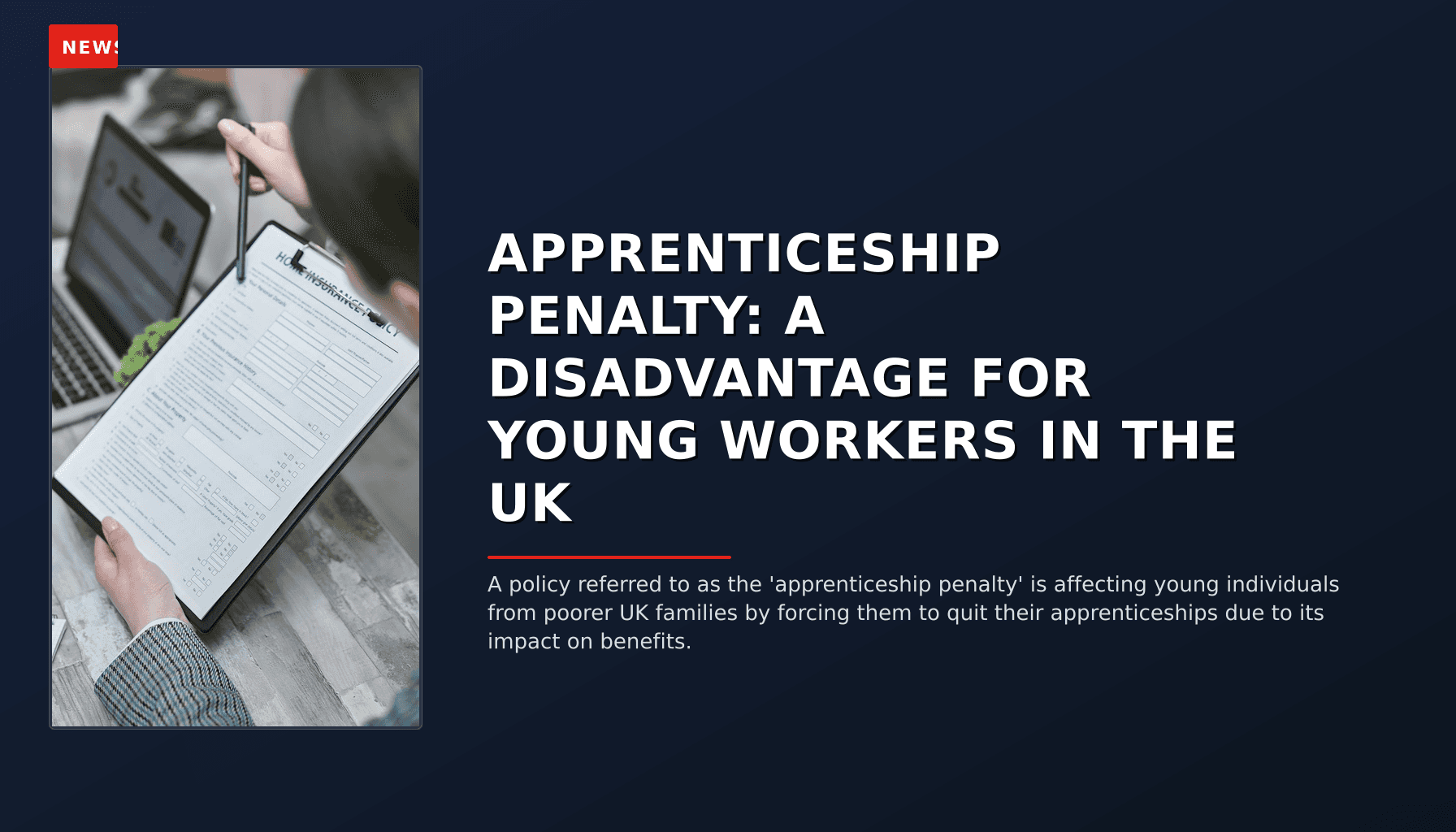
APPRENTICESHIP PENALTY: A DISADVANTAGE FOR YOUNG WORKERS IN THE UK
The 'apprenticeship penalty' reduces benefits for young apprentices, forcing many to leave their programs. This policy disproportionately affects those from poorer backgrounds.

A new policy forcing young apprentices from poorer backgrounds to leave their programs due to benefit reductions.
Recent reports have highlighted a controversial policy known as the 'apprenticeship penalty,' which is affecting young individuals from less privileged families in the UK. This policy reduces benefits for those enrolled in apprenticeships, leading many to drop out of these valuable training programs. According to sources including [https://source1.com/article] and [https://source2.com/article], this penalty has created a significant financial burden on young apprentices who are already facing economic challenges.
The 'apprenticeship penalty' operates by deducting benefits from individuals who are in apprenticeships, effectively discouraging them from continuing their education and training. This policy is particularly harsh on those from low-income households, as they rely more heavily on these benefits to support themselves while completing their apprenticeships. Experts suggest that this could lead to a long-term negative impact on the career prospects of these young individuals.
While the government has argued that the penalty is designed to encourage independence and reduce reliance on welfare, critics claim it fails to consider the financial strain already faced by many apprentices. The policy is part of broader welfare reforms aimed at reducing public spending, but its implementation has sparked concerns among educational institutions and labor organizations.
The exact impact of the 'apprenticeship penalty' remains unclear, as some sources suggest that the number of young people leaving apprenticeships has increased, while others claim there has been little change. This uncertainty adds to the complexity of an already contentious issue.
Read more: RIOT POLICE DEPLOYED ON FRENCH BEACHES: CHANNEL MIGRANT CROSSINGS getIntensified
Advocacy groups are calling for a review of the policy, arguing that it undermines efforts to promote social mobility and reduce income inequality. They emphasize that apprenticeships are crucial for equipping young people with skills and providing pathways into employment, especially for those from disadvantaged backgrounds.
In response to these concerns, government officials have stated that they are committed to ensuring that apprenticeships remain accessible to all. However, they maintain that the penalty is necessary to encourage financial independence among young adults. This stance has drawn criticism from various quarters, including members of the opposition and youth organizations.
The debate surrounding the 'apprenticeship penalty' reflects a broader discussion about welfare reform and its implications for young people in the UK. As policymakers continue to grapple with balancing the need for financial responsibility with the importance of supporting young individuals during their formative years, this issue is likely to remain a focal point in public discourse.
Looking ahead, there are calls for further research to better understand the policy's effects and its long-term consequences on the lives of apprentices. Advocacy groups also plan to push for changes to mitigate the financial burden placed on young people during their training programs.
Read more: PRIME MINISTER FACING ISOLATION: JOB CONCERNS mount as support wanes

More Stories

RIOT POLICE DEPLOYED ON FRENCH BEACHES: CHANNEL MIGRANT CROSSINGS getIntensified
23 April 2026 at 04:522 min read
Read More
PRIME MINISTER FACING ISOLATION: JOB CONCERNS mount as support wanes
23 April 2026 at 01:142 min read
Read More
LABOUR LEADERSHIP CHALLENGES: INTERNAL STRIFE AND PUBLIC SCRUTINY
22 April 2026 at 23:051 min read
Read MoreComments (0)
No comments yet. Be the first to share your thoughts!
Leave a Comment
Your email address will not be published. Comments are moderated before appearing.