
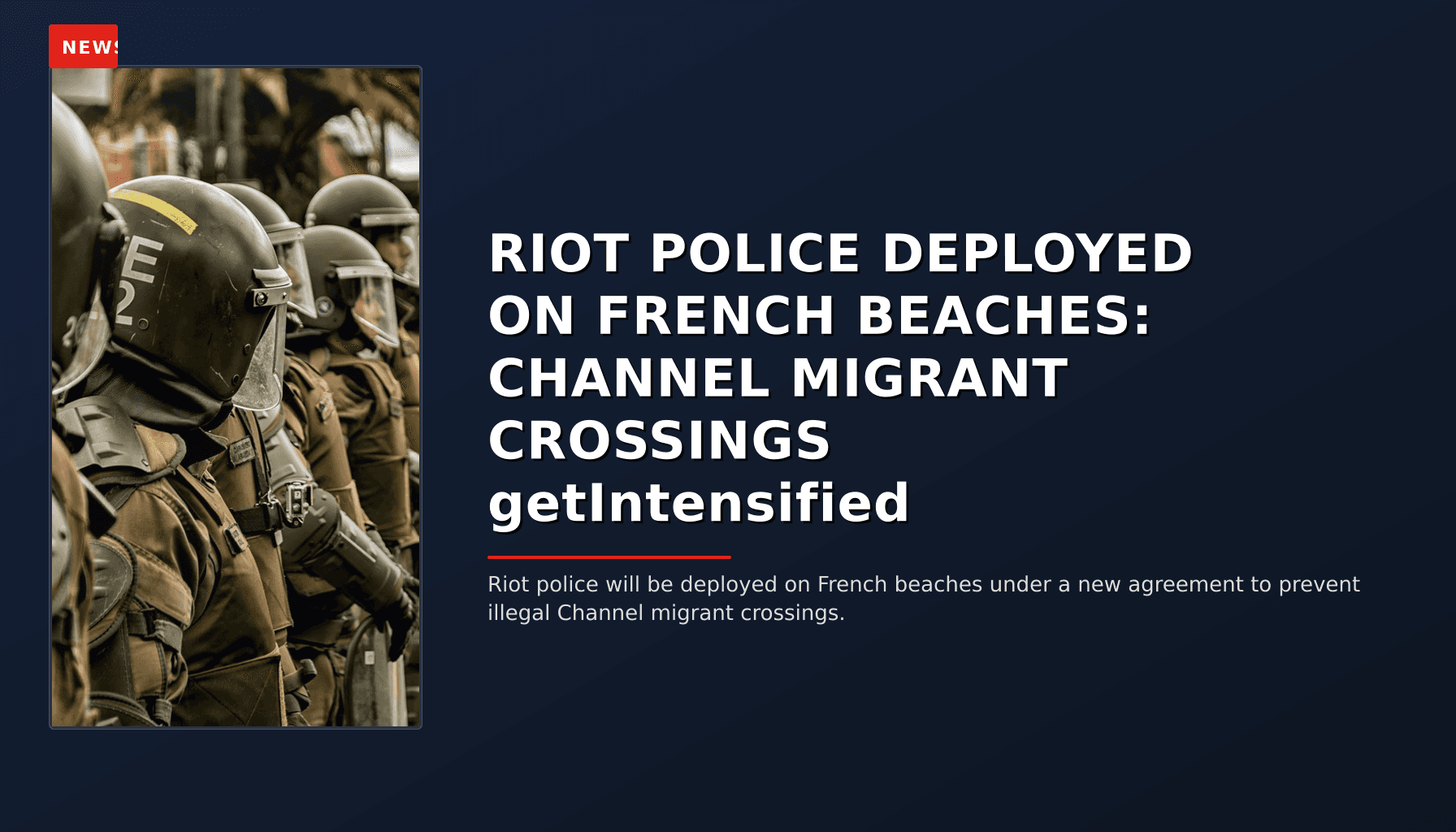
RIOT POLICE DEPLOYED ON FRENCH BEACHES: CHANNEL MIGRANT CROSSINGS getIntensified
The UK Home Office has agreed with France to deploy riot police on French beaches to prevent illegal Channel crossings, a significant step in addressing the ongoing migration crisis.

The UK Home Office and French government have agreed to deploy riot police on French beaches to curb illegal Channel crossings.
In a significant move to address the ongoing issue of illegal crossings across the English Channel, the UK Home Office has reached an agreement with the French government. This new initiative involves the deployment of riot police along French beaches, targeting areas where migrants frequently gather before attempting to cross into British waters. The decision follows months of increasing concern over the safety and security implications of these crossings, which have become a focal point for both nations.
The deployment is expected to commence shortly, with the primary aim of disrupting migrant networks by enhancing security measures in France. This marks a step up in efforts to manage the migration crisis, as illegal crossings have persisted despite previous attempts to deter individuals through various means. The involvement of riot police suggests a more robust approach to preventing these dangerous voyages, which often involve small boats and pose significant risks to those attempting the crossing.
According to sources within the UK Home Office, the agreement with France represents a crucial component of the broader strategy to secure the Channel perimeter. By strengthening border controls in key transit zones, officials hope to reduce the number of successful crossings while also addressing concerns about the welfare of migrants and the strain on resources in both countries. The move has been met with mixed reactions, with some stakeholders welcoming the additional security measures and others expressing worries about potential human rights implications.
The deployment of riot police on French beaches is part of a larger push by both governments to tackle what has become a pressing issue in bilateral relations. While the exact details of how the police will be stationed and what specific tactics they will employ remain unclear, the announcement signals a new phase in the ongoing efforts to manage migration flows. Critics have raised questions about the effectiveness of such measures, pointing out that previous attempts at similar strategies have had limited success in deterring migrants.
Read more: PRIME MINISTER FACING ISOLATION: JOB CONCERNS mount as support wanes
As the deployment begins, attention will turn to how these additional security forces interact with local communities and whether they can effectively disrupt the networks facilitating illegal crossings. The use of riot police raises concerns among some advocacy groups about the treatment of migrants and the potential for escalation in already tense situations. Public perception will likely play a significant role in shaping the long-term success of this initiative, as both governments navigate a delicate balance between security and compassion.
Looking ahead, this development underscores the complexities inherent in addressing migration issues through international cooperation. While the immediate focus is on strengthening border controls, questions remain about how sustainable and humane these measures will be in the long run. The effectiveness of the riot police deployment will be closely monitored by policymakers and observers alike, as they assess whether this latest step truly makes a difference in curbing illegal crossings across the Channel.

More Stories
PRIME MINISTER FACING ISOLATION: JOB CONCERNS mount as support wanes
23 April 2026 at 01:142 min read
Read More
LABOUR LEADERSHIP CHALLENGES: INTERNAL STRIFE AND PUBLIC SCRUTINY
22 April 2026 at 23:051 min read
Read More
EXCLUSIVE: IAN COLLARD'S POTENTIAL ROLE IN MANDELSOHN SCANDAL SPARKS INVESTIGATION
22 April 2026 at 21:121 min read
Read MoreComments (0)
No comments yet. Be the first to share your thoughts!
Leave a Comment
Your email address will not be published. Comments are moderated before appearing.