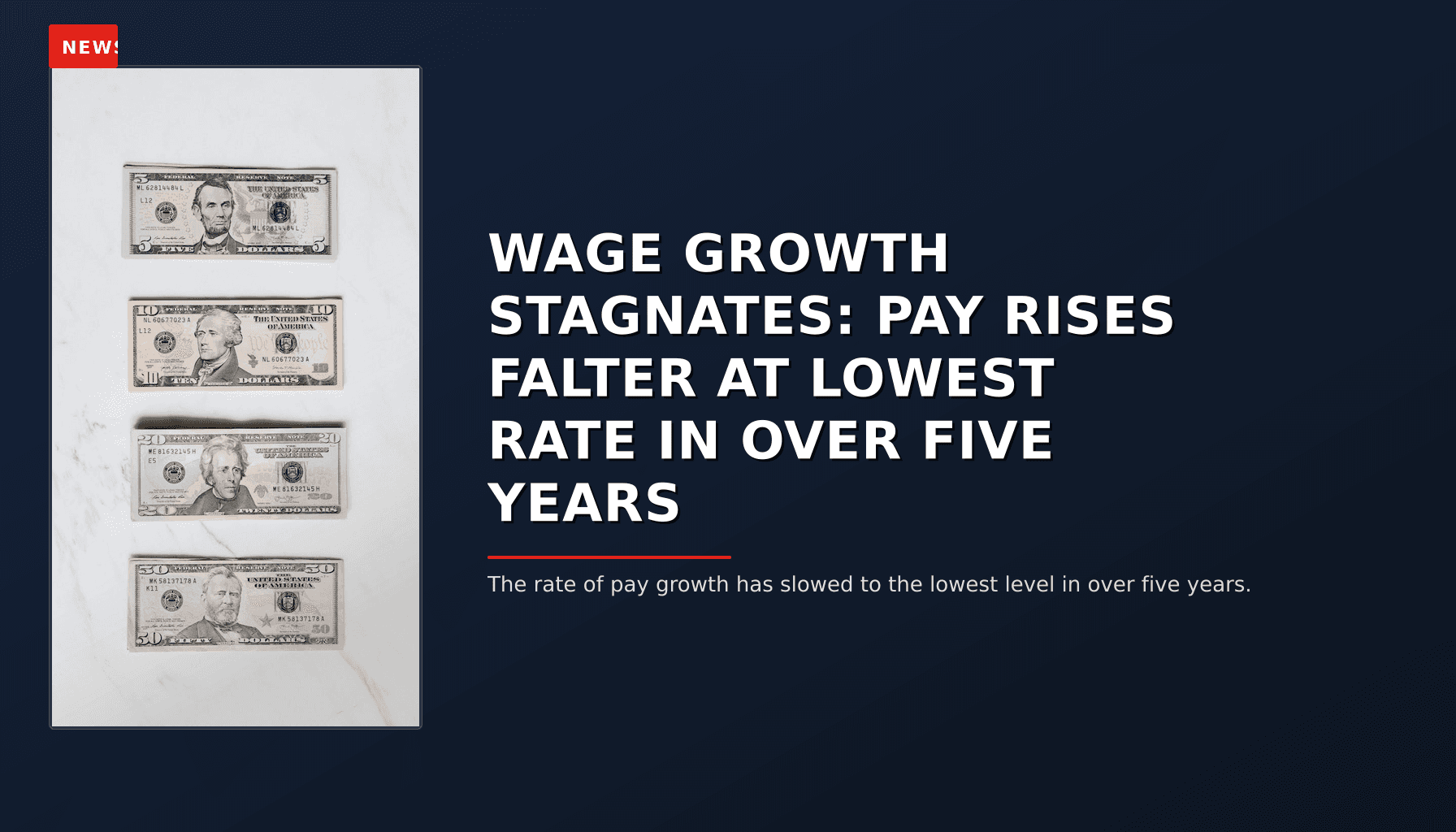
WAGE GROWTH STAGNATES: PAY RISES FALTER AT LOWEST RATE IN OVER FIVE YEARS
The rate of pay growth has slowed to its lowest level in over five years, raising concerns about economic health and household finances.

The rate of pay growth has slowed to its lowest level in more than five years, raising concerns about economic health.
According to recent reports, the rate at which wages are increasing has reached its slowest pace in over five years. This significant downturn marks a worrying shift in the UK's economic landscape, as workers face diminishing purchasing power amidst an already challenging cost-of-living crisis. The data highlights a broader trend of stagnation in income growth, which could have far-reaching implications for consumer spending and overall economic activity.
The latest figures reveal that pay growth has dipped to a mere 2.1% year-on-year, the lowest rate since late 2017. This decline comes despite inflation remaining above 5%, leaving many workers effectively losing ground financially. Experts suggest that this stagnation could exacerbate existing financial pressures on households already grappling with rising living costs such as food, energy, and housing.
Economists warn that a prolonged period of low wage growth could hinder economic recovery efforts. With consumer spending being a key driver of economic growth, any significant downturn in disposable incomes could lead to reduced demand for goods and services, potentially stifling business activity and investment. This scenario underscores the delicate balance policymakers must strike between managing inflation and ensuring robust income growth.
The causes behind this slowdown are multifaceted. While some attribute it to the natural ebb and flow of economic cycles, others point to structural issues within the job market, such as technological advancements displacing workers or a lack of upward mobility in certain industries. Additionally, the impact of global economic conditions, including fluctuating commodity prices and trade tensions, may also be contributing factors.
Public reaction to these developments has been mixed. Some workers express frustration over stagnating wages despite their increased productivity, while others acknowledge the challenging macroeconomic environment. Trade unions have called for greater protections and measures to ensure that wage growth aligns with inflation rates, urging employers to reassess pay scales in light of current economic realities.
Looking ahead, the implications of this slowdown are significant. If wage growth continues at this pace—or worse, if it were to decline further—the UK could face a prolonged period of economic stagnation. Policymakers will need to carefully navigate interventions that support both inflation control and income growth, possibly through mechanisms such as targeted fiscal stimulus or reformed monetary policies.
More Stories


Comments (0)
No comments yet. Be the first to share your thoughts!
Leave a Comment
Your email address will not be published. Comments are moderated before appearing.