
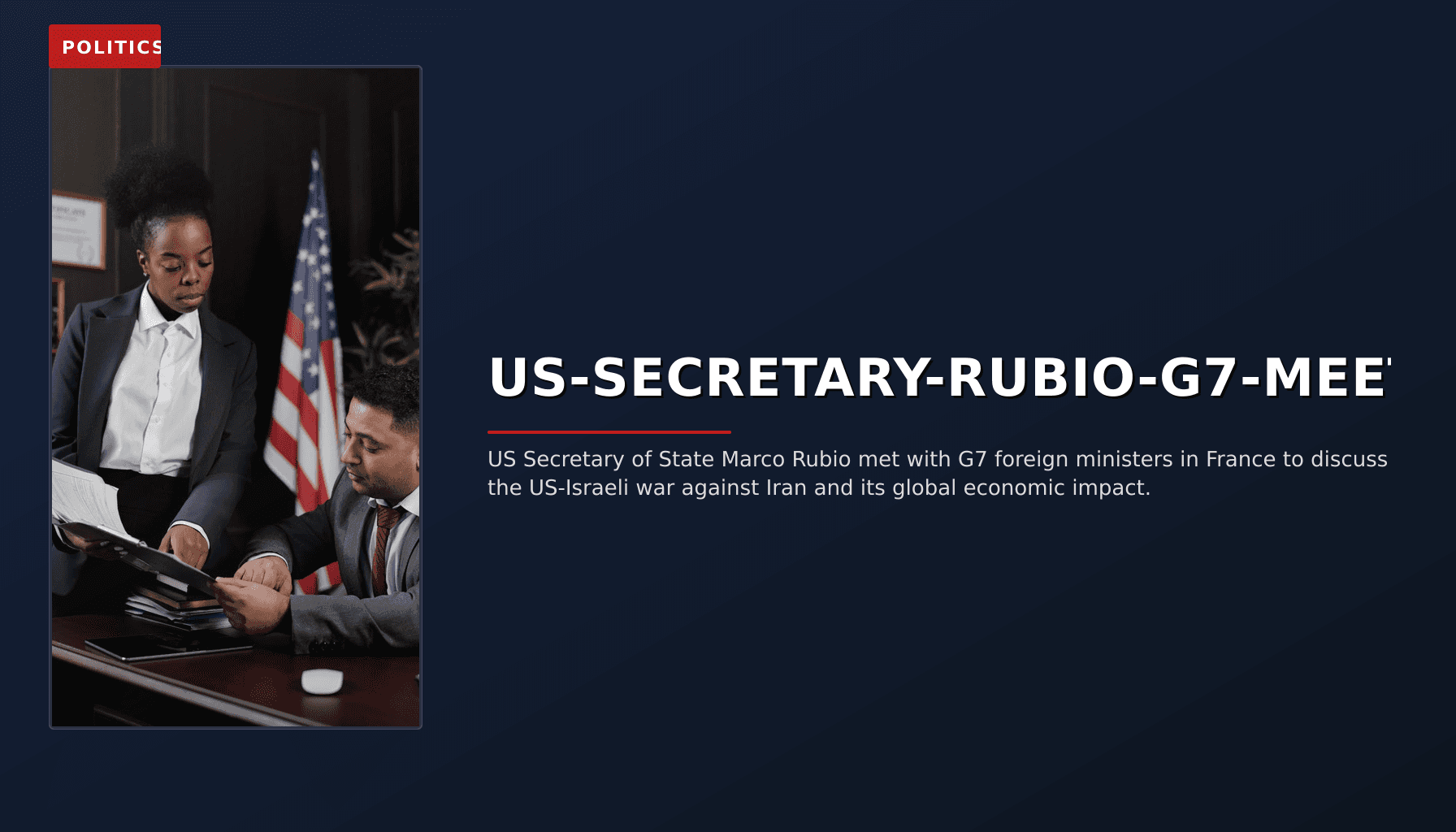
US-SECRETARY-RUBIO-G7-MEETING-Iran-WAR-ECONOMIC-IMPACT
G7 foreign ministers discuss US-Israeli conflict with Iran, focusing on the Strait of Hormuz blockade and its economic impact. Calls for international law adherence and swift resolution to stabilize the region.

G7 foreign ministers discuss US-Israeli conflict with Iran and its global economic repercussions, focusing on the Strait of Hormuz blockade.
The recent meeting between US Secretary of State Marco Rubio and G7 foreign ministers in France has drawn significant attention amid escalating tensions between the United States, Israel, and Iran. The discussions centered on the potential implications of a US-Israeli war against Iran, particularly regarding the Strait of Hormuz blockade imposed by Tehran, which has already sent shockwaves through global energy markets.
According to sources, Rubio emphasized the importance of G7 nations taking decisive action concerning the Strait of Hormuz situation, urging adherence to international law. This stance highlights the growing pressure on Western countries to respond cohesively to what is perceived as a direct threat to regional and global stability.
Yvette Cooper, the UK Foreign Secretary, stressed the urgency of resolving the conflict to restore stability in the region and reopen the strategic waterway, which accounts for approximately 20% of the world's oil and liquefied natural gas (LNG) shipments. Her comments underscored the economic stakes at play, with fears of a prolonged blockade potentially exacerbating already strained energy supplies.
German Foreign Minister Johann Wadephul echoed calls for a unified approach with the US to swiftly end the conflict. This alignment suggests a potential shift in European diplomacy towards a more assertive stance against Iran, despite lingering concerns about the broader implications of direct military involvement.
Ukrainian Foreign Minister Andrii Sybiha highlighted the importance of sustained US leadership in addressing the crisis, noting that both Russia and Iran are collaborating to extend conflicts beyond their immediate regions. This revelation adds a layer of complexity to the ongoing discussions, suggesting that the conflict may have far-reaching consequences beyond the Middle East.
Kaja Kallas, the EU's foreign policy chief, argued that while the US seeks to halt hostilities with Iran, it must also exert pressure on Russia to prevent further escalations. This dual-pronged approach reflects a recognition of the interconnected nature of global conflicts and the need for comprehensive strategies to address them.
In a revealing statement, UK Defense Secretary John Healey pointed out that Russia had provided Iran with intelligence and training on drone and electronic warfare tactics prior to the outbreak of hostilities. These allegations suggest a deeper involvement by Moscow in the conflict, potentially complicating efforts to achieve a swift resolution.
The discussions also touched upon the broader implications for international alliances, particularly NATO's role in addressing these emerging challenges. Observers note that President Donald Trump's criticism of NATO allies for not doing enough in the context of the Iran situation has added another layer of complexity to an already intricate geopolitical landscape.
As the G7 nations deliberate on their collective response, questions remain about the feasibility of enforcing a unified strategy given differing priorities and historical relationships with Iran. The potential economic fallout, including sustained oil price volatility and strained global supply chains, looms large over these discussions.
Moving forward, the focus will be on whether the G7 can translate their shared concerns into actionable measures that address both the immediate crisis and underlying factors contributing to regional instability. The outcome of these talks could shape the trajectory of the conflict and its impact on global energy markets for months to come.
More Stories
HORMUZ STRAIT CLOSED: GLOBAL OIL MARKETS DISRUPTED AND TRADE BLOCKED
27 March 2026 at 02:102 min read
Read More
OIL PRICES EXCEED $100 A BARREL: FIRST TIME IN FOUR YEARS
9 March 2026 at 00:472 min read
Read More
CRUCIAL GROOMING GANGS DOCUMENTS AT RISK OF BEING LOST: CONCERNS RAISED IN PARLIAMENT
27 March 2026 at 10:263 min read
Read More
Comments (0)
No comments yet. Be the first to share your thoughts!
Leave a Comment
Your email address will not be published. Comments are moderated before appearing.