
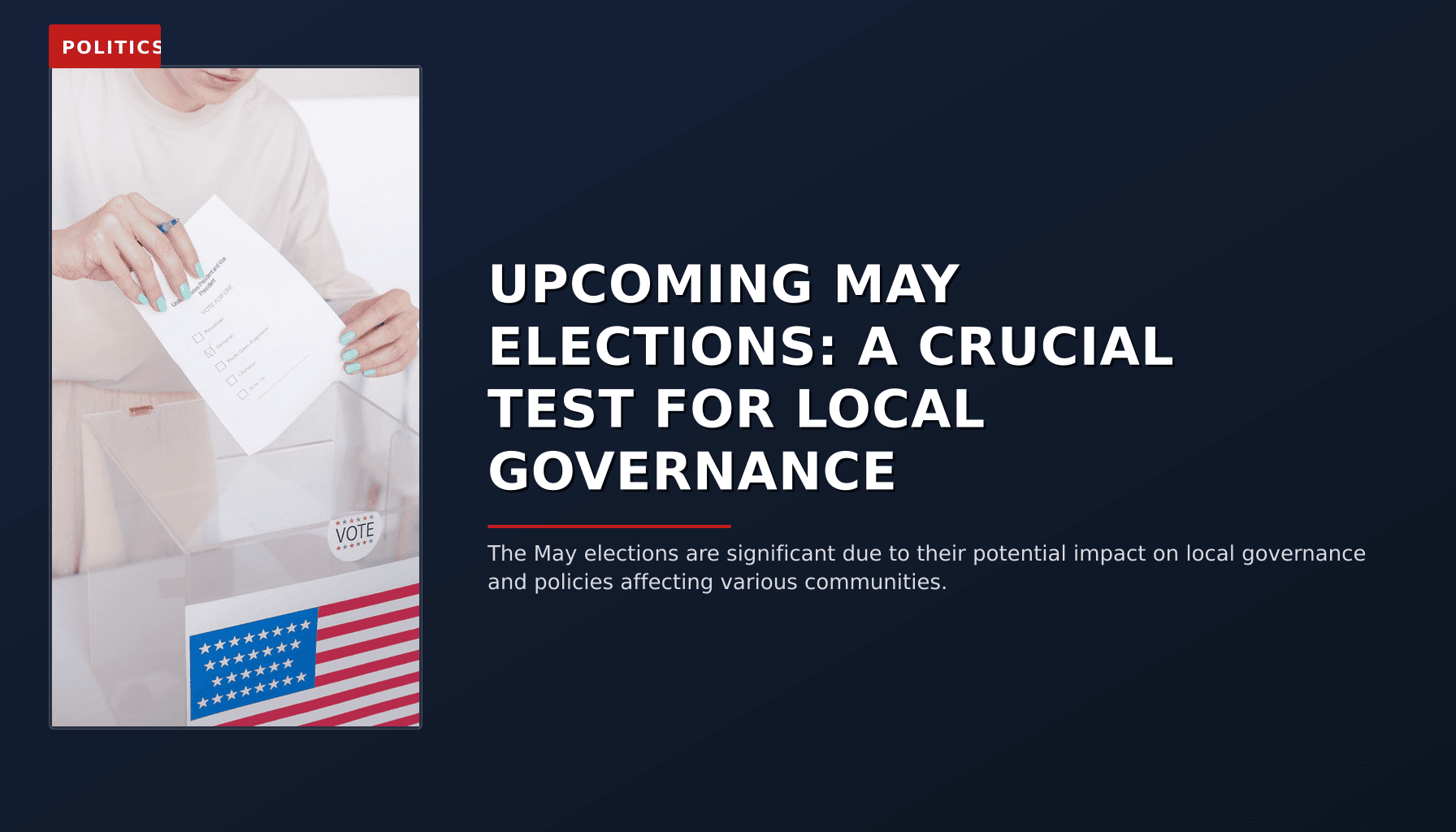
UPCOMING MAY ELECTIONS: A CRUCIAL TEST FOR LOCAL GOVERNANCE
The May elections are poised to reshape local governance in the UK, with significant implications for housing, transport, and community services.


The upcoming local elections present significant opportunities and challenges for communities across the UK.
As the clock ticks down to the May elections, voters across the UK are gearing up for what promises to be a pivotal moment in local governance. These elections will shape the direction of local councils, with candidates vying for positions that hold substantial influence over key public services such as housing and transport. Recent reports suggest that this election cycle could witness a notable increase in voter turnout, particularly among younger demographics, reflecting a growing engagement with local political processes.
According to sources, new legislation is set to empower local authorities further, granting them enhanced powers in critical areas including housing management and transportation planning. This shift marks a significant departure from previous arrangements, where such decisions were often made at a higher governmental level. The introduction of these measures has been met with mixed reactions—from optimism about greater community control to concerns over potential misuse of expanded powers.
The extension of voter registration deadlines is another notable development aimed at encouraging maximum participation. This move underscores the importance attached to these elections, as authorities strive to ensure that no eligible voter faces unnecessary barriers to casting their ballot. While this measure is designed to facilitate access, it has also raised questions about the integrity of the electoral process.
Amidst the backdrop of heightened political engagement, there have been reports of potential postal vote fraud, though no concrete evidence has yet emerged. These allegations have sparked debates about the security measures in place for different voting methods. Meanwhile, candidates and parties are reported to be adopting varying approaches—some emphasizing collaboration, while others are increasingly polarized in their rhetoric and strategies.
Read more: KEIR STARMER DEFENDS POLICIES: CLAIMS BENEFIT WORKERS, CHILDREN BUT PENSIONERS' FATE UNCLEAR
As these elections unfold, they will not only determine the composition of local councils but also set the tone for future policy directions. The outcomes could have far-reaching implications for housing policies, transport networks, and other services that directly affect residents' daily lives. With a focus on improving infrastructure and service delivery, the stakes are high for communities hoping to see tangible progress in these areas.
Looking ahead, the results of these elections will be closely monitored by stakeholders at all levels—from national policymakers to local activists. The hope is that this increased scrutiny will lead to more transparent and accountable governance, ensuring that local authorities use their newfound powers effectively and Responsively.

More Stories
KEIR STARMER DEFENDS POLICIES: CLAIMS BENEFIT WORKERS, CHILDREN BUT PENSIONERS' FATE UNCLEAR
5 April 2026 at 19:371 min read
Read More
NHS DOCTORS PREPARE FOR SIX-DAY STRIKE: CRUCIAL ADVICE FOR PATIENTS
6 April 2026 at 00:243 min read
Read More
JEREMY CORBYN SPEAKS AT LONDON RALLY: DEFENDING WORKERS' RIGHTS
5 April 2026 at 20:072 min read
Read More
Comments (0)
No comments yet. Be the first to share your thoughts!
Leave a Comment
Your email address will not be published. Comments are moderated before appearing.