
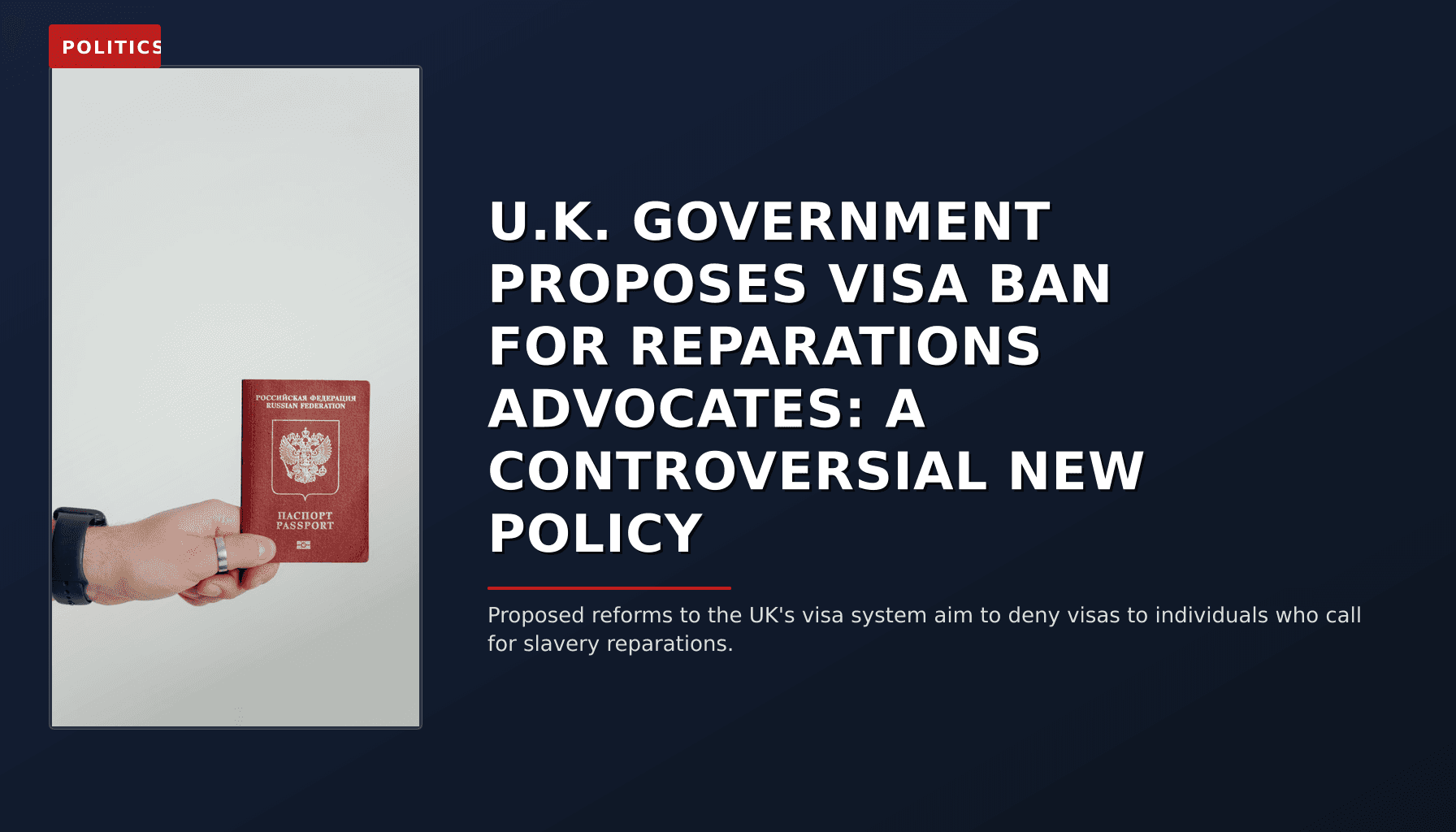
U.K. GOVERNMENT PROPOSES VISA BAN FOR REPARATIONS ADVOCATES: A CONTROVERSIAL NEW POLICY
The UK government is considering denying visas to individuals advocating for slavery reparations, sparking controversy and debate.


The U.K. government is considering denying visas to individuals advocating for slavery reparations.
According to recent reports, the UK government is reviewing its visa policies with a controversial focus on those who advocate for slavery reparations. This proposed reform has sparked widespread debate and concern among human rights groups and legal experts. The move comes as part of broader efforts to tighten immigration controls, but it raises questions about free speech and the right to seek asylum.
The government's consideration involves amending existing visa regulations to potentially block entry for individuals who call for reparations, a policy that could set a significant precedent in international law. This decision is reportedly under review following internal discussions and legal assessments. Critics argue that such measures risk stifling legitimate advocacy for historical injustices and may conflict with international human rights standards.
Supporters of the reforms claim it's necessary to protect national interests and prevent what they describe as 'divisive' calls for reparations that could strain public finances. However, opponents highlight the moral implications, emphasizing that slavery reparations are a matter of justice rather than economic burden. This stance echoes arguments from global human rights organizations.
Historically, the UK has been involved in transatlantic slavery, and many African countries have long advocated for reparations. The issue gained renewed attention during recent commemorations of the abolition of the slave trade. Advocates argue that reparations are not just about financial compensation but also about acknowledging historical wrongs and fostering reconciliation.
Read more: DOCTORS FACING NEW TRAINING HALT: CONCERNS OVER ENGLAND'S HEALTHCARE FUTURE
The proposed visa restrictions have drawn comparisons to past attempts to suppress political dissent. Legal experts warn that such measures could be challenged in court, given potential conflicts with international human rights laws. They stress the importance of balancing national security concerns with the protection of fundamental freedoms.
Public reaction has been mixed, with some supporting the move as a means to prevent 'outsider' interference in domestic matters, while others express outrage at what they perceive as an attack on free speech and historical accountability. MPs have also divided along party lines, with debates in parliament expected to be heated and contentious.
As the policy review continues, activists are planning campaigns to raise awareness and challenge the proposed restrictions. They argue that denying visas based on political or ideological grounds sets a dangerous precedent, potentially silencing voices advocating for justice worldwide. Legal challenges are also being prepared by human rights groups, who believe such policies are unconstitutional and violate international law.
The UK government has yet to release an official statement confirming the proposed changes. However, sources within the Home Office indicate that discussions are ongoing, with a final decision expected in the coming months. Advocacy groups remain vigilant, preparing to respond swiftly if the reforms are enacted.
Read more: MINIMUM WAGE HIKES APPROVED: UNDERSTANDING THE CHANGES FOR YOUNG WORKERS
In a broader context, this policy could influence other nations' approaches to immigration and political advocacy. The international community is closely watching the developments, with some expressing concern over the potential erosion of global norms on free expression and historical accountability. The outcome may set a precedent for how countries handle similar reparations-related migration issues in the future.

More Stories
DOCTORS FACING NEW TRAINING HALT: CONCERNS OVER ENGLAND'S HEALTHCARE FUTURE
7 April 2026 at 13:011 min read
Read More
MINIMUM WAGE HIKES APPROVED: UNDERSTANDING THE CHANGES FOR YOUNG WORKERS
7 April 2026 at 11:322 min read
Read More
DANCE ARTIST ABUSED OVER POLITICAL PIECE: SHOWING THE RISE OF ANTIMICRO POLITICS
7 April 2026 at 09:402 min read
Read More
Comments (0)
No comments yet. Be the first to share your thoughts!
Leave a Comment
Your email address will not be published. Comments are moderated before appearing.