
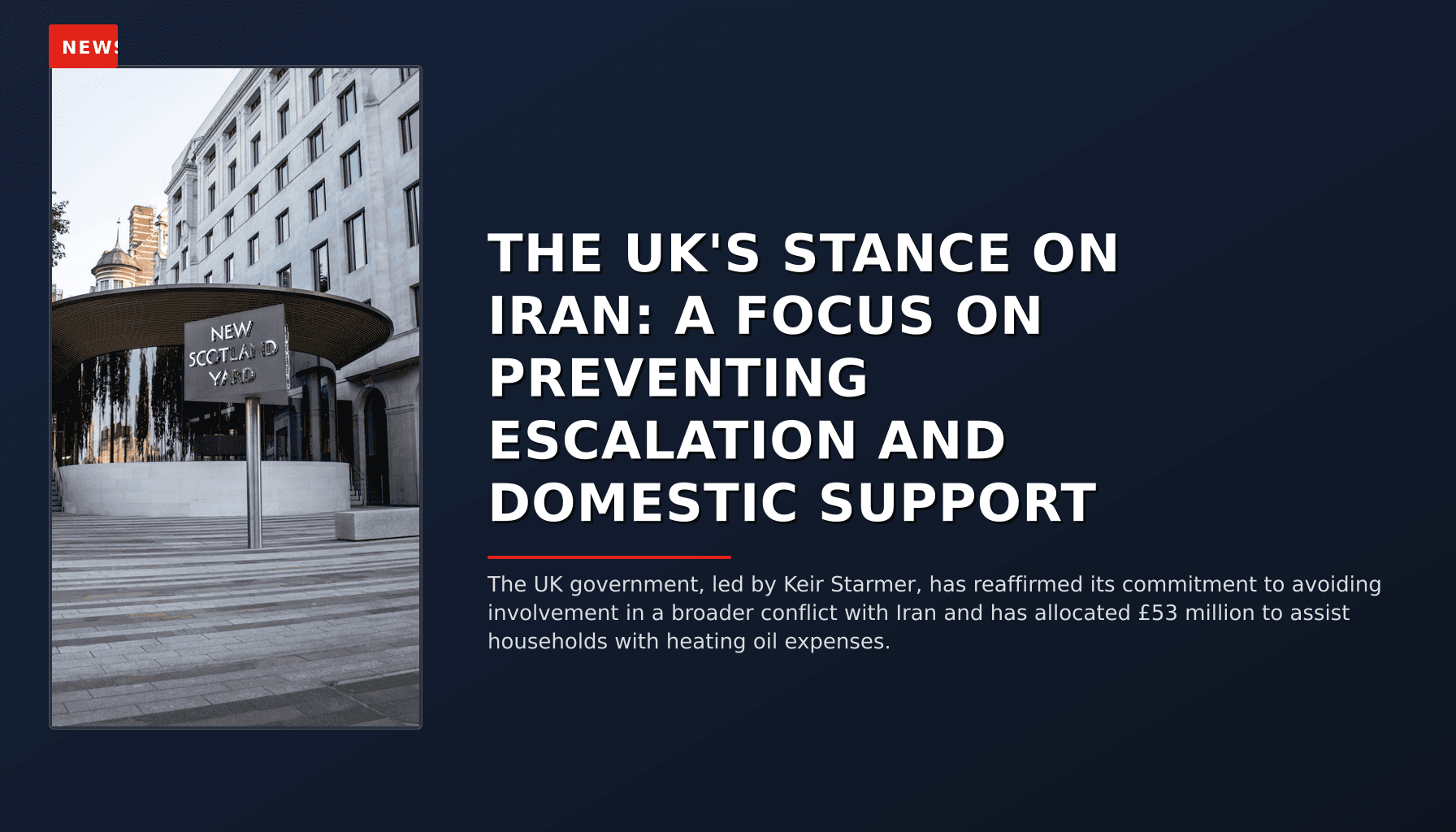
THE UK'S STANCE ON IRAN: A FOCUS ON PREVENTING ESCALATION AND DOMESTIC SUPPORT
The UK government reaffirms its commitment to avoiding a broader conflict with Iran while allocating £53 million to assist households with heating oil expenses.

The UK government reaffirms its commitment to avoiding a broader conflict with Iran and allocates £53 million to assist households with heating oil expenses.
In a significant move to maintain stability both internationally and domestically, the UK government has reiterated its stance on avoiding entanglement in a larger conflict involving Iran. Led by Prime Minister Keir Starmer, the government's policy is geared towards preventing any escalation that could draw the nation into a broader military confrontation. This decision comes amidst heightened tensions between Iran and other global powers, reflecting the UK's commitment to diplomacy over aggression.
The government has also announced a substantial financial package aimed at alleviating domestic pressures. A £53 million fund has been designated to support households facing rising heating oil costs. This initiative is part of broader efforts to address the economic challenges posed by inflation and energy price hikes, which have placed significant strain on UK citizens this winter.
According to sources including Politico and BBC, the UK's foreign policy approach is rooted in cautious diplomacy, aiming to de-escalate tensions rather than exacerbating them. This aligns with historical precedents where the UK has sought to mediate conflicts rather than take confrontational stances, particularly in regions like the Middle East.
The allocation of £53 million underscores the government's recognition of the urgent need for domestic support. With winter approaching, ensuring access to affordable heating is crucial for vulnerable populations. This financial aid reflects a shift in policy focus towards addressing immediate societal needs amidst economic uncertainty.
Keir Starmer's leadership has been marked by a balance between international diplomacy and domestic welfare. By steering clear of potential military conflicts and investing in community support, the government aims to maintain both national security and public trust. This strategy is viewed as a pragmatic response to complex global and domestic challenges.
The decision not to engage in broader conflicts with Iran has been met with cautious approval from international observers. Experts suggest that such a stance reduces the risk of regional instability spilling over into UK territories or affecting its economic interests. However, some critics argue that it may limit the UK's influence on the global stage regarding Middle Eastern affairs.
Looking ahead, the government's commitment to diplomacy will be tested by ongoing developments in Iran and other regions. The success of this approach will depend on maintaining open channels of communication and demonstrating a consistent resolve to avoid escalation. Domestically, the effectiveness of the £53 million heating oil assistance will be closely monitored as winter progresses.
In summary, the UK's reaffirmed commitment to peace in its relations with Iran and its proactive approach to domestic economic challenges highlight a balanced foreign and domestic policy strategy. As global tensions continue to evolve, the UK's stance remains one of caution and community support.
More Stories
WARWICKSHIRE LEADER DEFIES DOUBTS: GEORGE FINCH'S FIGHT FOR SURVIVAL
16 March 2026 at 09:562 min read
Read More
UNCONVENTIONAL INFLATION BONDS: ONS INCLUDES ALCOHOL-FREE BEER AND PET GROOMING
16 March 2026 at 09:462 min read
Read More
LABOUR CALLS FOR TAX INVESTIGATION INTO REFORM'S TICE: OPPOSITION CRITICIZES TAXAID CHIEF
16 March 2026 at 08:112 min read
Read More
Comments (0)
No comments yet. Be the first to share your thoughts!
Leave a Comment
Your email address will not be published. Comments are moderated before appearing.