
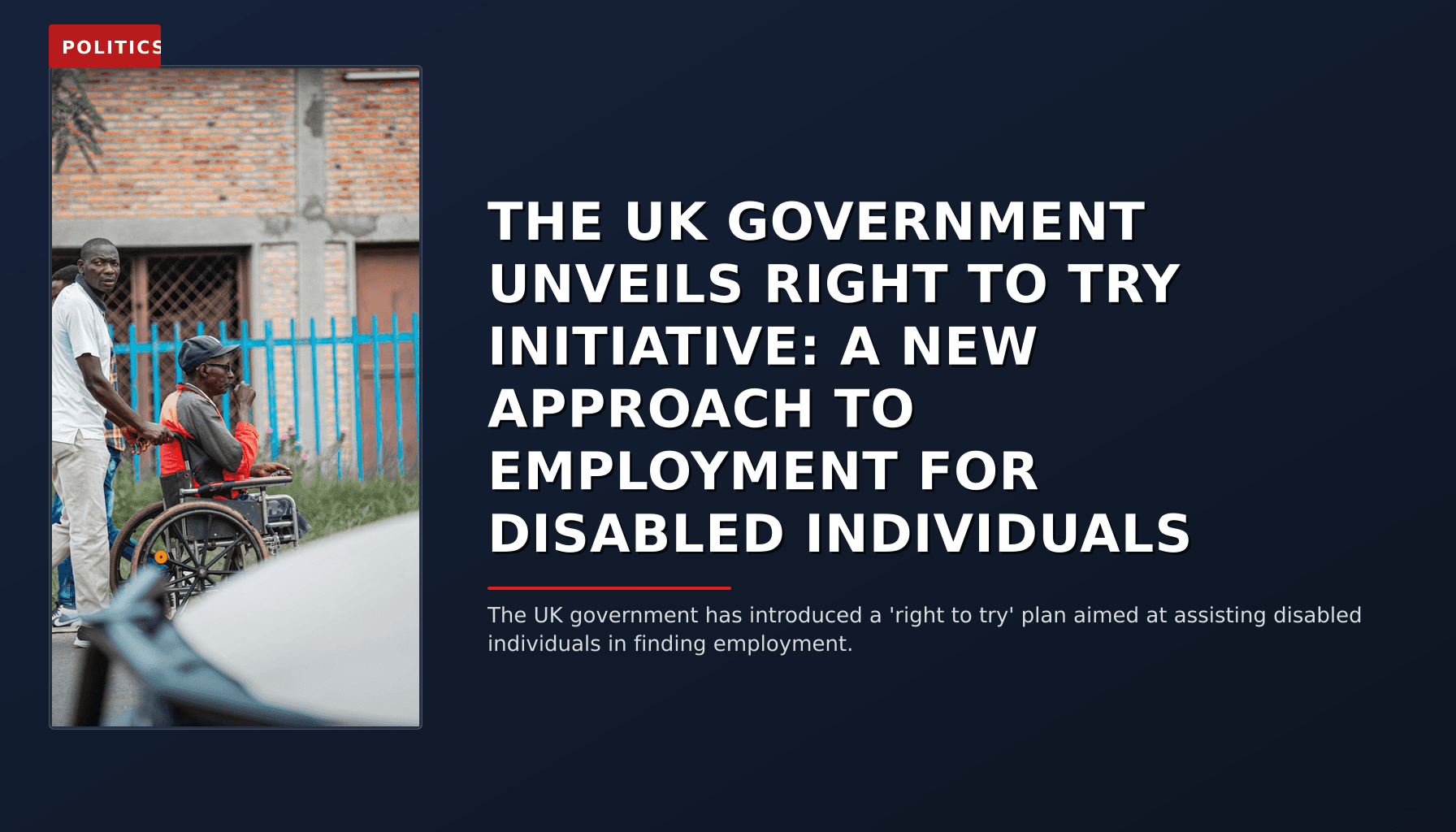
THE UK GOVERNMENT UNVEILS RIGHT TO TRY INITIATIVE: A NEW APPROACH TO EMPLOYMENT FOR DISABLED INDIVIDUALS
The UK government has introduced a 'right to try' initiative aimed at helping disabled individuals secure employment through trial periods without prior work experience requirements.


The UK government has introduced a new 'right to try' plan aimed at helping disabled individuals secure employment by allowing them to request trial periods in positions they are qualified for, irrespective of prior work experience or gaps in their resumes.
In a significant move to tackle unemployment among disabled individuals, the UK government has unveiled a pioneering 'right to try' initiative. This new policy allows jobseekers with disabilities to apply for trial periods in roles they qualify for, without being hindered by previous work experience or gaps in their resumes. The initiative is part of broader efforts to promote inclusivity and reduce barriers to employment faced by disabled people.
Under the scheme, employers will be legally required to make reasonable adjustments to accommodate disabled employees during these trial periods. These adjustments could include modifying workstations, providing necessary tools, or altering schedules to meet individual needs. Sources confirm that this requirement is designed to ensure that disabled individuals have equal opportunities in the workplace.
The move has been met with mixed reactions from various quarters. While some disability advocates applaud the initiative as a step towards greater inclusivity, others raise concerns about its potential implementation and enforcement. There are reports suggesting that the timeline for rolling out the plan remains unclear, which could hinder its effectiveness.
According to government ministers, the 'right to try' plan is part of a larger strategy to increase employment opportunities for disabled individuals. They argue that by allowing trial periods without the pressure of prior work history, more people with disabilities can explore suitable career paths and showcase their skills to employers.
Read more: Kemi badenach attacks PM: Scathing criticism over Iran war response
However, questions remain about how compliance will be monitored and enforced. Some sources indicate that there are no immediate penalties for employers who fail to comply with the new regulations. This lack of clarity has sparked debates among legal experts and disability rights groups about the practicality of the scheme.
The initiative also faces challenges in terms of public perception and implementation. Disability advocates emphasize the importance of raising awareness about the 'right to try' plan among both jobseekers and employers. They stress that without proper education and support, the policy may not achieve its intended impact.
Looking ahead, it is crucial for the government to provide clear guidelines and a timeline for implementing this new legislation. Additionally, establishing mechanisms for monitoring compliance and addressing any issues that arise will be essential to the success of the 'right to try' plan.
In conclusion, the UK government's introduction of the 'right to try' initiative marks an important step toward promoting employment equality for disabled individuals. While there are challenges in implementation and enforcement, the policy represents a forward-thinking approach to addressing the barriers that disabled people face in the job market.
Read more: Unprecedented £40bn planned for parliament refurbishment: Public scrutiny intensifies

More Stories

Kemi badenach attacks PM: Scathing criticism over Iran war response
7 March 2026 at 14:153 min read
Read More
Unprecedented £40bn planned for parliament refurbishment: Public scrutiny intensifies
6 March 2026 at 22:143 min read
Read More
Conservative peer resigns over PPE deal investigation: Scrutiny intensifies
6 March 2026 at 20:363 min read
Read More
Comments (0)
No comments yet. Be the first to share your thoughts!
Leave a Comment
Your email address will not be published. Comments are moderated before appearing.