
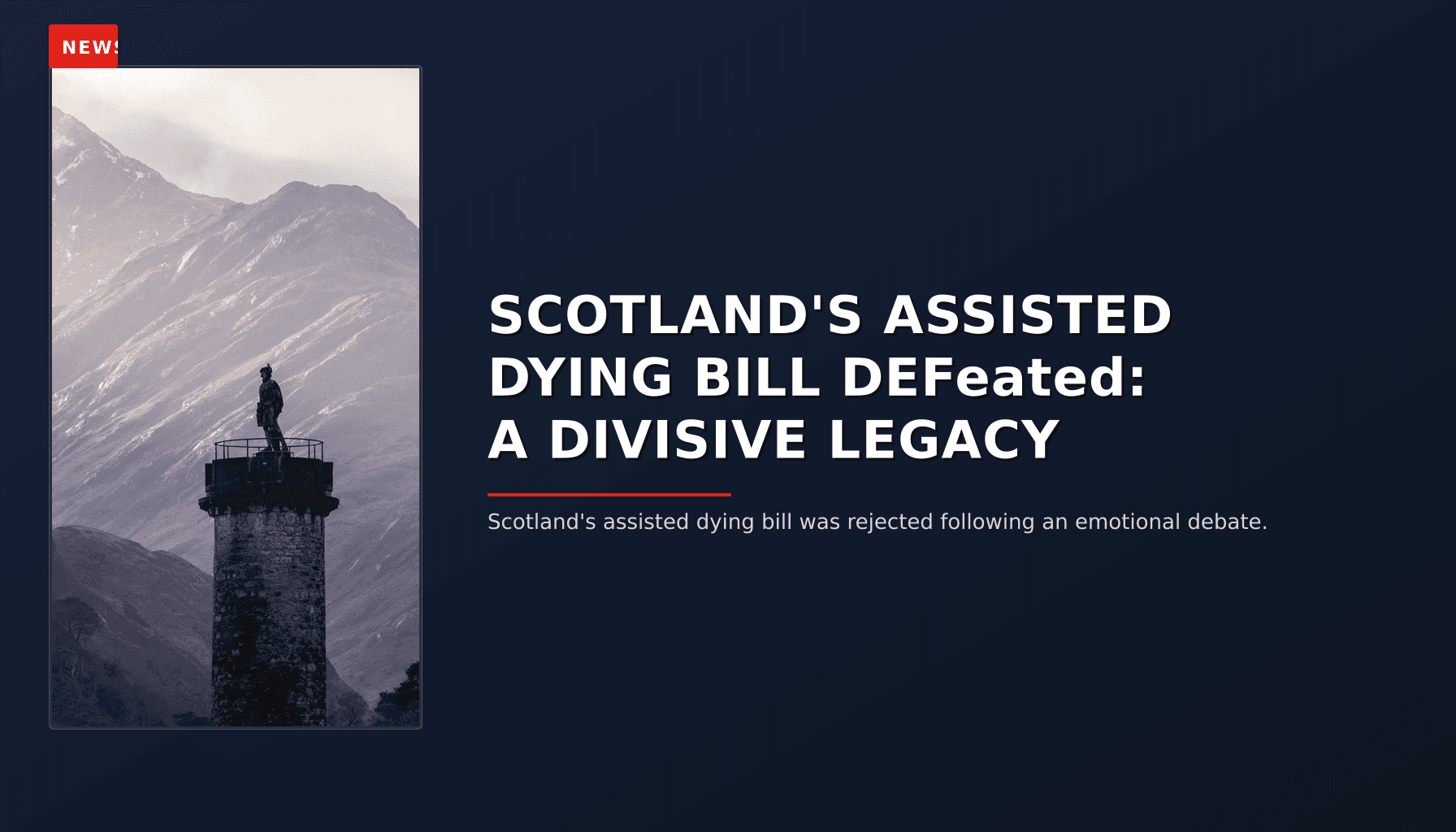
SCOTLAND'S ASSISTED DYING BILL DEFeated: A DIVISIVE LEGACY
The Scottish Parliament has rejected the Assisted Dying Bill following an emotional debate, with a final vote of 63 to 50 against it. The decision has sparked widespread discussion on end-of-life rights and ethical implications.

The Scottish Parliament has voted against the Assisted Dying Bill, marking a significant moment in the debate over end-of-life choices.
The Scottish Parliament has rejected the Assisted Dying Bill after a heated and emotional debate, according to reports from BBC Scotland and The Guardian. The bill was defeated by 63 votes to 50 in the final vote. This decision comes after years of passionate discussions on both sides of the issue.
Supporters of the bill argued that it would provide terminally ill patients with a compassionate option to end their suffering, while opponents expressed concerns about the potential for misuse and the ethical implications of assisted dying. The debate highlighted deep divisions within Scottish society over this sensitive topic.
The Assisted Dying Bill faced significant opposition from various quarters, including religious groups and medical professionals who believe that ending someone's life goes against moral and professional standards. Campaigners on both sides had been actively engaging in public discussions to sway the outcome of the vote.
During the emotional debate, members of the Scottish Parliament shared personal stories and heartfelt appeals, reflecting the profound impact this issue has on individuals and families. The final tally showed a clear majority against the bill, with 63 votes cast against it compared to 50 in favor.
The rejection of the Assisted Dying Bill is a significant milestone in Scotland's ongoing conversation about end-of-life rights. Opponents have celebrated the decision as a victory for ethical principles and the protection of vulnerable individuals, while supporters remain disappointed, arguing that the bill could have provided much-needed relief to those facing terminal illnesses.
The vote has sparked widespread debate across the country, with many questioning whether the outcome reflects the will of the people or the influence of powerful lobbying groups. As Scotland continues to grapple with this contentious issue, the focus now shifts to potential future attempts to reintroduce similar legislation.
More Stories

OIL PRICES EXCEED $100 A BARREL: FIRST TIME IN FOUR YEARS
9 March 2026 at 00:472 min read
Read More
DEATH OUTSIDE GLASGOW'S FIRST DRUG FACILITY: INVESTIGATION ONGOING
8 March 2026 at 14:342 min read
Read More
THREE WOMEN INTERVIEWED UNDER CAUTION IN MOHAMMAD AL FAYED INVESTIGATION: DEVELOPING UPDATE FROM LONDON POLICE
6 March 2026 at 16:432 min read
Read More
Comments (0)
No comments yet. Be the first to share your thoughts!
Leave a Comment
Your email address will not be published. Comments are moderated before appearing.