
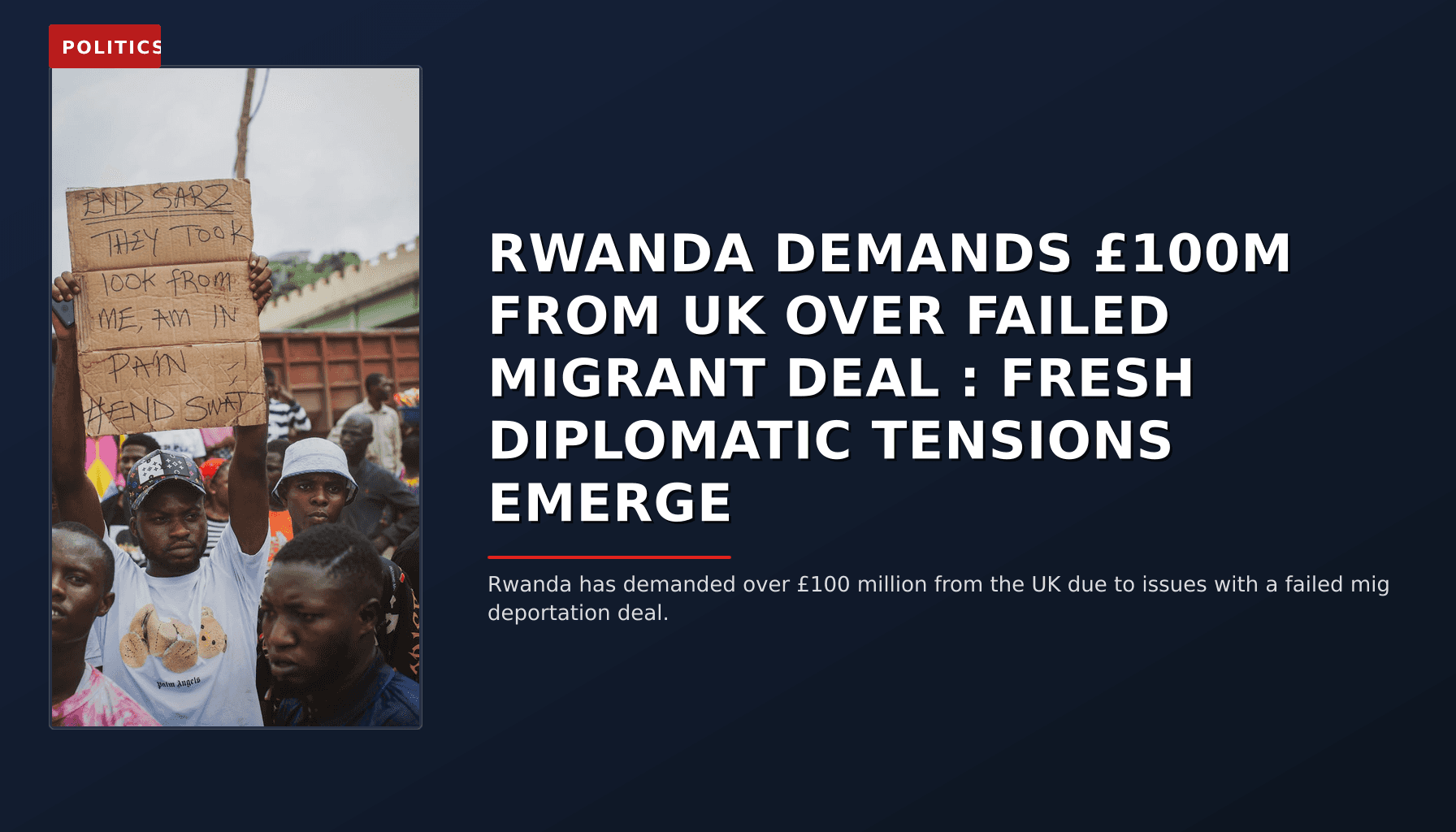
RWANDA DEMANDS £100M FROM UK OVER FAILED MIGRANT DEAL : FRESH DIPLOMATIC TENSIONS EMERGE
Rwanda demands over £100 million from the UK following a failed migrant deportation deal, sparking diplomatic tensions.

Rwanda is seeking compensation from the UK for a failed migrant deportation agreement, escalating diplomatic tensions.
The Government of Rwanda has formally demanded over £100 million in compensation from the United Kingdom following the collapse of an agreement to deport migrants. This move has raised eyebrows in international relations circles and sparked fresh diplomatic tensions between the two nations. According to reports from major news outlets, including the BBC, the Rwandan government claims that the UK failed to honour the terms of a migrant relocation deal signed earlier this year.
The agreement in question was intended to facilitate the transfer of asylum seekers from the UK to Rwanda. However, it faced significant legal and political challenges almost immediately after being announced. Critics argued that the deal violated international human rights standards and could set a dangerous precedent for forced migration policies. Despite these concerns, both governments proceeded with the arrangement under the condition that it would be implemented within a specific timeframe.
Rwanda now argues that the UK's failure to meet its obligations has caused significant financial and reputational damage. In a statement attributed to Rwandan officials, the country expressed its intention to seek 'full compensation' for what it describes as a broken promise. The exact figure of £100 million is said to represent the estimated costs incurred by Rwanda in preparing infrastructure and personnel for the influx of deportees that never materialised.
This development comes at a sensitive time for UK-Rwanda relations, which have been strained over various issues in recent years. Observers note that this compensation claim could escalate tensions further, particularly if the UK chooses to contest the demand or if it leads to retaliatory measures. Meanwhile, the UK government has yet to respond officially to Rwanda's allegations, but sources suggest that internal discussions are already underway to assess the legal and financial implications.
The failed migrant deal was part of a broader strategy by the UK to deter illegal migration through controversial outsourcing agreements. Similar arrangements have been proposed or implemented with other countries, including Malta and Saint Lucia, but this is the first instance where such a partnership has resulted in a direct financial claim against the UK. Advocacy groups have long warned that these kinds of deals undermine human rights protections and divert attention from addressing the root causes of migration.
In response to Rwanda's demand, legal experts are weighing in on whether the UK is obligated to compensate under international law. Some argue that the terms of the agreement may indeed create a contractual obligation, while others question the enforceability of such deals between sovereign nations. Regardless of the outcome, this case sets a precedent for future diplomatic and migration-related agreements.
Public opinion in both countries appears divided on the issue. In the UK, some see the deal as a necessary step to control borders, while critics argue that it prioritises politics over humanity. Meanwhile, in Rwanda, there is a sense of frustration at what they perceive as broken promises by their international partners. This sentiment could have broader implications for bilateral cooperation in areas such as trade and development assistance.
As the situation evolves, both governments are likely to consider the potential impact on their respective domestic agendas and international reputations. For the UK, managing this外交危机 (diplomatic crisis) will require careful diplomacy to avoid further alienating Rwanda and other key partners. For Rwanda, securing compensation without appearing overly aggressive will be a delicate balancing act.
In the coming weeks, stakeholders on both sides will need to navigate this complex legal and political landscape. The outcome of their negotiations could set an important precedent for how nations handle failed migration agreements in the future. Regardless of the financial resolution, the episode underscores the challenges inherent in crafting effective and ethical immigration policies.
More Stories
KEMI BADENACH ATTACKS PM: SCATHING CRITICISM OVER IRAN WAR RESPONSE
7 March 2026 at 14:153 min read
Read More
UNPRECEDENTED £40bn PLANNED FOR PARLIAMENT REFURBISHMENT: PUBLIC SCRUTINY INTENSIFIES
6 March 2026 at 22:143 min read
Read More
CONSERVATIVE PEER RESIGNS OVER PPE DEAL INVESTIGATION: SCRUTINY INTENSIFIES
6 March 2026 at 20:363 min read
Read More
Comments (0)
No comments yet. Be the first to share your thoughts!
Leave a Comment
Your email address will not be published. Comments are moderated before appearing.