
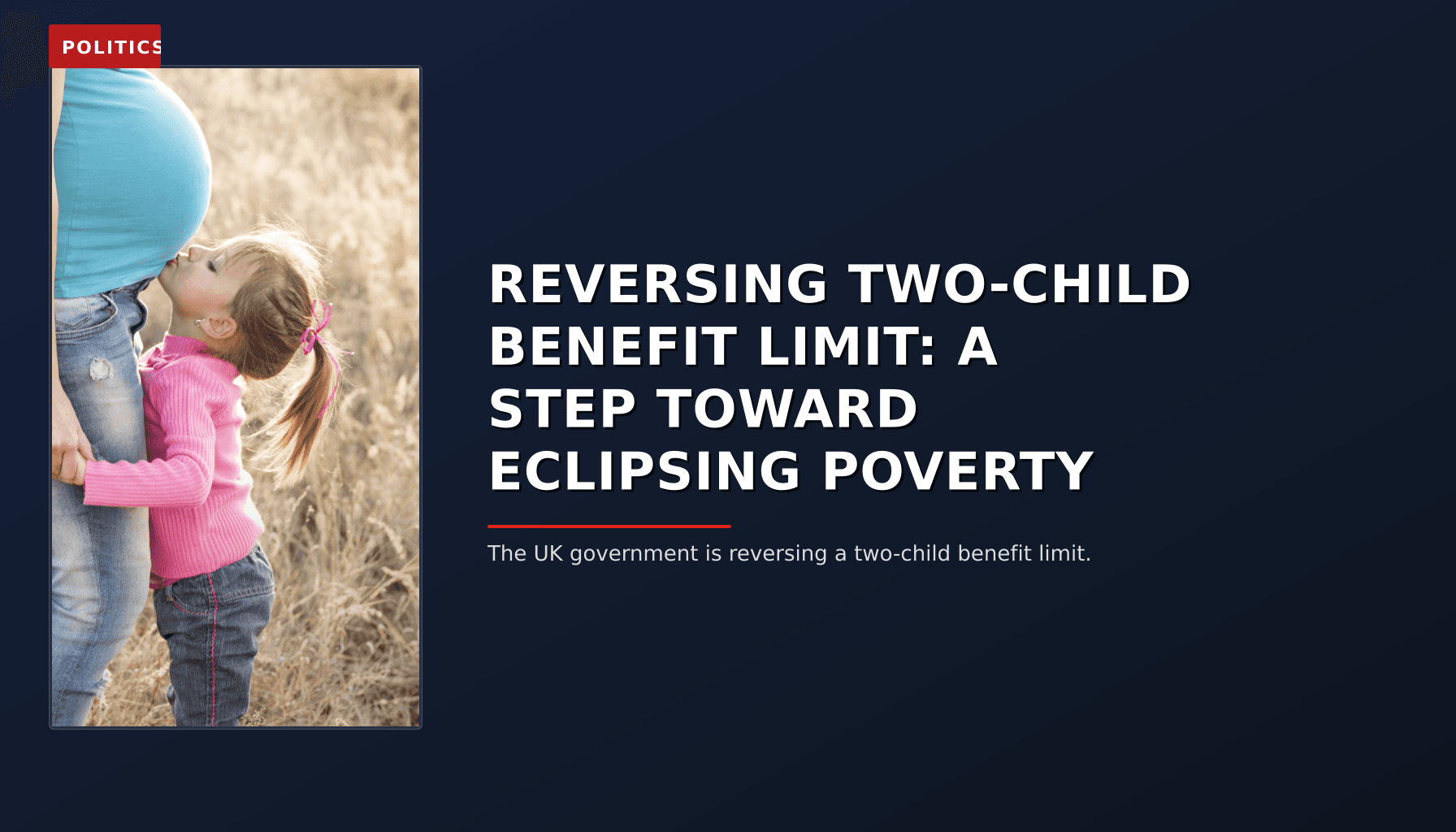
REVERSING TWO-CHILD BENEFIT LIMIT: A STEP TOWARD ECLIPSING POVERTY
The UK government scraps the two-child benefit cap, enhancing support for larger families and aiming to reduce child poverty.


The UK government scraps the two-child benefit cap, promising enhanced support for larger families.
In a significant policy shift, the UK government has announced its decision to reverse the two-child benefit limit. This move aims to provide increased financial assistance to families with more than two children, addressing what many have perceived as an unfair constraint on welfare support. The change reflects broader efforts by the government to alleviate economic pressures on larger households and to encourage a more inclusive society.
The reversal of the two-child benefit cap was first introduced under former Chancellor George Osborne in 2017, capping benefits for the third child onwards at £20 per week. Critics argued that this policy disproportionately affected low-income families, limiting their ability to meet basic needs. The government's U-turn comes after extensive reviews and consultations highlighting the financial strain faced by larger families under the previous cap.
According to a recent article in 'The Guardian,' this policy change has garnered positive support from various quarters, with many viewing it as a step towards reducing child poverty. ['The Guardian' view is positive towards this policy change.] The editorial suggests that lifting the benefit cap could significantly ease financial burdens on families and contribute to long-term economic stability.
Experts predict that the removal of the two-child limit will have far-reaching implications for social welfare in the UK. Economists estimate that hundreds of thousands of families could stand to benefit from increased support, potentially reducing child poverty rates and enhancing overall household well-being. This decision aligns with recent trends in policy-making aimed at addressing income inequality and supporting vulnerable groups.
Read more: UK WARNS OF IRAN CONFLICT RISKS: STRAMER URGES RESILIENCE AND EUROPEAN ALLIANCE STRENGTHENING
Public reaction has been mixed, with some praising the government for acknowledging the challenges faced by larger families and others questioning the timing and extent of the benefits. Advocacy groups have welcomed the move, arguing that it is a necessary step towards creating a more equitable society. However, critics remain cautious, pointing out that the implementation details will be crucial in determining the policy's effectiveness.
As the government rolls out this new initiative, questions arise about how the benefits will be administered and whether the additional funding required to support these changes is secured. The Department for Work and Pensions has assured that measures are in place to ensure a smooth transition and to maximize the positive impact on affected families. This policy shift underscores the ongoing debate about the role of government in addressing income inequality and supporting family structures.

More Stories
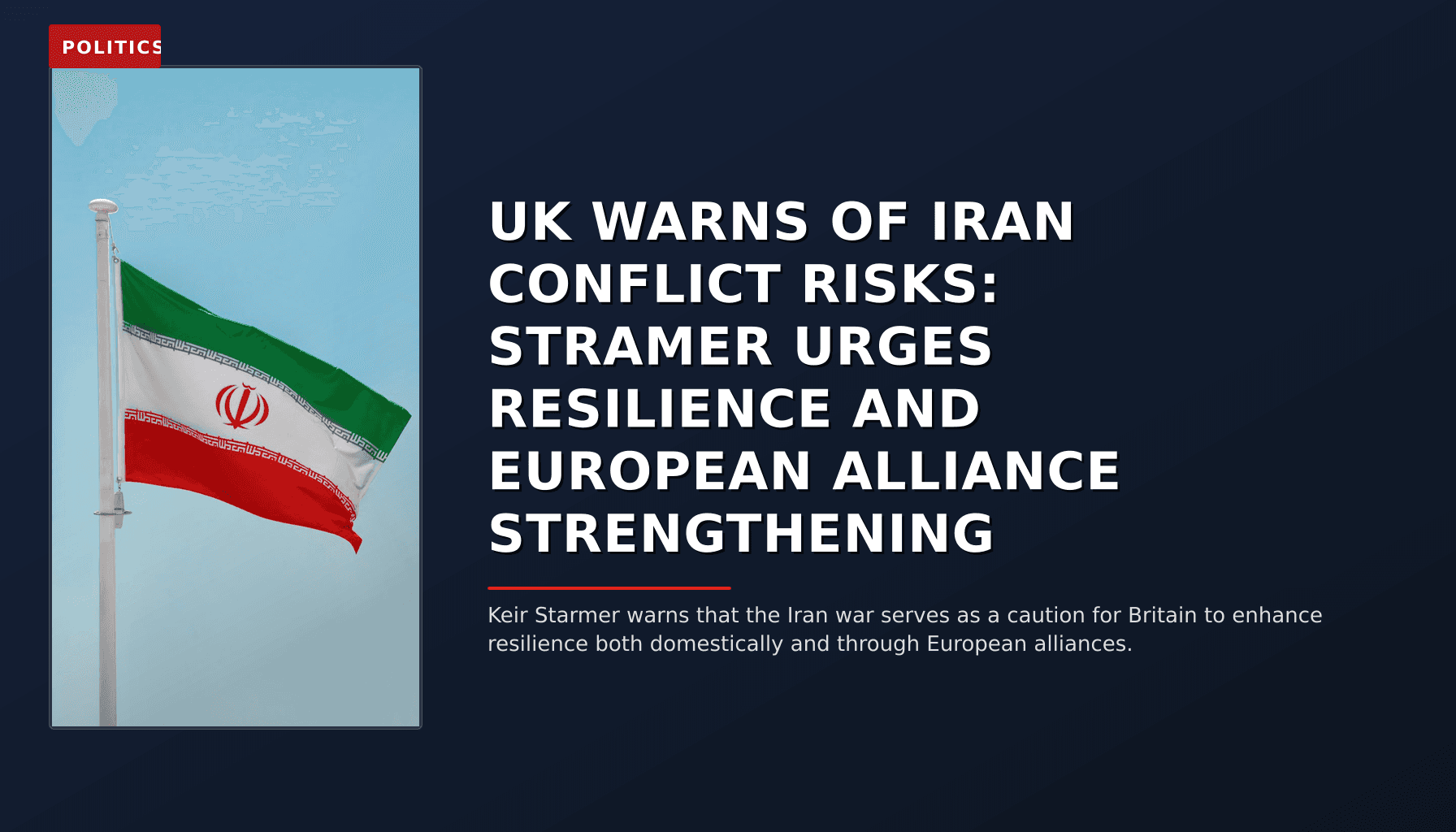
UK WARNS OF IRAN CONFLICT RISKS: STRAMER URGES RESILIENCE AND EUROPEAN ALLIANCE STRENGTHENING
9 April 2026 at 19:472 min read
Read More
KEIR STARMER CRITICIZES ISRAEL'S LEBANON ACTIONS: A CONTROVERSIAL STANCE IN THE UK
9 April 2026 at 18:562 min read
Read More
UK FOREIGN AID SPENDING DROPS TO EIGHTH LOWEST SINCE 2008: CRITICAL FUNDING CUTS IN INTERNATIONAL DEVELOPMENT
9 April 2026 at 17:512 min read
Read More
Comments (0)
No comments yet. Be the first to share your thoughts!
Leave a Comment
Your email address will not be published. Comments are moderated before appearing.