
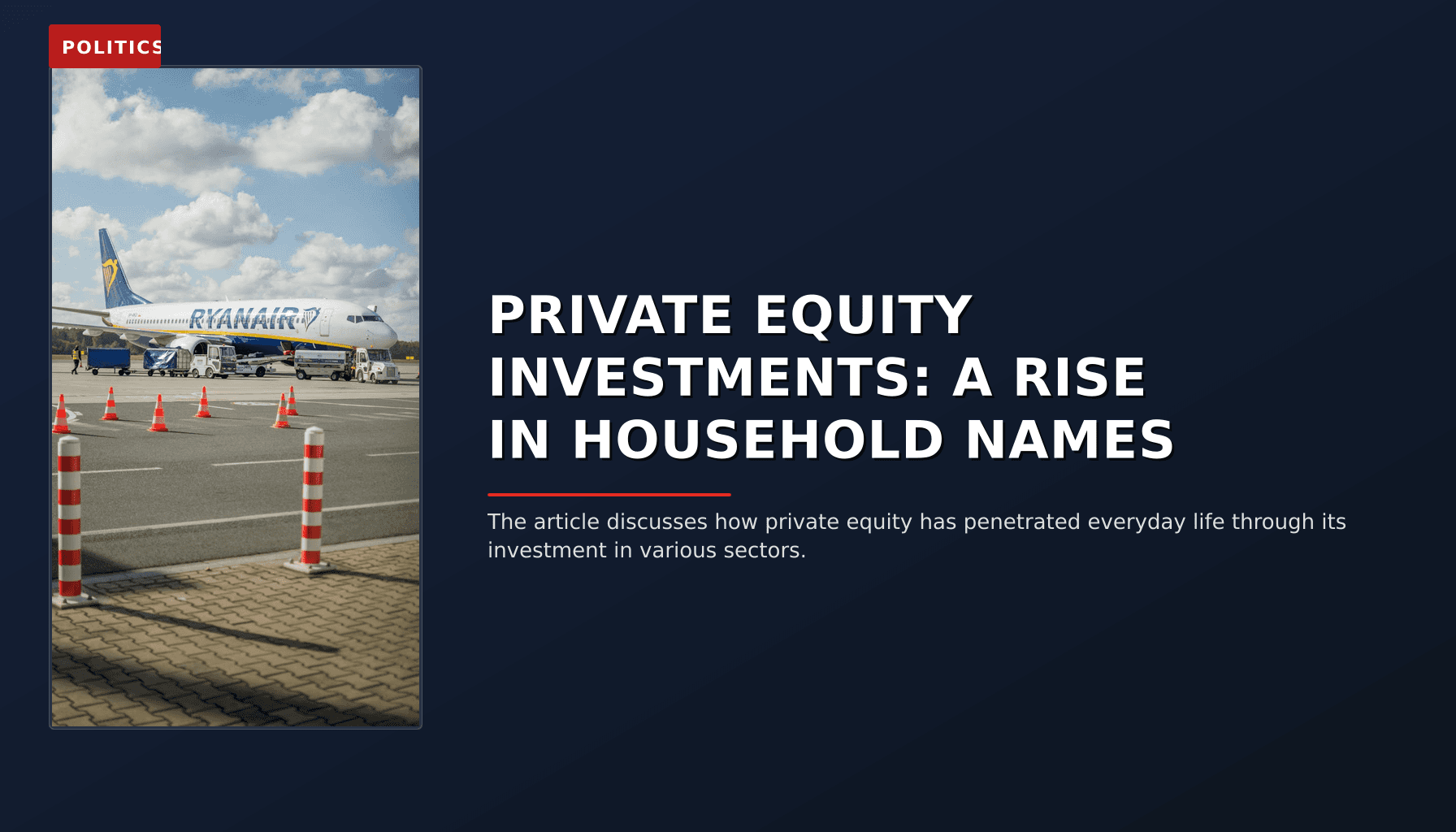
PRIVATE EQUITY INVESTMENTS: A RISE IN HOUSEHOLD NAMES
The rise of private equity investments in major UK companies like Ryanair and Sainsbury's has sparked debates over their ethical implications and financial impacts on consumers.


Private equity's infiltration into major companies raises ethical concerns and financial questions.
The rise of private equity investments in some of the UK's most recognisable companies has sparked a heated debate over their impact on everyday life. From budgeting for groceries to planning flights, private equity firms have become influential players behind the scenes, holding stakes in major brands such as Ryanair and Sainsbury's. This shift has transformed not only business operations but also consumer experiences across various sectors.
Private equity firms, known for their strategic investments, have targeted established companies with significant market shares. According to financial analysts, these investments are driven by the potential for substantial returns, often achieved through cost-cutting measures and operational changes. While figures show that private equity involvement has led to increased profits for shareholders, critics argue that this comes at a cost to employees and customers.
The ethical concerns surrounding private equity's practices have been brought to light through various reports. Critics highlight instances where company restructuring under private equity ownership has led to job losses and reduced service quality. For example, in the retail sector, Sainsbury's faced scrutiny over store closures and staff reductions following its partial acquisition by a private equity firm. Similarly, Ryanair's reputation for aggressive cost-cutting strategies has drawn criticism from both employees and passengers.
Supporters of private equity argue that their involvement brings efficiency and innovation to established businesses. They point to improved management practices and investment in technology as positive outcomes. However, the balance between profit maximisation and ethical business conduct remains a contentious issue, particularly when it affects public-facing industries like retail and aviation.
Read more: Kemi badenach attacks PM: Scathing criticism over Iran war response
As private equity continues to expand its influence, questions arise about the long-term sustainability of their investment models. Critics warn that short-term gains may overshadow the need for sustainable business practices. The ongoing debate underscores the need for greater transparency and accountability in how these firms operate within the UK market.
Moving forward, there are calls for stricter regulations to ensure that private equity investments do not compromise employee rights and customer welfare. Advocacy groups are urging both companies and investors to consider ethical implications alongside financial returns. The outcome of these discussions will shape the future role of private equity in key sectors affecting everyday life.

More Stories

Kemi badenach attacks PM: Scathing criticism over Iran war response
7 March 2026 at 14:153 min read
Read More
Unprecedented £40bn planned for parliament refurbishment: Public scrutiny intensifies
6 March 2026 at 22:143 min read
Read More
Conservative peer resigns over PPE deal investigation: Scrutiny intensifies
6 March 2026 at 20:363 min read
Read More
Comments (0)
No comments yet. Be the first to share your thoughts!
Leave a Comment
Your email address will not be published. Comments are moderated before appearing.