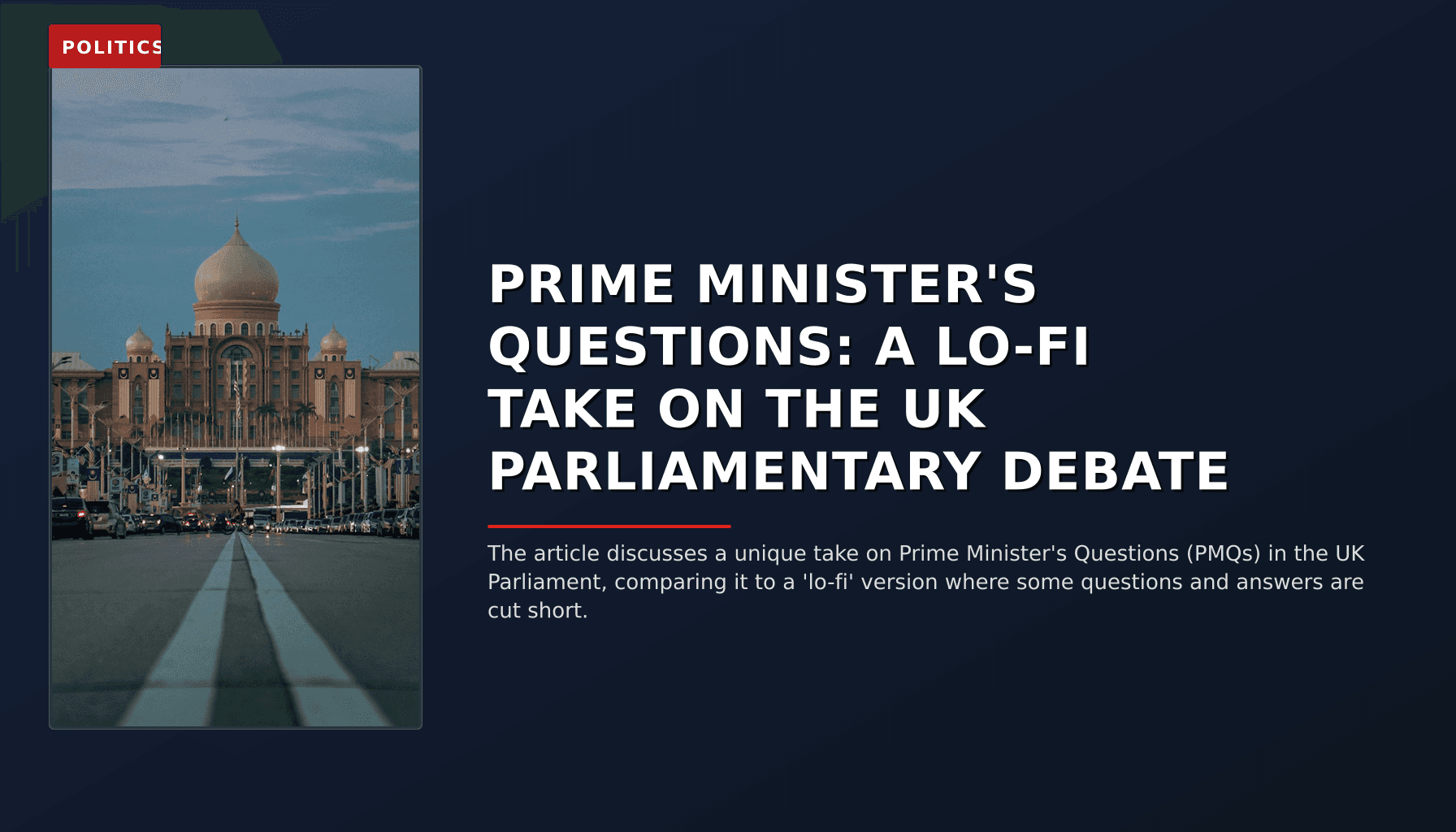
PRIME MINISTER'S QUESTIONS: A LO-FI TAKE ON THE UK PARLIAMENTARY DEBATE
The UK Parliament has introduced a 'lo-fi' version of Prime Minister's Questions, where some questions and answers are cut short, sparking debate on its impact.

The unique 'lo-fi' version of Prime Minister's Questions highlights a shift in parliamentary proceedings.
In an unexpected twist, recent Prime Minister's Questions (PMQs) sessions in the UK Parliament have been likened to a 'lo-fi' music experience, where some questions and answers are abruptly cut short. This unconventional approach has sparked curiosity among political observers and MPs alike. According to sources familiar with the proceedings, this new style aims to streamline discussions while maintaining the core essence of parliamentary debate.
The 'lo-fi' PMQs format emerged as a response to concerns about the length and focus of traditional debates. By truncating certain interactions, the sessions aim to keep discussions more dynamic and relevant. This approach has been cautiously welcomed by some members who see it as an effort to modernize legislative processes, though others remain skeptical about its impact on thoroughness.
The Guardian reported that this shift in PMQs style reflects broader trends within parliamentary structures, where efficiency is increasingly valued over exhaustive deliberation. Observers note that the 'lo-fi' format mirrors recent changes in how public discourse is consumed in other areas of society, such as shorter, more impactful media content.
John Crace, a noted political commentator, has speculated that this new method could signal a broader cultural shift within British politics. He suggests that the move toward concise, fast-paced interactions might be an attempt to engage younger audiences and adapt to the digital age's demands for quicker information digestion.
Read more: SENIOR LABOUR FIGURES WARN AGAINST MILITARY SPENDING CUTS TO WELFARE: A RISKS-LADEN TRADE-OFF
Critics argue that truncating questions and answers risks overlooking nuanced policy discussions. They fear that this 'lo-fi' approach may dilute the depth of parliamentary debates, potentially leading to superficial analysis of complex issues. This raises concerns about the quality and comprehensiveness of legislative decision-making.
Supporters, however, believe that the streamlined format enhances engagement and ensures that more MPs have the opportunity to voice their opinions during the session. They point to increased participation rates as evidence of the format's effectiveness in fostering a more inclusive and dynamic environment.

More Stories


Comments (0)
No comments yet. Be the first to share your thoughts!
Leave a Comment
Your email address will not be published. Comments are moderated before appearing.