
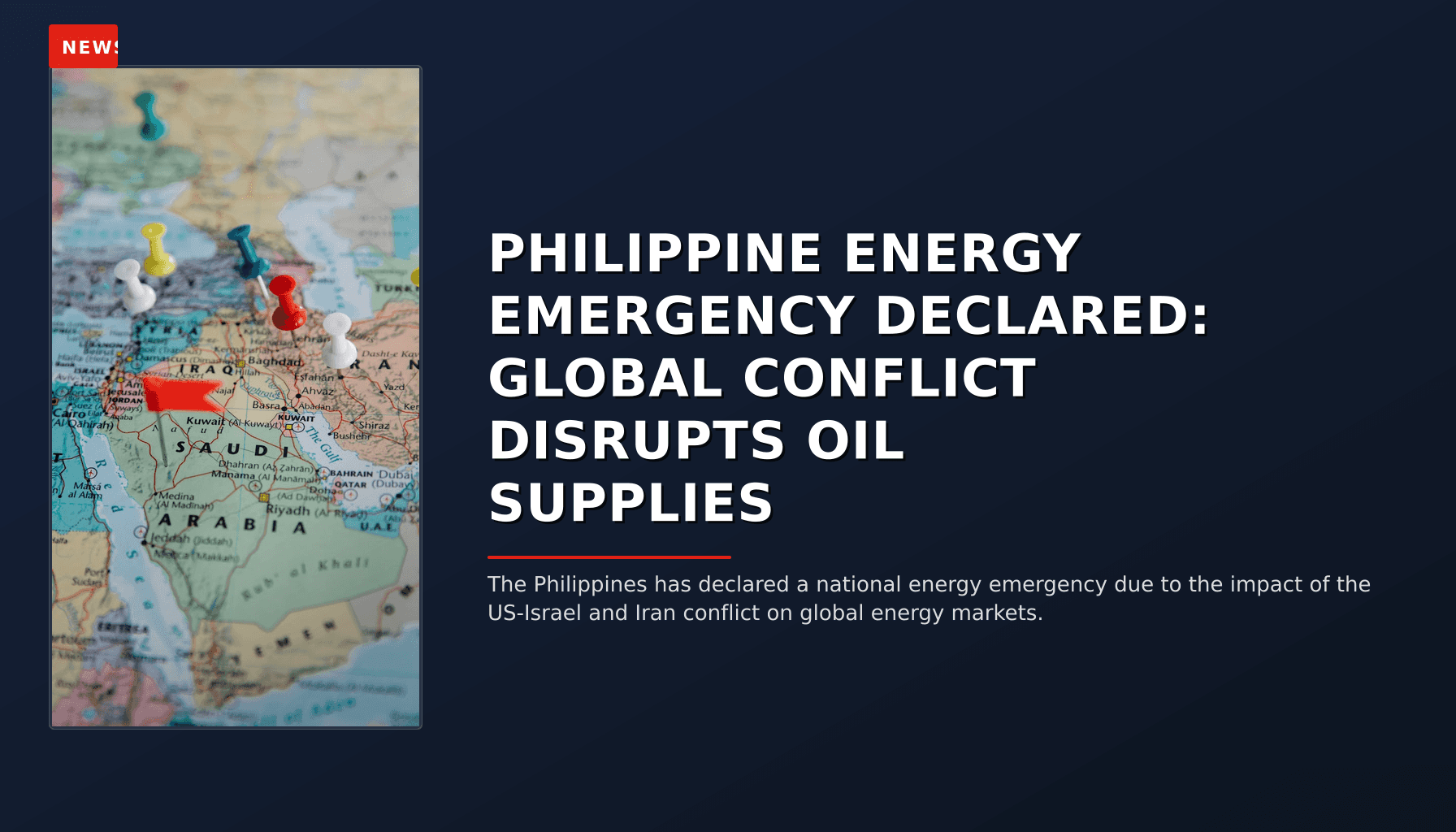
PHILIPPINE ENERGY EMERGENCY DECLARED: GLOBAL CONFLICT DISRUPTS OIL SUPPLIES
The Philippines has declared a national energy emergency due to rising fuel prices caused by the US-Israel and Iran conflict, with President Ferdinand Marcos Jr taking direct control of fuel distribution.

The Philippines has declared a national energy emergency as global oil markets face disruption from the US-Israel and Iran conflict.
In response to escalating tensions between the US, Israel, and Iran, which have sent shockwaves through global energy markets, President Ferdinand Marcos Jr of the Philippines has declared a national energy emergency. This move comes amid soaring fuel prices that have more than doubled since the conflict began on February 28. The declaration grants the government unprecedented authority to implement measures ensuring fuel stability across the nation.
According to reports, President Marcos signed an executive order establishing a committee to oversee fuel distribution and directly purchasing fuel supplies from international markets. This decision was prompted by the alarming news that the Philippines currently only has about 45 days of fuel reserves left. The country is heavily reliant on Gulf imports for oil, accounting for 98% of its total consumption.
Energy Secretary Sharon Garin has highlighted the critical situation, stating that the government will need to ration fuel and explore alternative energy sources. To mitigate the crisis, officials have announced plans to increase reliance on coal-fired power plants, as liquefied natural gas costs continue to rise rapidly.
The declaration of emergency is expected to last for one year, unless circumstances improve or it is extended further. Senators had earlier urged President Marcos to acknowledge the severe economic hardship caused by the surge in oil prices, with transport costs and everyday goods becoming increasingly unaffordable for many citizens.
In a bid to conserve fuel and manage demand, the government has introduced several measures. These include offering subsidies to transport drivers, reducing ferry services, and implementing a four-day workweek for civil servants. These steps aim to reduce overall energy consumption while ensuring essential services remain operational during this critical period.
The unfolding situation raises significant concerns about the Philippines' long-term energy security and economic stability. As global oil markets remain volatile, President Marcos' decision to take direct control of fuel distribution could prove pivotal in navigating this crisis. However, reliance on coal-fired power generation may have broader environmental implications, adding another layer of complexity to an already challenging situation.
Looking ahead, the success of these measures will depend on how effectively the government can manage fuel supplies and stabilize prices. The ongoing conflict in the Middle East continues to cast a shadow over global energy markets, leaving the Philippines—and many other nations—vulnerable to further disruptions. As the country braces for an extended period of uncertainty, the focus remains on ensuring that critical infrastructure and public services remain unaffected by the unfolding energy crisis.
Meanwhile, experts warn that similar situations could arise elsewhere as geopolitical tensions continue to escalate. The Philippines' declaration serves as a stark reminder of how interconnected global markets are and the potential domino effect of regional conflicts on far-reaching economies.
More Stories
OIL PRICES EXCEED $100 A BARREL: FIRST TIME IN FOUR YEARS
9 March 2026 at 00:472 min read
Read More
DEATH OUTSIDE GLASGOW'S FIRST DRUG FACILITY: INVESTIGATION ONGOING
8 March 2026 at 14:342 min read
Read More
PREDICTION MARKETS AND NUCLEAR WAR BETS: THE RISKS OF A UK MARKET
6 March 2026 at 09:473 min read
Read More
Comments (0)
No comments yet. Be the first to share your thoughts!
Leave a Comment
Your email address will not be published. Comments are moderated before appearing.