
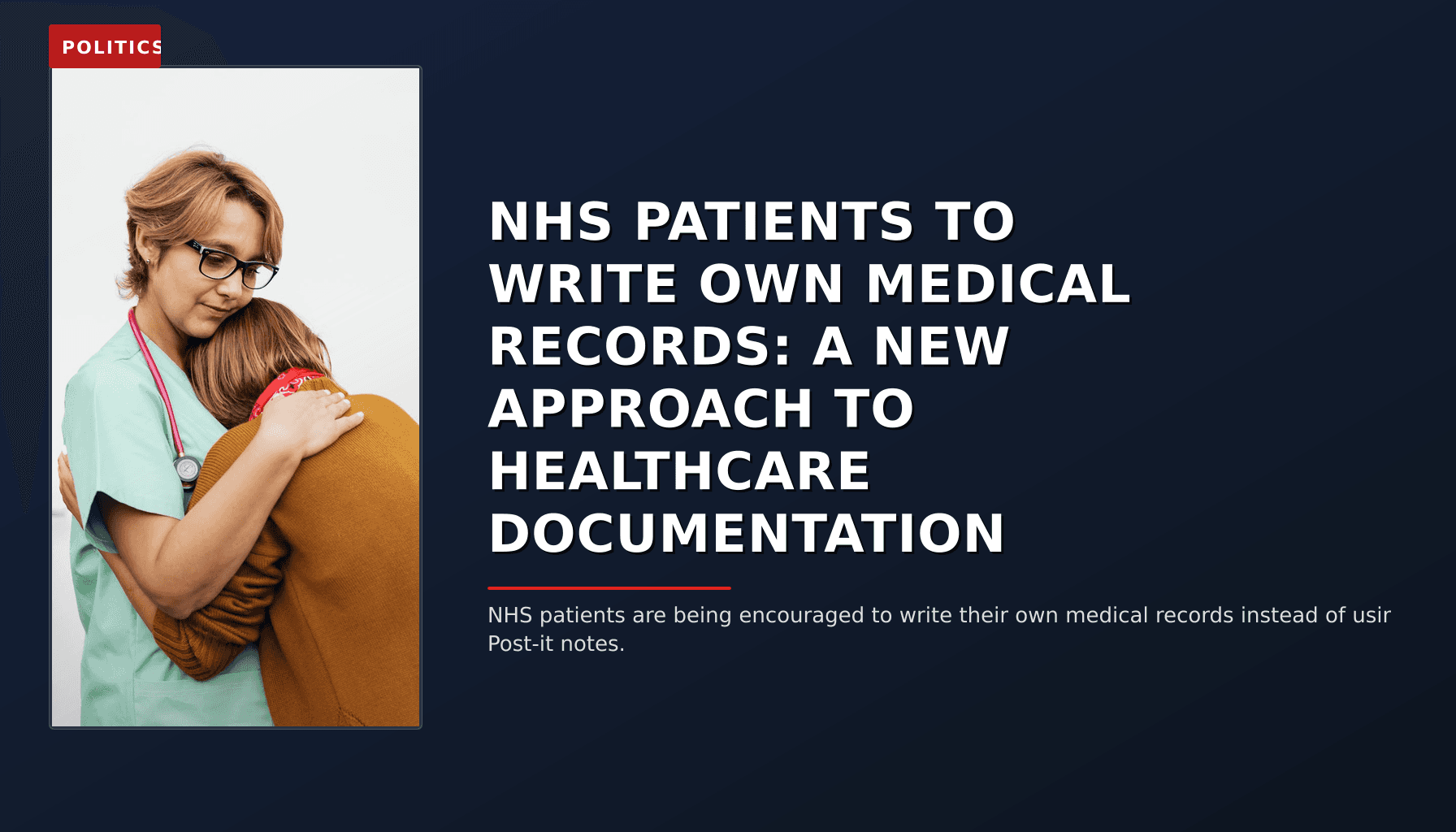
NHS PATIENTS TO WRITE OWN MEDICAL RECORDS: A NEW APPROACH TO HEALTHCARE DOCUMENTATION
The NHS is encouraging patients to write their own medical records, marking a shift towards patient-centred care with mixed reactions from the public and healthcare professionals.


The NHS is encouraging patients to maintain their own medical records, marking a shift in healthcare documentation practices.
In a move aimed at enhancing patient involvement and transparency, the NHS has announced a new initiative urging individuals to write their own medical records instead of relying on traditional Post-it notes. This development comes as part of broader efforts to empower patients with greater control over their health information. The policy change reflects a growing trend towards patient-centred care in the UK healthcare system.
According to recent reports, NHS officials have emphasized that allowing patients to document their medical histories and treatment details can lead to more accurate and comprehensive records. This approach is intended to reduce errors and improve communication between patients and healthcare providers. The move has been met with mixed reactions from both professionals and the public, with some praising it as a step towards greater patient autonomy while others express concerns about the potential for inaccuracies.
The decision to have patients write their own medical records is part of a larger strategy to modernize NHS services and align them more closely with international best practices. Proponents argue that this shift not only enhances patient engagement but also streamlines administrative processes within healthcare facilities. However, critics highlight the lack of standardized guidelines for such documentation, which could lead to inconsistencies in record-keeping.
It is understood that the NHS will provide training and resources to help patients effectively manage their medical records. This includes workshops and online platforms designed to guide individuals through the process. Despite these measures, some healthcare providers remain skeptical about the effectiveness of this new approach, particularly regarding its impact on data accuracy and patient safety.
Read more: Hospital Worker Jailed for Sexually Exploiting Vulnerable Patient
The introduction of patient-authored medical records follows several years of consultations with stakeholders across the healthcare sector. Advocates for this change believe it will foster a more collaborative relationship between patients and medical staff, ultimately leading to better health outcomes. However, questions have been raised about how these records will integrate with existing NHS systems and whether they will be recognized as official documentation.
Public response to the new policy has been varied. While some patients welcome the opportunity to take a more active role in their healthcare, others have expressed confusion about how to start and maintain such records. Health organizations are urging the government to ensure adequate support structures are in place to assist those who may find the process challenging.
Looking ahead, the success of this initiative will depend on several factors, including patient uptake, the availability of resources, and the effectiveness of integration with current NHS systems. The NHS has committed to monitoring the implementation closely and making adjustments as needed to address any challenges that arise. This new approach represents a significant shift in how medical records are managed and could set a precedent for future healthcare policies.

More Stories

Hospital Worker Jailed for Sexually Exploiting Vulnerable Patient
5 June 2025 at 17:092 min read
Read More
INDUSTRIAL COMPETITIVENESS CRISIS: UK FACES £600 MILLION ANNUAL INVESTMENT GAP
16 April 2026 at 19:492 min read
Read More
MANDELSON FAILS VETTING: FOREIGN OFFICE DEFIES DECISION
16 April 2026 at 18:162 min read
Read More
Comments (0)
No comments yet. Be the first to share your thoughts!
Leave a Comment
Your email address will not be published. Comments are moderated before appearing.