Lucy Connolly sar: The truth about attorney general consent
Screenshots are being touted as viral proof of high-level meddling — but the law behind this prosecution tells a far less dramatic story about statutory consent. Lucy Connolly has posted on social media that she has “finally obtained” her subject access request (SAR) from the Crown Prosecution...

Screenshots are being touted as viral proof of high-level meddling — but the law behind this prosecution tells a far less dramatic story about statutory consent.
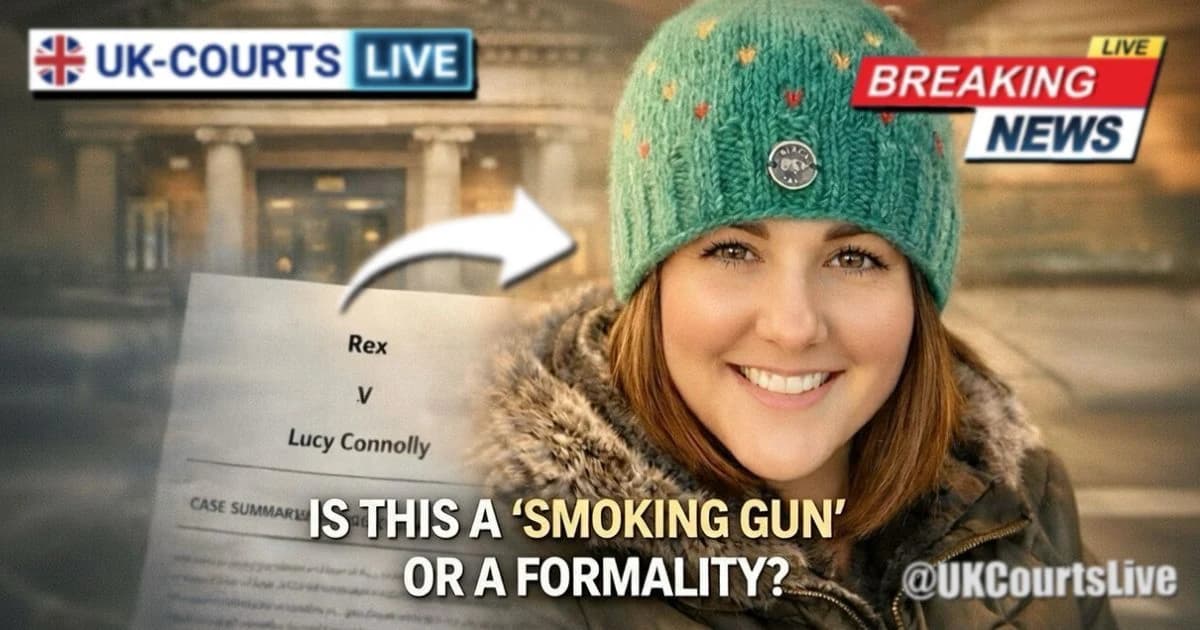
Lucy Connolly has posted on social media that she has “finally obtained” her subject access request (SAR) from the Crown Prosecution Service, and says she has been going through the documents in detail. She claims the material makes her “sick” to read, alleging messages have been manipulated and that her character has been “assassinated” for what she describes as the establishment’s benefit.
She says she has “so much to say on so many points” but chose to start with one item: a screenshot she describes as being taken from the prosecution bundle used by the Crown. In the post she flags a date and a single sentence that she frames as pivotal.
The court document shown is headed “IN THE CROWN COURT SITTING AT NORTHAMPTON” and appears to be a “Case Summary and Prosecution Note for hearing on 12 August 2024” in “Rex v Lucy Connolly”. The standard introductory text on the page states it is a working document prepared to assist the Court and the Defence at an early stage and should not be taken to represent the totality of the evidence.
A further page from the same case summary sets out a short procedural timeline. It states that on 9 August 2024 “LC was further arrested and charged” with an offence “contrary to section 19” of the Public Order Act 1986; that on 10 August 2024 “Consent was obtained from the Attorney General for the prosecution of LC”; and that on 10 August 2024 LC appeared at Nottingham Magistrates' Court, with the case sent to Northampton Crown Court for a hearing on 12 August 2024. The same passage notes the prosecution position that the matter was not suitable for summary trial, and includes a statement (partly redacted in the screenshot) referring to sentences exceeding 12 months’ imprisonment for offences linked to the then-ongoing disorder.
Connolly’s public argument is that the presence of “Attorney General” consent in the case paperwork undermines claims that senior figures had “nothing to do” with her prosecution. In her post she explicitly references “Lord Hermer” and “that lot”, treating the consent note as proof of direct involvement. Legally, the more prosaic explanation is that the consent note is not an optional flourish but a procedural gate the law requires for this kind of case. Part III of the Public Order Act 1986 (which includes section 19) sits within the “stirring up racial hatred” framework, and prosecutions under that Part cannot be instituted without the Attorney General’s consent. In practice that means the CPS can investigate and prepare a case file, but the proceedings themselves require that formal consent step before the prosecution is lawfully brought.
That consent mechanism is commonly misunderstood as “personal approval” in the political sense. It is better understood as a constitutional safeguard: a quasi-judicial filter for sensitive speech-related offences, intended to ensure a higher level of scrutiny before a prosecution is launched. It does not mean the Attorney General selected the defendant, ordered an arrest, or ran the operational decision-making of police and prosecutors; it means the statutory threshold for instituting proceedings under that Part was formally authorised. The date Connolly highlights—10 August 2024—also fits the practical logic of compliance. If a prosecution under Part III proceeds without the required consent, it risks being procedurally invalid. Obtaining consent at the point the case is moving through the magistrates’ court stage is therefore not, on its face, a sign of “speedy interference”; it is consistent with ensuring the case is not advanced unlawfully.
None of this addresses Connolly’s wider claims about the handling of evidence, messaging, or her allegation that her character has been unfairly attacked. Those are separate factual disputes that would depend on the full underlying material, not a single line in a case summary. But on the narrow point being presented as the “gotcha”—the Attorney General consent note—the paperwork shown is consistent with a standard statutory requirement for section 19 proceedings, rather than proof of political direction, as many online commentators are claiming.