
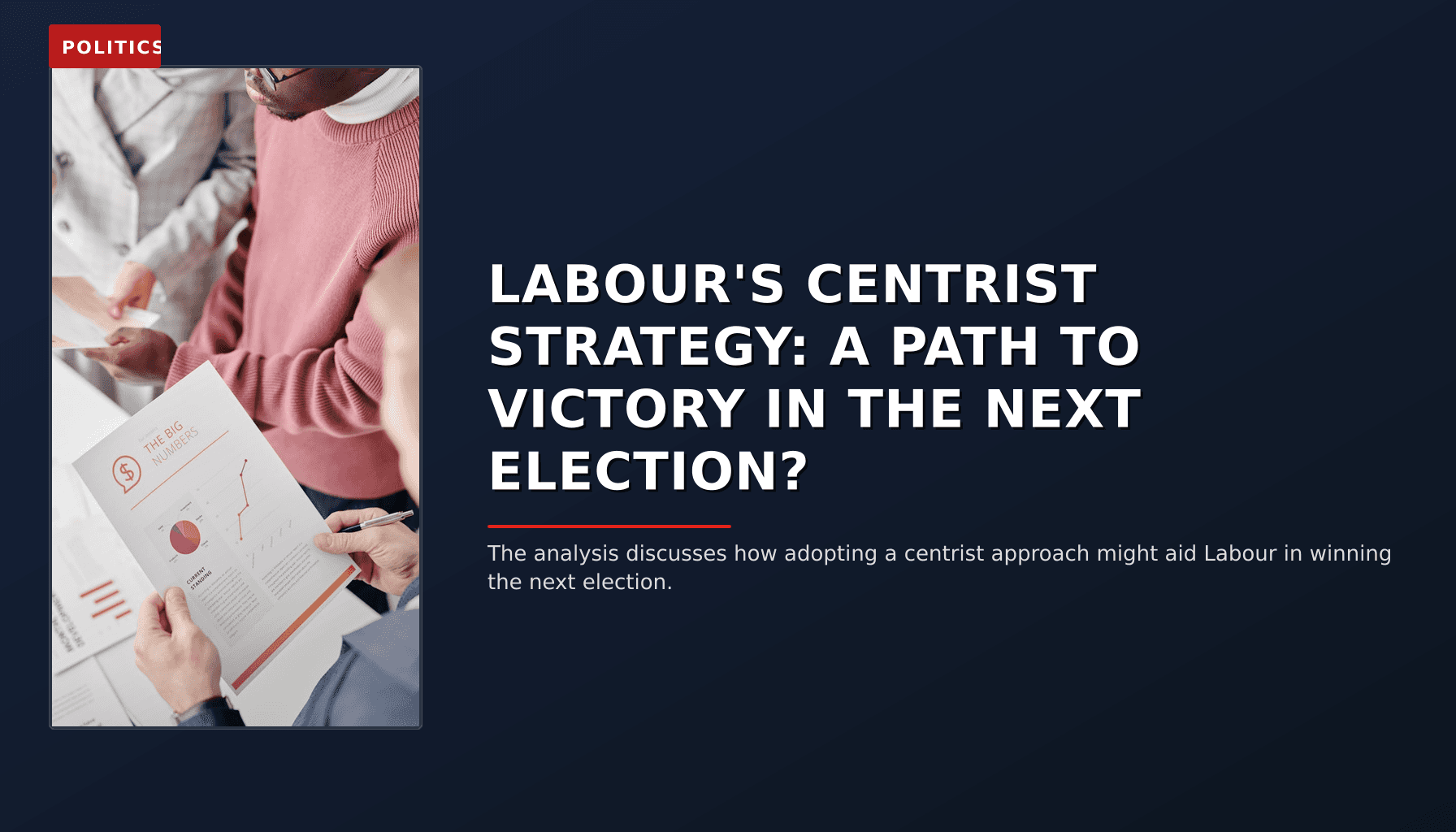
LABOUR'S CENTRIST STRATEGY: A PATH TO VICTORY IN THE NEXT ELECTION?
Exploring whether Labour's shift towards centrist policies could secure them a win in the upcoming general election.

Exploring whether Labour's shift towards centrist policies could secure them a win in the upcoming general election.
As the political landscape in the UK continues to evolve, Labour Party strategists are increasingly considering a centre-left approach as a potential key to electoral success. This strategy, which involves adopting moderate policies that appeal to a broader range of voters, has sparked significant debate among party members and political analysts alike. According to recent financial Times analysis, this centrist route could be instrumental in helping Labour reclaim power at the next general election.
The idea behind this approach is to position Labour as the party of moderation and compromise, thereby attracting disaffected Conservatives and disillusioned voters from other parties. By toning down some of their traditionally left-wing policies and presenting themselves as a pragmatic choice, Labour hopes to bridge the gap between their core supporters and the wider electorate. This strategy has been tested in various political contexts, with mixed results, but the Financial Times suggests that it could be particularly effective in the current climate.
However, this shift towards centrism is not without its challenges. There are concerns within Labour ranks about diluting the party's identity and risking alienation of their traditional base. Some argue that moving too far towards the centre could lead to a loss of support among their core voterbase, particularly in areas with strong socialist traditions. The Financial Times report highlights these internal divisions, suggesting that the path forward is not without hurdles.
Despite these challenges, the potential benefits of a centrist strategy are significant. By occupying the middle ground, Labour could position themselves as the default choice for many voters who feel let down by both major parties. This approach would also allow them to capitalise on growing disillusionment with the Conservative government's policies, particularly in areas such as economic management and social welfare.
The Financial Times analysis underscores the importance of messaging and policy alignment in this potential shift. It suggests that Labour needs to carefully balance their core values with a pragmatic approach to appeal to a wider audience. This would involve not only revising their public statements but also ensuring that their policies reflect this centrist stance without alienating their base.
Looking ahead, the success of this strategy will largely depend on how effectively Labour can communicate their new direction to the electorate. If they can convince voters that they are a viable and moderate option, they could stand a strong chance of winning the next election. However, any missteps or perceived backtracking could undermine this effort and lead to失望 among both core supporters and potential swing voters.
In conclusion, while adopting a centre-left strategy presents Labour with an opportunity to broaden their appeal and secure a much-needed victory in the upcoming election, it is not without its risks. The party will need to navigate internal divisions and carefully balance their policies to avoid alienating either end of the political spectrum. As the Financial Times suggests, this could be the key to their success—or it could backfire if not executed with precision.
More Stories
ANGLA RAYNER CRITICIZED BY HARRIET HARMAN: LABOUR INTERNAL TENSION HEATS UP
22 March 2026 at 00:152 min read
Read More
LABOUR MP MARKUS CAMPBELL-SAVOIRS WHIP RESTORED AFTER FARM TAX VOTE DEFYAL
6 March 2026 at 18:572 min read
Read More
IRAN WAR ECONOMIC IMPACT: POTENTIAL 'TRUMPFLATION' THREAT TO BRITAIN
22 March 2026 at 08:292 min read
Read More
Comments (0)
No comments yet. Be the first to share your thoughts!
Leave a Comment
Your email address will not be published. Comments are moderated before appearing.