
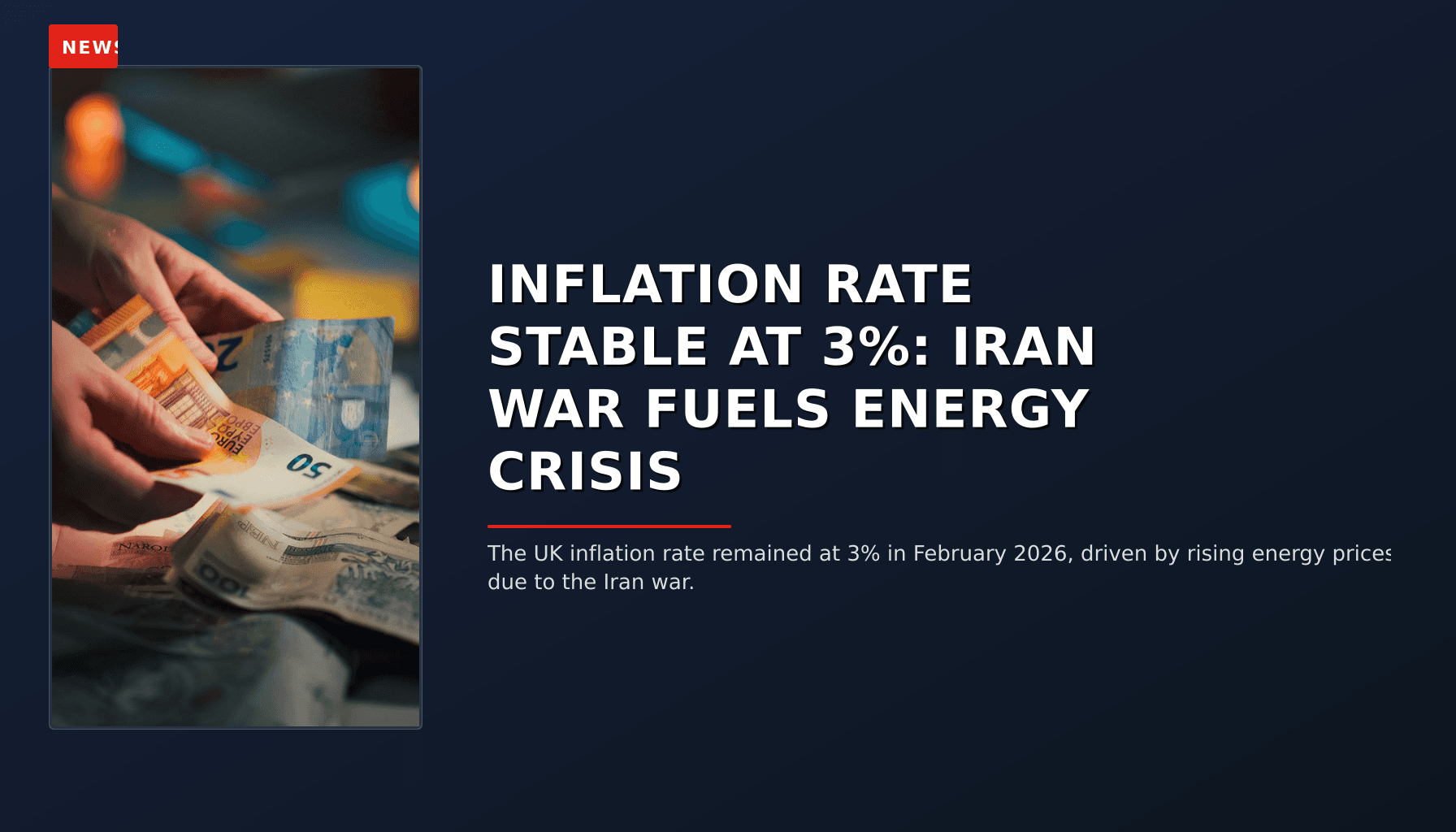
INFLATION RATE STABLE AT 3%: IRAN WAR FUELS ENERGY CRISIS
The UK's inflation rate remained stable at 3% in February 2026, driven by rising energy prices due to the Iran war. The Bank of England and Chancellor Rachel Reeves face challenges in managing economic stability amidst global tensions.

The UK's inflation rate has remained steady at 3%, driven by escalating energy prices amid the Iran war.
In a significant development, the UK's inflation rate held steady at 3% in February 2026, according to recent figures. This stagnation comes despite expectations from Bank of England policymakers who had projected a decline to 2% by early 2026. The persisting high inflation is primarily attributed to the surge in energy prices resulting from the ongoing Iran war, which has disrupted global oil and gas markets.
The conflict between Iran and its adversaries has severely impacted the Strait of Hormuz, a critical maritime chokepoint for oil transportation. This strategic waterway's instability has led to a dramatic increase in oil and gas prices, exacerbating the UK's economic challenges. The Bank of England had anticipated a cooling off period, but geopolitical tensions have instead prolonged the energy crisis.
Chancellor Rachel Reeves is under mounting pressure to address the rising utility bills faced by UK households. Her review of potential support measures underscores the government's recognition of the financial strain on citizens. Experts warn that without immediate intervention, the cost-of-living crisis could intensify further.
The UK's inflation trajectory reflects a broader global economic shift influenced by the Iran war. As oil prices climb, industries across sectors are grappling with higher operational costs, which are subsequently passed onto consumers. This cycle has made it increasingly difficult for the Bank of England to maintain its 2% inflation target.
Historically, energy price fluctuations have been a pivotal factor in shaping UK inflation rates. The 2008 financial crisis and previous conflicts, such as the Gulf War, provide parallels where geopolitical tensions significantly impacted economic stability. However, the current scenario stands out due to the intricate interplay between global energy markets and domestic economic policies.
In response to these challenges, the Bank of England is reevaluating its monetary policy strategies. Policy makers are weighing options that include adjusting interest rates to curb inflation while supporting economic growth. This delicate balance is crucial as the UK navigates an uncertain geopolitical and economic landscape.
Public sentiment has grown increasingly anxious as the cost-of-living continues to rise. Recent polls indicate heightened concerns among consumers about their financial futures. This underscores the urgency for the government to implement effective measures to alleviate the burden on households.
Looking ahead, the outcome of the Iran war and its impact on global energy supplies will be pivotal in determining the UK's economic path. Should the conflict escalate further, the repercussions on inflation and energy prices could become even more severe. The Bank of England and Chancellor Reeves are at a critical juncture, requiring decisive action to steer the economy towards stability.
More Stories
RISHI SUNAK ANNOUNCES ENERGY BILL ASSISTANCE PROGRAM: A CRUCIAL STEP TO ALLEVIATE FINANCIAL PRESSURE
25 March 2026 at 02:473 min read
Read More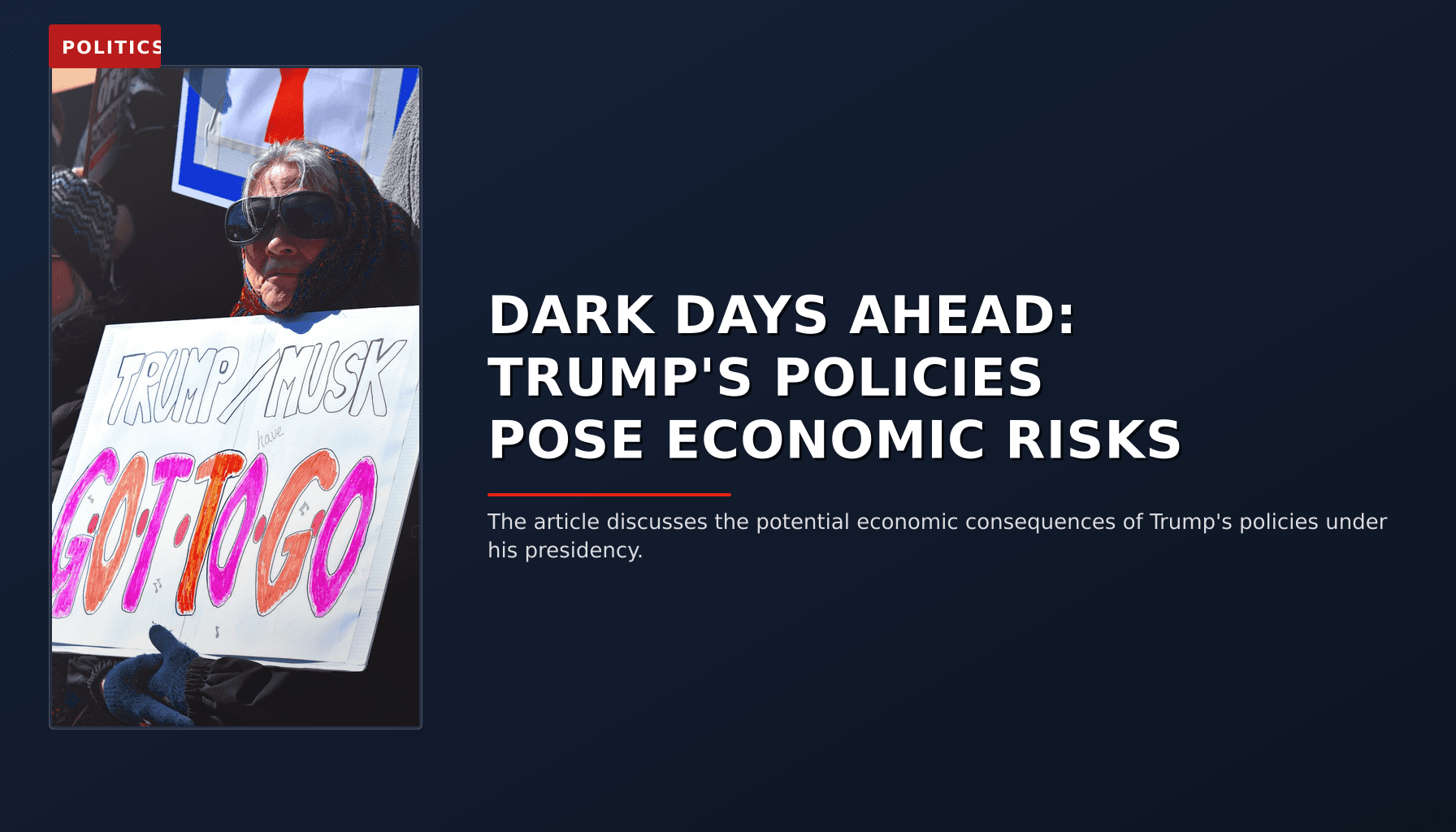
DARK DAYS AHEAD: TRUMP'S POLICIES POSE ECONOMIC RISKS
25 March 2026 at 06:321 min read
Read More
Lindsay Hoyle Calls For Fraudster's Extradition From Tenerife: A Developing Legal Drama
25 March 2026 at 04:382 min read
Read More
Comments (0)
No comments yet. Be the first to share your thoughts!
Leave a Comment
Your email address will not be published. Comments are moderated before appearing.