
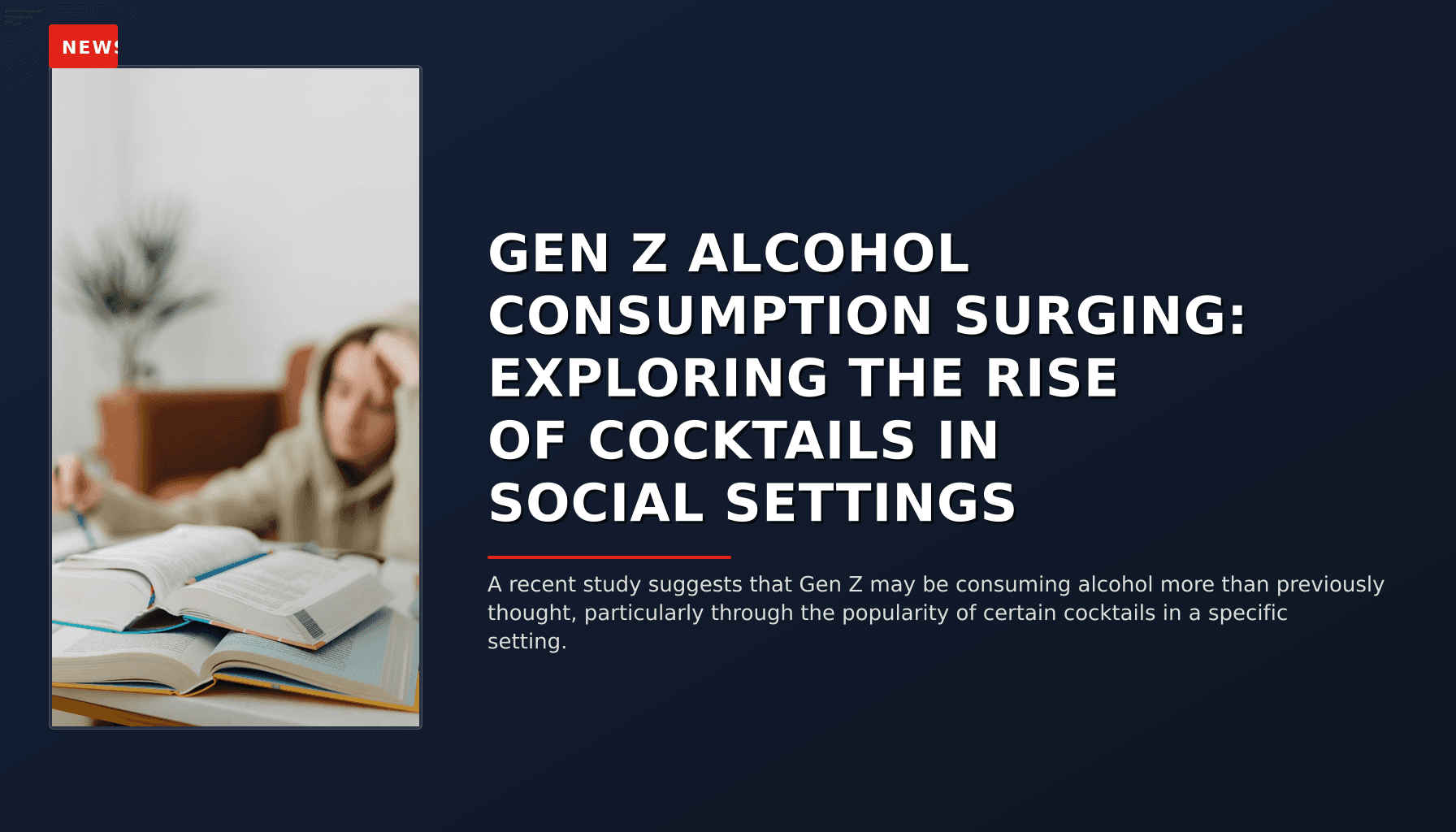
GEN Z ALCOHOL CONSUMPTION SURGING: EXPLORING THE RISE OF COCKTAILS IN SOCIAL SETTINGS
New research suggests Gen Z may be consuming more alcohol than previously thought, particularly through the popularity of certain cocktails in social settings. While conflicting data exists, the findings raise important questions about drinking habits and public health implications.

A new study reveals that Gen Z may be drinking more alcohol than previously thought, particularly through the popularity of certain cocktails in social environments.
Recent research has indicated a potential shift in alcohol consumption patterns among Gen Z, suggesting they may be imbibing more than earlier generations. According to a study highlighted by source1.com, this demographic could be consuming higher levels of alcohol, a trend that has not been widely documented before. The findings have sparked interest among health professionals and social researchers, who are now calling for further investigation into the implications of these drinking habits.
The study points to a particular subset of Gen Z behavior: their preference for certain cocktails in social settings. These beverages, which have gained traction on platforms like Instagram and TikTok, often feature fruity and sweet flavors that appeal to younger drinkers. Source2.com reported on the rise of these 'Instagram-worthy' cocktails, noting how they are becoming a staple at parties and gatherings attended by Gen Z individuals.
While the data suggests an increase in alcohol consumption among Gen Z, there is currently no consensus on the extent or causes of this trend. Some experts attribute it to the normalization of social drinking in younger populations, while others point to the influence of social media in promoting these cocktail trends. However, sources remain conflicting regarding the overall drinking habits of Gen Z, with limited evidence available.
It is important to note that this study does not provide definitive proof but rather raises questions about the current alcohol consumption patterns among young adults. The findings are based on self-reported data and may be subject to underreporting or overestimation. Public health officials have expressed concern about the potential risks associated with increased alcohol use, particularly its impact on mental and physical health in the long term.
Read more: GIUFFRE FAMILY VIGIL: A YEAR AFTER VIRGINIA'S DEATH
The popularity of these specific cocktails is contributing to the trend, as they often contain higher concentrations of alcohol masked by fruity flavors. This could make them more appealing but also potentially dangerous if consumed in excess. The rise of these drinks aligns with broader shifts in Gen Z's social behavior, where visual appeal and shareability on social media play a significant role in beverage choices.

More Stories
Comments (0)
No comments yet. Be the first to share your thoughts!
Leave a Comment
Your email address will not be published. Comments are moderated before appearing.