
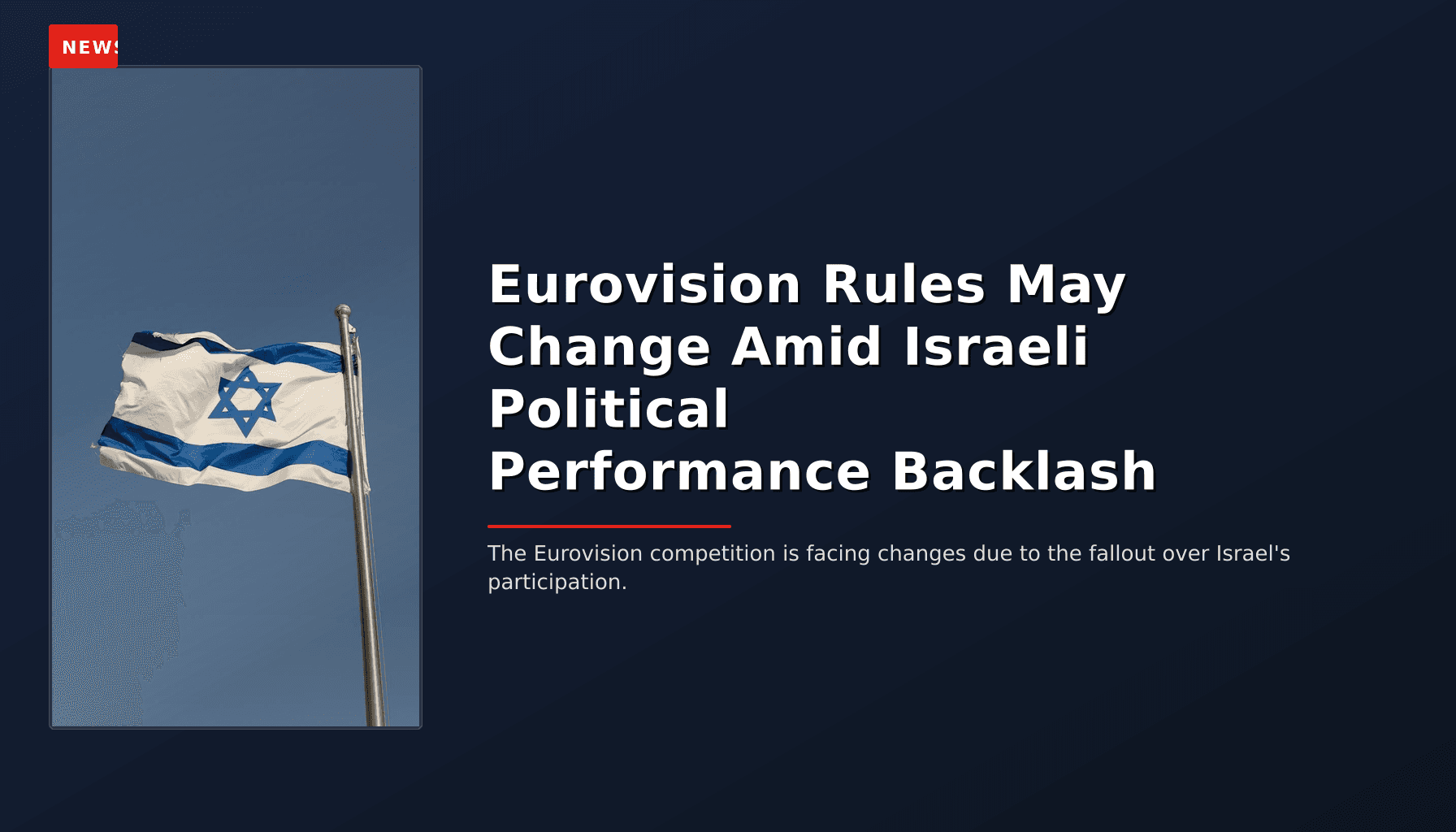
Eurovision Rules May Change Amid Israeli Political Performance Backlash
The Eurovision competition is reconsidering its rules after an Israeli contestant's political performance sparked controversy. Potential changes may restrict political statements during performances.

The Eurovision competition is reconsidering its rules following criticism of an Israeli contestant's political statements.
The Eurovision competition, one of the world's most prestigious and widely watched music events, is facing potential rule changes after a recent controversy involving an Israeli contestant. The event has sparked heated debates over whether political statements have no place in what was traditionally seen as a purely musical spectacle.
According to recent reports, Eurovision officials are reviewing their regulations following a performance by the Israeli representative that drew significant criticism for incorporating political messaging. Sources within the Union of European Football Associations (UEFA) suggest that new guidelines may be introduced to address such issues in future editions of the contest.
The controversy arose after the Israeli contestant's performance was deemed to include elements that went beyond artistic expression and into overtly political territory. This move has led to a backlash from both within and outside the Eurovision community, with some viewers feeling that such statements undermine the event's neutrality and focus on music.
While there is no concrete evidence directly linking the specific performance to any rule changes, the timing of the announcement suggests a correlation. The discussions about modifying the rules have been ongoing for several months, but the recent incident has accelerated these talks.
Read more: POLICE INVESTIGATE EAST LONDON SYNAGOGUE FIRE: NEIGHBOURHOOD SHOCKED BY INCIDENT
The potential new rules could include restrictions on political statements during performances or events. This decision comes amid increasing scrutiny over how international competitions handle political expressions, especially in such high-profile platforms.
However, the extent to which political statements influenced the decision to review the rules remains unclear. There is speculation but no direct evidence tying the specific performance to the rule changes. The discussions are still at an early stage, and it remains to be seen how these new regulations will be implemented.
The move has raised concerns about the potential legal implications of limiting free expression in artistic performances. Critics argue that such rules could stifle creativity and set a dangerous precedent for future events.
Eurovision organizers have emphasized that any changes would aim to maintain the event's focus on music while addressing concerns about inappropriate political messaging. They stress that the goal is to ensure fairness and respect for all participants and audiences.
Read more: BRITISH PUBS IN CRISIS: NEARLY TWO CLOSURES A DAY IN 2026
The sensitivity around political statements in international competitions is not new. Previous editions of Eurovision have occasionally faced similar issues, but this incident has reignited debates over how such events should handle political elements.
As the discussions continue, it remains uncertain whether new rules will be introduced or if the current regulations will suffice. The outcome could set a significant precedent for future international music competitions and their handling of political expressions.
More Stories
POLICE INVESTIGATE EAST LONDON SYNAGOGUE FIRE: NEIGHBOURHOOD SHOCKED BY INCIDENT
5 May 2026 at 11:173 min read
Read More
BRITISH PUBS IN CRISIS: NEARLY TWO CLOSURES A DAY IN 2026
5 May 2026 at 04:062 min read
Read More
WORLD TITLE VACANT: Wu Triumphs Over Murphy in Showdown
5 May 2026 at 00:173 min read
Read MoreComments (0)
No comments yet. Be the first to share your thoughts!
Leave a Comment
Your email address will not be published. Comments are moderated before appearing.