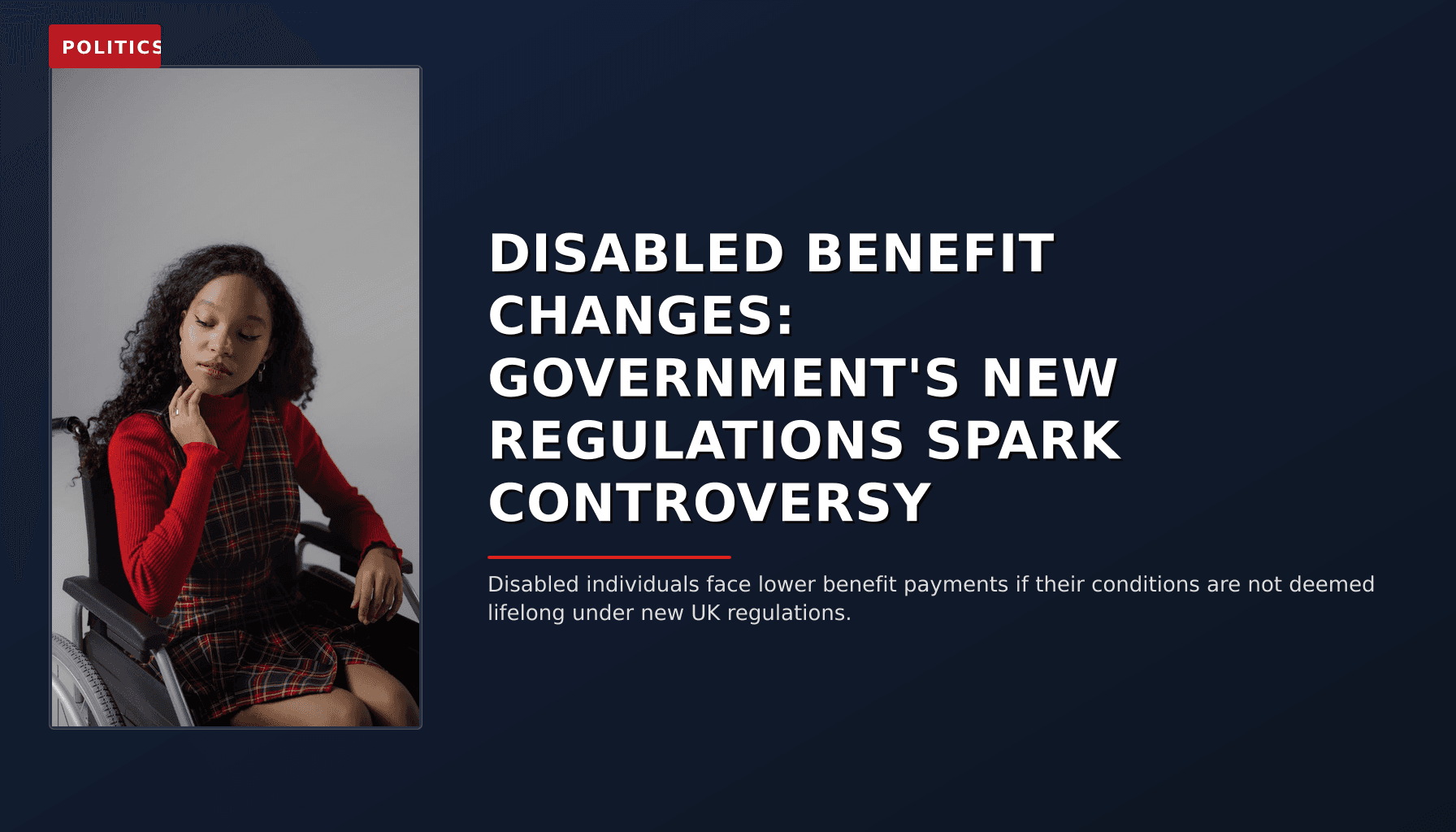
DISABLED BENEFIT CHANGES: GOVERNMENT'S NEW REGULATIONS SPARK CONTROVERSY
New UK regulations may reduce benefits for disabled individuals with non-lifelong conditions, sparking controversy over fairness and support.

New UK regulations could reduce benefits for disabled individuals with non-lifelong conditions, sparking debate over fairness and access to support.
The UK government has introduced new regulations that may significantly impact benefit payments for disabled individuals. Under the revised rules, those whose conditions are not deemed lifelong could face lower financial assistance. This change has sparked controversy among disability advocates and groups representing individuals with non-permanent health issues. The move comes amid broader reviews of welfare policies aimed at streamlining benefits and ensuring they are targeted more effectively.
According to sources within the Department for Work and Pensions (DWP), the changes are part of an effort to 'better assess the long-term nature of disabilities' and allocate resources accordingly. However, the exact implications for those with conditions that fluctuate or improve over time remain unclear. Some experts warn that this shift could leave many individuals struggling to meet their daily needs, particularly if their benefits are reduced without corresponding support structures in place.
Disabled people in the UK may receive reduced benefit payments if their conditions are determined to be non-lifelong. This decision has been met with mixed reactions, with some arguing it promotes fairness by reserving higher payments for those with more severe, permanent disabilities. Critics, however, argue that such a distinction is arbitrary and fails to account for the diverse ways in which disabilities manifest and evolve over time.
The DWP maintains that these adjustments are necessary to ensure the sustainability of the benefits system. They point to examples where individuals have recovered from temporary conditions but continued to receive payments, potentially straining public finances. Yet, there is no official statement confirming how much benefits might be reduced or what criteria will determine whether a condition is considered lifelong.
Advocacy groups are calling for clarity and urging the government to provide more details on how these new regulations will be implemented. They emphasize that any changes must not disproportionately affect those who rely on benefits to maintain their quality of life. Public consultations have been announced, but the timeline for finalizing the policies remains uncertain.
The lack of concrete information has left many in the disabled community feeling anxious about their financial future. Some fear that without accurate data or clear guidelines, the changes could lead to widespread hardship. Others are hopeful that these reforms will ultimately improve support systems by focusing resources where they are needed most.
More Stories



Comments (0)
No comments yet. Be the first to share your thoughts!
Leave a Comment
Your email address will not be published. Comments are moderated before appearing.