
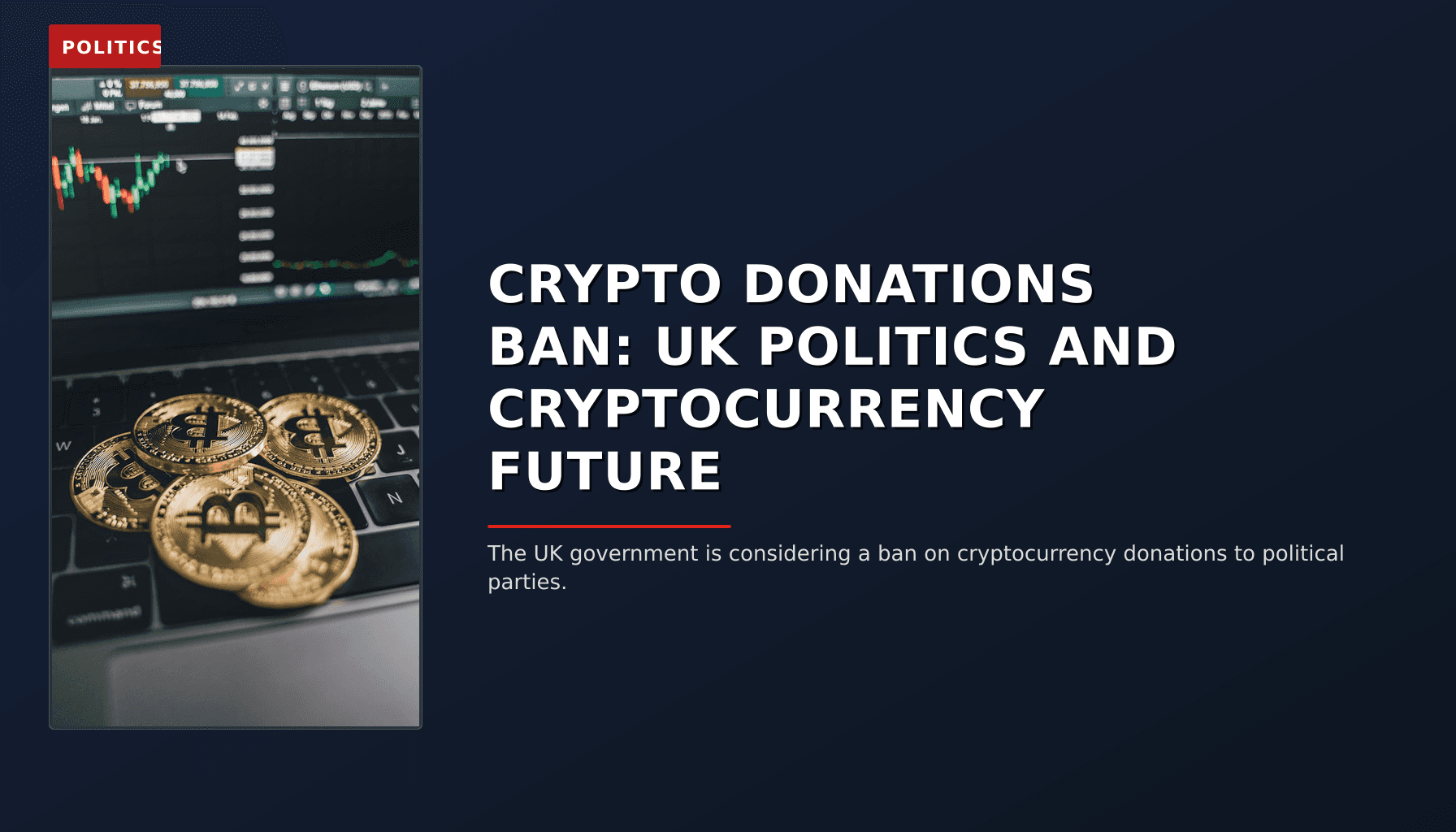
CRYPTO DONATIONS BAN: UK POLITICS AND CRYPTOCURRENCY FUTURE
The UK government is considering banning cryptocurrency donations to political parties, aiming to enhance financial oversight and transparency in the political arena. This move reflects global trends towards stricter regulation of digital assets.

The UK government is considering banning cryptocurrency donations to political parties, sparking debate over transparency and regulation.
The UK government is evaluating measures that could potentially ban cryptocurrency donations to political entities, a move aimed at enhancing financial oversight within the political arena. This development comes as part of ongoing discussions about tightening regulations on such transactions, reflecting a broader trend across the globe where governments are scrutinizing digital assets' role in finance and politics.
According to recent reports from Politicus UK and Government News, there is a growing consensus among policymakers that cryptocurrencies, known for their anonymity and potential misuse, pose significant risks when used for political funding. These concerns have fueled the push for stricter controls, with some officials advocating for an outright ban on crypto donations to ensure transparency and accountability.
While the exact scope of these regulations remains under debate, sources indicate that the focus is primarily on political parties rather than all political entities. This distinction suggests a recognition of the varying roles political groups play in society, while still aiming to mitigate risks associated with anonymous contributions.
The proposed ban has sparked mixed reactions from different sectors of society. Advocacy groups for transparency in politics argue that such measures are necessary to prevent foreign interference and safeguard democratic processes. On the other hand, proponents of cryptocurrency freedoms warn against overregulation, stating it could stifle innovation and further marginalize already underrepresented voices in tech.
Historically, the UK has been at the forefront of financial regulation, often setting precedents that other nations follow. This consideration to ban crypto donations aligns with earlier efforts to integrate digital assets into the traditional financial framework responsibly. However, this move also raises questions about the balance between innovation and regulation in a rapidly evolving technological landscape.
It remains unclear whether the government will extend these restrictions beyond political parties to include all political entities. This ambiguity underscores the complexity of the issue, as different stakeholders have varying interests and concerns. The lack of an official announcement has left both supporters and critics waiting for further clarification on the implementation timeline.
As the debate unfolds, experts suggest that any new regulations should be accompanied by comprehensive measures to educate voters about the implications of political funding sources. This would help ensure that citizens are informed and can make educated decisions during elections.
In the coming weeks, stakeholders from various sectors are expected to engage in discussions with policymakers. These dialogues will play a crucial role in shaping the final regulations, determining whether the ban is implemented, and if so, how it is enforced across different political entities.
More Stories

NEW POLICY AND MILITARY DEPLOYMENT: UK GOVERNMENT'S MOVE TO REGULATE SOCIAL MEDIA AND STRENGTHEN DEFENCE
29 March 2026 at 05:302 min read
Read More
LOCAL ELECTIONS APPROACH: VOTERS PREPARED FOR MAY POLLING
29 March 2026 at 04:033 min read
Read More
END OF TWO-CHILD BENEFIT CAP: A £302.50 MONTHLY BOOST FOR LOW-INCOME FAMILIES
29 March 2026 at 00:312 min read
Read More
Comments (0)
No comments yet. Be the first to share your thoughts!
Leave a Comment
Your email address will not be published. Comments are moderated before appearing.