
CRITIQUE OF US-Iran CONFLICT: Reeves' CONTROVERSIAL CLAIM
Renowned analyst Reeves claims the U.S.-Iran conflict was a mistake, sparking debates on foreign policy and regional stability.


Reeves has sparked debate by asserting that the U.S.-Iran conflict was a mistake.
Prominent journalist and analyst Reeves has recently expressed a controversial viewpoint regarding the ongoing tensions between the United States and Iran. In an interview with leading media outlets, Reeves claimed that the U.S. war on Iran was fundamentally a 'mistake'. This statement has drawn significant attention from policymakers, military officials, and the general public alike.
Reeves' assertion comes at a time when regional stability in the Middle East is under intense scrutiny. The conflict between the two nations has had far-reaching implications, including economic sanctions, disrupted global oil supplies, and heightened geopolitical tensions. Reeves argues that the decision to engage in hostilities was made without sufficient consideration of long-term consequences.
According to sources cited by Reeves, the strategic misjudgment by U.S. policymakers has led to unintended escalation of violence in the region. 'The war on Iran was not just a miscalculation,' Reeves stated, 'but a series of blunders that have prolonged instability and hindered progress toward peace.'
While some analysts agree with Reeves' perspective, others remain skeptical. Critics argue that the situation is more complex than a simple misstep, involving multiple factors such as ideological differences, strategic interests, and international alliances.
Read more: JEREMY CORBYN DEFIES TRUMP: STAND ON IRAN REMAINS FIRM DESPITE TRADE DEAL THREATS
Reeves' critique has sparked a broader conversation about the role of the U.S. in international conflicts. Advocacy groups and think tanks are now calling for an independent review to assess the impact of U.S. foreign policy on global security and economic stability.
The implications of Reeves' remarks extend beyond the immediate conflict. They raise questions about decision-making processes in foreign affairs and highlight the need for more comprehensive analysis before committing to military actions.

More Stories
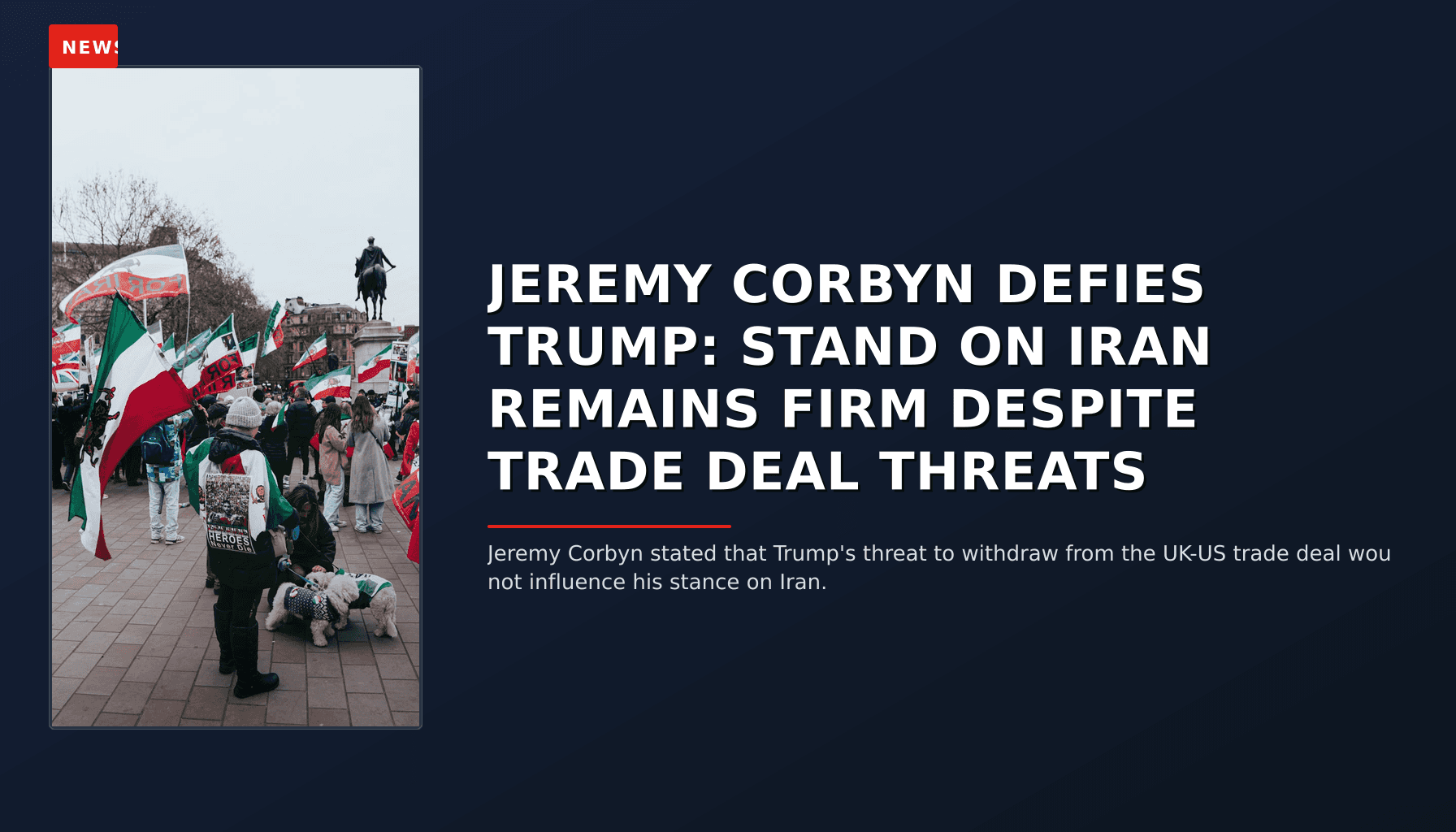
JEREMY CORBYN DEFIES TRUMP: STAND ON IRAN REMAINS FIRM DESPITE TRADE DEAL THREATS
15 April 2026 at 15:381 min read
Read More
RICHARD BINGLEY JOINS REFORM UK: FORMER COUNCILLOR'S NEW POLITICAL MOVE
15 April 2026 at 18:192 min read
Read More
NEW LORD OF THE RINGS PROJECT: WOODALL AND WINSELET JOIN CAST
15 April 2026 at 16:581 min read
Read More
Comments (0)
No comments yet. Be the first to share your thoughts!
Leave a Comment
Your email address will not be published. Comments are moderated before appearing.