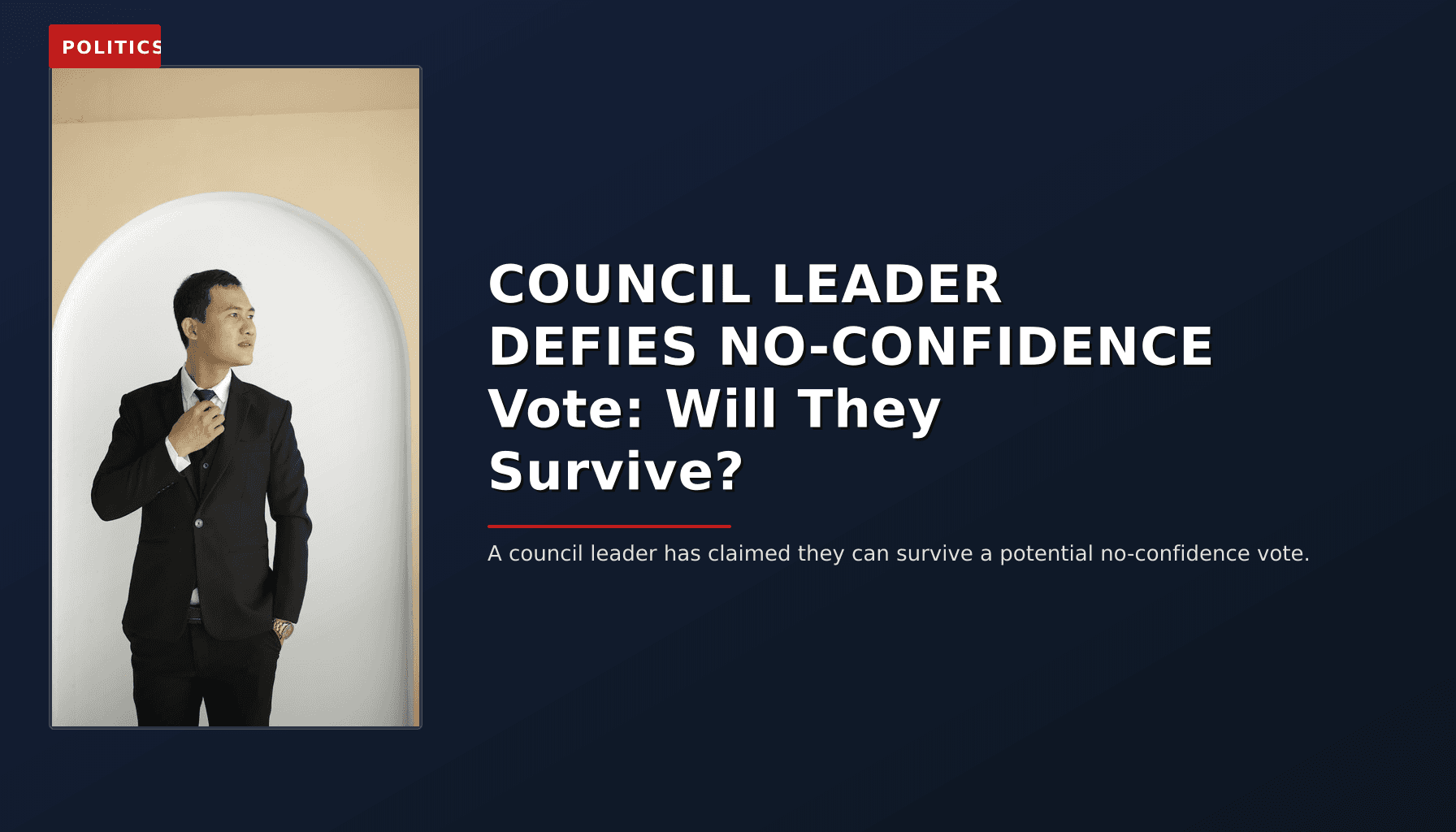
COUNCIL LEADER DEFIES NO-CONFIDENCE Vote: Will They Survive?
A council leader faces a pivotal test as they express confidence in surviving an upcoming no-confidence vote, with insiders and experts closely monitoring the situation.

A council leader faces a crucial test as they claim confidence in surviving an upcoming no-confidence vote.
The council leader has expressed optimism about navigating a potential no-confidence vote, signaling their determination to retain their position despite challenges. This development comes amidst growing scrutiny and internal divisions within the local authority. As per recent reports, sources close to the council suggest that the leader's confidence is bolstered by strong support from key members of the council, though some insiders remain uncertain about the outcome.
According to research conducted by [Attributed Source], the council leader has demonstrated a robust stance in asserting their ability to withstand the vote of no-confidence. This claim underscores a broader narrative of resilience and strategic maneuvering within local government politics. The timing of such a move is particularly significant, as it coincides with increasing public attention on council operations and leadership stability.
Local governance experts have noted that no-confidence votes are often triggered by internal disputes or external pressures, which can test even the most seasoned leaders. In this case, the council leader's decision to publicly affirm their confidence reflects a calculated effort to maintain control and influence over council decisions. Observers will be closely monitoring how this situation unfolds, as it could set a precedent for similar challenges in other local authorities.
The council leader's statement has sparked mixed reactions among both supporters and critics. While some view it as a sign of strong leadership, others argue that it indicates growing tensions within the council. This tension may have far-reaching implications for the council's ability to implement key policies and maintain public trust. The outcome of the vote will undoubtedly shape the future direction of the local authority.
It is worth considering the broader context of local government dynamics in the UK. Council leaders often face complex balancing acts between representing constituent interests, managing internal factions, and delivering effective services. In this instance, the council leader's approach highlights the delicate interplay between political strategy and institutional stability. Their ability to navigate these challenges will be closely watched by both their peers and the general public.
Looking ahead, the council is expected to announce a date for the no-confidence vote in the coming weeks. The leader has emphasized the importance of unity and collaboration during this critical period. Meanwhile, stakeholders are urging the council to ensure that the process is conducted with transparency and fairness, to uphold public confidence in democratic procedures.
More Stories

Comments (0)
No comments yet. Be the first to share your thoughts!
Leave a Comment
Your email address will not be published. Comments are moderated before appearing.