
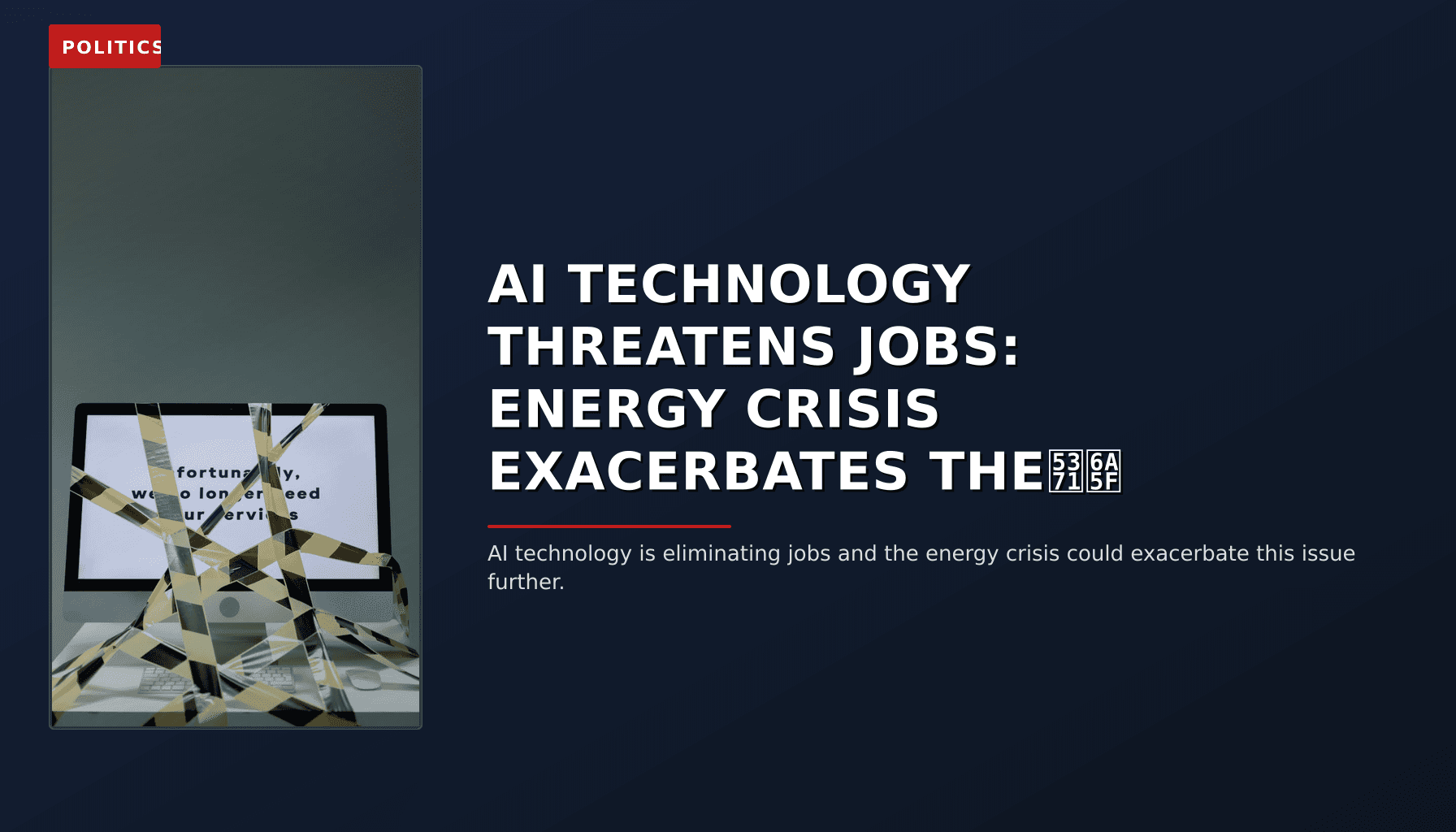
AI TECHNOLOGY THREATENS JOBS: ENERGY CRISIS EXACERBATES THE危機
The rise of AI technology is eliminating jobs across various industries, and the ongoing energy crisis is making this problem even worse. Millions of workers face an uncertain future as these two forces combine to create unprecedented challenges for global employment.


The rise of AI and the global energy crisis are together creating unprecedented challenges for the job market, with millions at risk of losing their livelihoods.
The rapid advancement of artificial intelligence is reshaping industries across the globe, leading to widespread job losses. According to recent reports from reputable financial institutions, sectors such as manufacturing, healthcare, and finance are experiencing significant layoffs due to automation. This trend is particularly concerning as it coincides with an escalating energy crisis, which is further straining economies and livelihoods.
AI's impact on employment is not confined to developed nations; developing countries are also grappling with the consequences. For instance, in manufacturing hubs like China and India, factories are increasingly replacing human workers with automated systems, rendering many jobless. Meanwhile, the energy crisis has led to skyrocketing utility bills, making it even more difficult for these countries to recover from AI-induced unemployment.
Economists warn that the combination of AI-driven job displacement and the energy crunch could lead to a global recession. In the UK alone, industries ranging from retail to transportation are feeling the squeeze. The government has announced measures to mitigate the impact, but experts remain skeptical about their effectiveness. Larry Elliott, a prominent economist, has described the situation as 'a perfect storm for workers.'
The energy crisis is exacerbating existing economic tensions, with many countries struggling to meet their energy demands. This has led to increased costs for businesses and households alike. For individuals already affected by AI automation, the additional financial burden is proving overwhelming.
Read more: HISTORIC AUSTRALIAN OIL FIRE THREATENS NATIONAL PETROL SUPPLIES: A PRECARIOUS OUTLOOK FOR FUTURE
In response to these challenges, some nations are exploring policies aimed at cushioning the blow of technological advancement on employment. France, for example, has implemented a 'robot tax' on companies replacing workers with machines. However, the effectiveness of such measures remains to be seen, and critics argue that they may not address the root causes of job displacement.

More Stories


Comments (0)
No comments yet. Be the first to share your thoughts!
Leave a Comment
Your email address will not be published. Comments are moderated before appearing.