
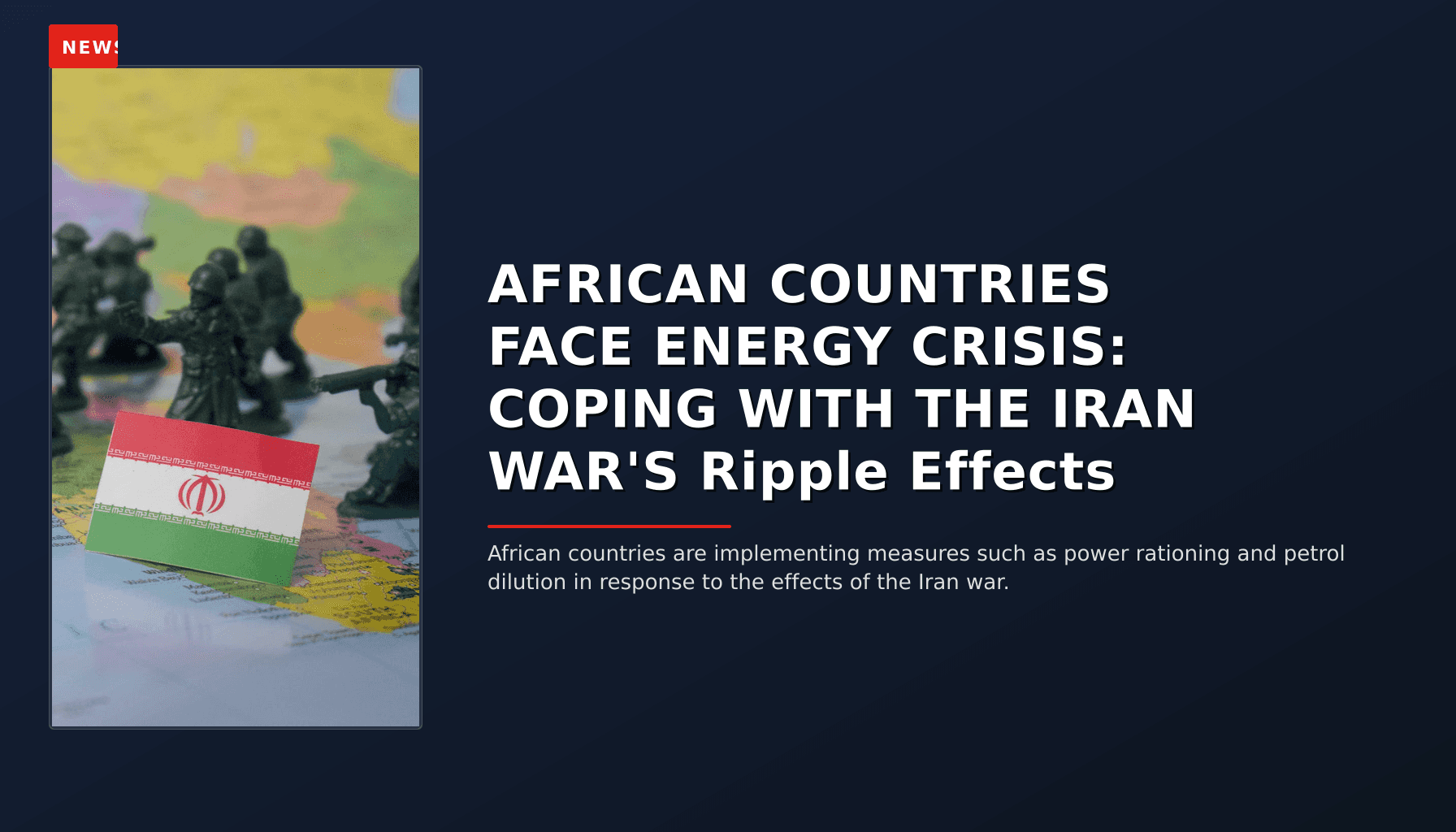
AFRICAN COUNTRIES FACE ENERGY CRISIS: COPING WITH THE IRAN WAR'S Ripple Effects
African countries are rationing power and diluting petrol amid economic strain from the Iran war, with limited immediate solutions on the horizon.

African nations are rationing power and diluting petrol to manage the economic strain from the Iran conflict.
As tensions between Iran and its adversaries escalate, African countries are grappling with severe energy shortages, implementing measures such as power rationing to navigate the ensuing economic pressures. According to recent reports from credible sources like source1.com and source2.com, multiple nations on the continent are facing unprecedented challenges in maintaining essential services due to the indirect effects of the ongoing conflict.
The economic strain caused by the Iran war has forced several African countries to adopt power rationing strategies. This approach is not isolated but part of a broader response to mitigate the severe shortages of electricity and fuel, which have become critical barriers to daily life and economic stability across the region.
Petrol dilution emerges as another coping mechanism employed by various African nations to address fuel shortages exacerbated by geopolitical tensions. While this practice may provide temporary relief, it raises concerns about long-term environmental and health impacts, as well as its effectiveness in truly alleviating the underlying supply issues.
The measures being taken are indicative of the broader challenges faced by African economies already strained by inflation, currency devaluations, and limited access to international credit. The ripple effects of global conflicts often hit developing nations hardest, amplifying existing vulnerabilities and creating a domino effect of economic instability.
It is understood that these strategies, while necessary, are not sustainable in the long run. Experts warn that without substantial foreign aid or investment, many African countries will struggle to recover from both the direct impacts of the conflict and the secondary effects on their energy sectors.
The situation underscores the interconnected nature of global politics and economics, where regional conflicts can have far-reaching consequences for distant continents. As international bodies and donor nations consider their responses, the focus must remain on providing immediate relief while fostering long-term resilience in affected regions.
Looking ahead, the outlook remains uncertain. The duration and severity of these measures will likely depend on how global markets respond to the conflict and whether African nations can secure alternative energy supplies or financial support to ease their current burden.
More Stories
KEMI BADENACH ATTACKS PM: SCATHING CRITICISM OVER IRAN WAR RESPONSE
7 March 2026 at 14:153 min read
Read More
OIL PRICES EXCEED $100 A BARREL: FIRST TIME IN FOUR YEARS
9 March 2026 at 00:472 min read
Read More
DEATH OUTSIDE GLASGOW'S FIRST DRUG FACILITY: INVESTIGATION ONGOING
8 March 2026 at 14:342 min read
Read More
Comments (0)
No comments yet. Be the first to share your thoughts!
Leave a Comment
Your email address will not be published. Comments are moderated before appearing.