Why Labour won’t tell Calais migrants about new rules
Shabana Mahmood stood before the cameras last week and declared the end of Britain’s “golden ticket” for asylum seekers. Temporary status. Regular…

LABOUR’S IMMIGRATION REFORMS: WHY THEY’RE NOT TELLING THE CORRECT AUDIENCE
By Legal Editor, UKCourtsLive
Shabana Mahmood stood before the cameras last week and declared the end of Britain’s “golden ticket” for asylum seekers.
Temporary status.
Regular reviews.
Deportation the moment a home country is deemed safe.
Modelled on Denmark, the Home Secretary promised “the most significant changes to our asylum system in modern times”.
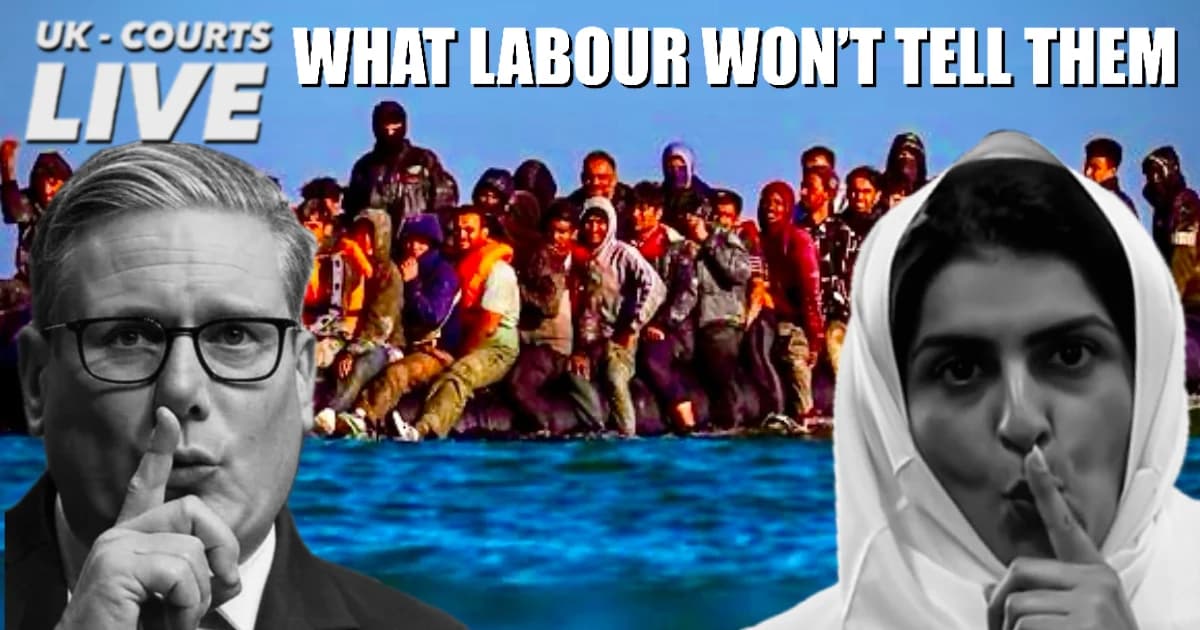
Yet 39,075 people have already crossed the Channel in small boats this year – a 19 per cent rise on 2024, 43 per cent above 2023.
Thousands more wait in Calais, clutching smuggler-supplied maps and WhatsApp screenshots of hotel addresses.
They speak Pashto, Dari, Arabic, Tigrinya, Vietnamese – rarely English.
Their knowledge of UK law is zero.
Their grasp of British politics is less.
These are the very individuals the reforms target.
These are the very individuals who will never hear about them.
The Home Office has form in deterrence messaging.
A £4.7 million campaign in Albania warned of economic hardship and deportation risks.
TikTok influencers were paid £380,000 to reach Vietnamese networks.
A France-specific returns deal merited £15,000 in targeted ads.
Denmark, by contrast, ran full-page advertisements in Lebanese newspapers listing welfare cuts and family reunion bans.
Britain’s efforts look timid by comparison.
Calais remains a multilingual babel.
Legal advice comes from volunteer drop-ins, not government leaflets.
Smugglers sell the same line: “UK pays hotel, gives phone, lets you work.”
Sunk costs – £5,000 per head, months in transit – drown out nuance.
A multilingual, on-the-ground information drive would require French cooperation, NGO buy-in, and sustained funding.
None is forthcoming.
Labour’s political arithmetic is brutal.
Ipsos polling in August 2025 placed immigration as the public’s top concern for 48 per cent of voters.
Reform UK leads Labour 36 per cent to 21 per cent in the latest MRP projection.
Left-wing backbenchers already brief against the “harsh” Danish model.
A high-visibility “Don’t Come” campaign in Calais would ignite open revolt within the party and hand Reform a gift-wrapped attack line.
The Calais Group – Britain, France, Belgium, the Netherlands – prioritises upstream disruption.
Joint statements speak of “preventative communications”.
In practice, this means Facebook ads in Tirana, not billboards in Grande-Synthe.
Denmark’s negative nation branding slashed asylum applications from 21,000 in 2015 to 1,500 in 2020.
Britain’s Home Office spent £90,000 on three months of social media ads in 2022 – while crossings hit record highs.
The budget disparity is not accidental.
Labour needs the domestic headline: control restored.
It cannot afford the international optics: Britain slams door.
EU partners would panic at the prospect of 100,000 claimants suddenly unpalatable to the UK.
Pro-immigration constituencies – urban, educated, younger – would mobilise.
The reforms therefore function as theatre.
Loud in Whitehall.
Silent in the dunes.
The audience that matters votes in Britain.
The audience that crosses votes with its feet – and will keep coming.
The reforms’ legal architecture hinges on a selective reading of the European Convention on Human Rights.
Article 8 – the right to respect for private and family life – is qualified.
Parliament can narrow its scope through primary legislation.
The Nationality and Immigration Act 2002, as amended in 2014, already instructs tribunals to weigh public interest in deportation against family ties.
Mahmood’s new rules will tighten the definition of “exceptional circumstances”.
Judges must prioritise public safety over Article 8 claims in removal cases.
Appeal success rates for foreign national offenders – currently 3 per cent – will fall further.
Article 3, however, is absolute.
No torture.
No inhuman or degrading treatment.
Non-derogable in peacetime.
It operates as a safety net wider than the Refugee Convention.
A real risk of death, flogging, or prison rape in the country of origin blocks removal irrespective of criminal record or public cost.
Strasbourg jurisprudence sets the threshold low: “flagrant denial” of fair trial or medical care suffices.
Claimants adapt.
Family reunion barred under Article 8?
Pivot to Article 3.
No private life established?
Cite systemic violence or healthcare collapse.
House of Commons Library data show Article 3 grounds now underpin 42 per cent of successful human rights appeals against deportation.
Denmark’s parallel restrictions on Article 8 saw Article 3 claims rise 28 per cent within two years.
Labour’s white paper is silent on Article 3.
No statutory override.
No proposed derogation.
The Human Rights Act 1998 remains untouched.
Domestic courts will continue to apply Strasbourg’s absolute bar.
Backlogs – 111,000 initial decisions pending – will swell as lawyers reroute claims.
The only route past Article 3 is ECHR withdrawal.
Reform UK pledges exit within 100 days of government.
The Conservative manifesto commits to leaving and repealing the Human Rights Act.
Both parties cite the same statistic: 74 per cent of ruled unlawful removals since 2020 involved Article 3.
Offshore processing, accelerated returns, and statutory disregard of interim measures become viable only outside the Convention framework.
Labour rules out exit.
Keir Starmer’s Justice Secretary speech in September 2025 reaffirmed “reform within the ECHR”.
Northern Ireland Protocol constraints and EU trade optics preclude withdrawal.
The result: a legal firewall that collapses the moment Article 3 is invoked.
Temporary protection for 30 months, extendable only on review, buys time.
Indefinite leave to remain deferred for a decade or more.
Family reunion routes suspended.
All contingent on Labour retaining power beyond the next general election – fixed no later than May 2029, potentially sooner if confidence collapses.
A Reform-led administration or Reform-Conservative coalition triggers immediate ECHR exit.
Article 3 vanishes as a domestic barrier.
Claims lodged under Labour’s permissive window face retrospective reassessment.
Offshore centres replace Home Office hotels.
Deportation flights depart within weeks, not years.
The legal calculus is merciless.
Cross now, claim under Labour’s rules, and the prize – settlement, family reunion, citizenship – evaporates the day the Convention is disapplied.
The journey, the cost, the risk: rendered void by a change of government.
Labour will not broadcast this contingency.
To do so would concede the reforms’ fragility and invite electoral punishment.
The message stays locked in Whitehall briefing rooms.
The migrants remain uninformed. The electoral horizon compresses the entire reform package into a three-year window.
General election due no later than May 2029.
Confidence collapse could trigger it sooner.
Reform UK commands 36 per cent in October MRP polling.
Labour trails at 21 per cent.
Translation: 367 Reform seats projected against Labour’s 180.
Mahmood’s firewall is temporal.
Initial grant: 30-month temporary protection.
Extension only on stringent review.
Indefinite leave to remain postponed a decade or more.
Family reunion routes suspended under tightened Article 8 criteria.
Settlement clock starts ticking only after multiple compliance hurdles.
A claimant crossing tomorrow enters this pipeline.
Processing backlog: 111,000 initial decisions.
Average wait: 18 months for first instance.
Appeal routes add another 12 to 24 months.
Earliest realistic indefinite leave pathway: 2035 or later.
Reform victory in 2029 – or earlier – resets the board.
ECHR exit enacted within 100 days.
Article 3 barrier removed.
Human Rights Act repealed.
Statutory ouster clauses bar judicial review of removal decisions.
Offshore processing centres replace Home Office accommodation.
Return flights operate on 14-day timelines.
The migrant’s investment – £5,000 to smugglers, months in transit camps – collapses.
Temporary status revoked retrospectively.
Family reunion applications voided.
Claimants face removal before the first review cycle completes.
Calais networks operate on Labour-era intelligence.
Smugglers market “hotel, phone, work” under current rules.
No channel exists to update the narrative with polling data or manifesto pledges.
Reform’s 100-day exit pledge remains confined to Westminster briefings.
Labour calculates the domino risk.
Explicit messaging – “cross now and a new government deports you in 2029” – triggers EU panic.
France, Belgium, Germany face immediate pressure to absorb claimants Britain renders unpalatable.
Diplomatic channels freeze.
Trade negotiations stall.
Labour’s “compassionate reset” branding evaporates.
The silence is strategic.
Domestic voters hear toughness.
Calais hears nothing.
The firewall holds only if the migrants stay ignorant of the ticking clock.
A private benefactor could shatter the equilibrium.
£500,000 funds multilingual billboards from Dunkirk to Grande-Synthe.
Digital ads target Albanian, Vietnamese, Eritrean Facebook groups.
Message: “Labour’s promise expires 2029 – Reform deports Day 101.”
Satirical footnote: Reform treasurers and Conservative donors – applications welcome.
Conclusion
Labour announces seismic asylum reform yet withholds the one ingredient that would make it effective: communication to the intended audience.
Article 8 is curtailed; Article 3 endures.
Temporary protection buys electoral time, not border control.
Reform’s polling ascent renders the entire edifice contingent on a single ballot.
The migrants remain uninformed, the firewall illusory, the theatre complete.
Thought of the day
Borders are policed by information as much as by patrol boats; Labour has chosen to patrol neither.