Truth behind the 18-month sentence for 33-view tweets
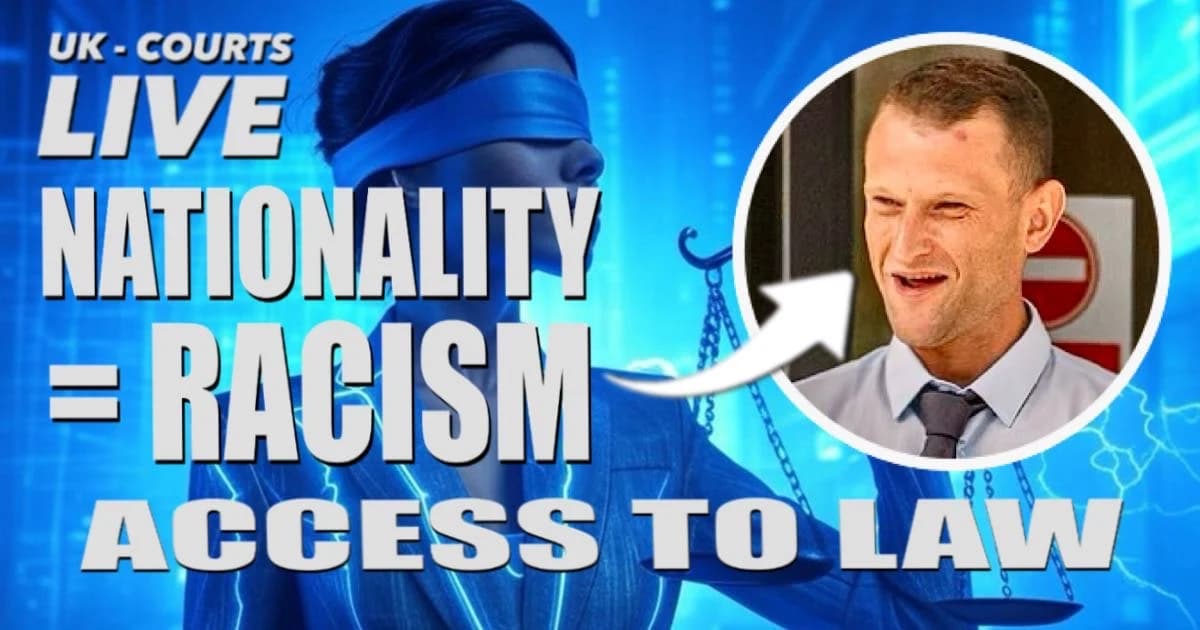
Luke Yarwood, 36, ( DOB 20/05/1988 ), of Burton, near Christchurch, Dorset, has been sentenced to 18 months’ immediate imprisonment at Bournemouth Crown Court following the publication of two posts on the social media platform X. The defendant was convicted under the Public Order Act 1986 for...
Luke Yarwood, 36, ( DOB 20/05/1988 ), of Burton, near Christchurch, Dorset, has been sentenced to 18 months’ immediate imprisonment at Bournemouth Crown Court following the publication of two posts on the social media platform X.
The defendant was convicted under the Public Order Act 1986 for stirring up racial hatred after responding to a car attack in Germany with calls to "burn" migrant hotels and "start the slaughter" against MPs and Parliament.
The prosecution, led by Siobhan Linsley, successfully argued that while the specific illegal posts garnered only 33 views, they were part of a month-long pattern of activity between December 21, 2024, and January 29, 2025.
Despite defence submissions that Yarwood was a "socially isolated" man with "fragile mental health" whose rants had no real-world consequences, Judge Jonathan Fuller ruled the content was designed to incite violence.
This sentencing has immediately triggered widespread claims of "two-tier justice" across digital platforms, with critics comparing the 18-month term to shorter sentences handed out for physical violent offences.
However, the prevailing narrative that this disparity is a result of political bias ignores the specific legislative mechanics of the UK’s sentencing guidelines and the statutory definition of race.
The legal reality is that the Public Order Act 1986 explicitly includes nationality within its definition of a "racial group," alongside colour, race, and ethnic or national origins.
By targeting "immigrants" and "asylum seekers," Yarwood’s actions were legally classified as inciting racial hatred, a "special category" offence that carries significantly higher sentencing starting points than standard incitement to violence.
So the problem here is simply one word:
‘NATIONALITY’
that is included in the UK legal definition of Racism and nothing else.
You can read our full Access to Law Legal explainer in our previous article:
🔴 UK RACISM LAW: Nationality Counts as Race in Court
So, had the word "nationality" been absent from the UK’s legal definition of race, the defendant would likely have been charged with malicious communications or general incitement to arson.
Under those alternative charges, a man of Yarwood’s profile—with no evidence of a wider conspiracy and a limited audience—would frequently expect a suspended sentence or a much shorter custodial term.
Many commentators and media outlets are currently opting to omit this technical distinction, favouring a narrative of systemic unfairness that generates higher engagement and click-through rates than legislative analysis.
The "two-tier" argument is effectively a distraction from the fact that the judiciary is simply applying the law as it is written by Parliament, specifically the inclusion of nationality as a protected racial characteristic.
If the public or political figures find these sentences disproportionate, the only logical remedy is a campaign to lobby Parliament to remove the word nationality from the legal definition of race.
Such a move would decouple xenophobic rants from the high-tariff sentencing brackets currently reserved for racial hatred, yet such a campaign remains non-existent due to its lack of "viral" appeal.
The Labour government is unlikely to pursue such a narrowing of the law, and even opposition parties like Reform UK have yet to focus on this specific statutory amendment despite their rhetoric on sentencing.
While the public remains focused on the perceived emotional or political motivations of the court, the cold reality remains that the severity of the sentence is a direct consequence of a specific statutory inclusion.
Until the legislative link between nationality and race is severed, individuals like Yarwood and Lucy Connolly will continue to face the full weight of racial hatred laws regardless of their actual audience reach.
The outrage currently seen on social media is therefore built upon a false narrative that chooses to ignore the boring, technical reality of the UK’s statute books in favour of populist friction.