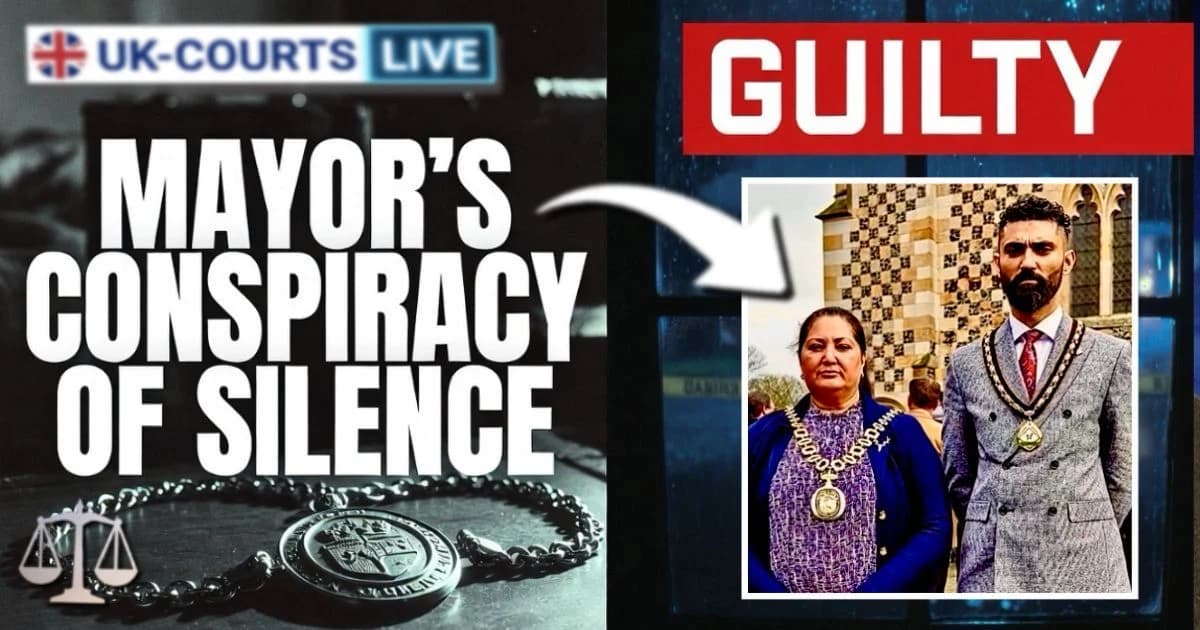
Ex-mayor convicted in rape cover-up: The fall of naheed ejaz
Naheed Ejaz, a former Labour mayor of Bracknell Forest, has been convicted of perverting the course of justice after a jury heard she deliberately delayed police officers at her home while her son concealed a mobile phone prosecutors said contained evidence of a rape involving a 15-year-old girl....

Naheed Ejaz, a former Labour mayor of Bracknell Forest, has been convicted of perverting the course of justice after a jury heard she deliberately delayed police officers at her home while her son concealed a mobile phone prosecutors said contained evidence of a rape involving a 15-year-old girl.
Following a six-day trial at Winchester Crown Court, jurors found Ejaz, 61, guilty of obstructing officers who arrived to arrest her son, Diwan Khan, on 12 September 2024. Khan, 41, was separately convicted of raping the teenager. Both defendants are to be sentenced at a later date.
The court heard Ejaz kept officers waiting at the front door for more than 90 seconds while speaking to Khan in Urdu, enabling him to hide a phone said to hold key evidence. Ed Wylde, prosecuting, told jurors the exchange amounted to a deliberate attempt to frustrate a lawful arrest and evidence seizure, describing it as a “conspiracy of silence” motivated by loyalty to her son.
Body-worn police footage played to the jury captured Khan referring to the “big bell”, which the prosecution said was a coded reference to the device, before Ejaz replied: “Keep silent, I know.” Mr Wylde said the conversation demonstrated awareness that officers were seeking the phone and a conscious decision to prevent its recovery.
Jurors were told the police later searched the property and recovered 26 SIM cards. The judge noted that Ejaz held 12 separate contact entries for Khan, none corresponding to the number linked to an iPhone 14 believed to contain material evidence. The handset itself was not located.
During the trial, the prosecution argued that while Ejaz may not have known the full details of the allegation at the time, she knowingly interfered with police duties. Mr Wylde said: “A mother’s love for her son will stretch some way, and in this case it stretched into criminality.”
Khan was convicted of raping a 15-year-old girl in June 2024. The court heard the complainant lost consciousness after consuming vodka into which MDMA had allegedly been introduced. Prosecutors said she later awoke naked in the back seat of Khan’s car with no memory of events and was shown a video depicting sexual activity. The jury’s verdict represents a finding of guilt after trial.
At the time of the incident, Ejaz was serving as a Labour councillor and had recently completed a one-year term as mayor. She resigned her council seat in October 2024. Khan had acted as mayoral consort during her tenure.
For many residents, the mayor is the most visible and accessible link to local politics, the figure they encounter at community events, civic ceremonies, and during local campaigns. The role carries a unique capacity to champion causes, mobilise volunteers, and lead personal initiatives that can shape the direction and morale of the area.
When that platform is compromised, it risks diminishing confidence not only in an individual office-holder but in the credibility of local government leadership more broadly. It underscores how essential personal integrity is to a position designed to unite communities, advocate for residents, and embody the civic identity of the place it represents.
For the Labour Party, the episode is politically damaging as it seeks to project an image of professional standards in public life and responsible local governance. The actions of this mayor and her consort inevitably place the party on the defensive and invite scrutiny of its vetting processes, oversight, and response.
Sentencing in the Crown Court will take place on a date to be fixed, when the judge will determine the appropriate penalties for both the obstruction offence and the rape conviction in accordance with statutory guidelines. For perverting the course of justice, the offence is indictable-only and carries a maximum sentence of life imprisonment, with the penalty in any individual case determined by the judge according to sentencing guidelines and the facts proved. For rape, the statutory maximum is life imprisonment, with sentences set under definitive guidelines that assess harm and culpability before the court. Sentencing guidelines for rape also provide structured starting points based on harm and culpability, before adjustment for the individual circumstances of the case.