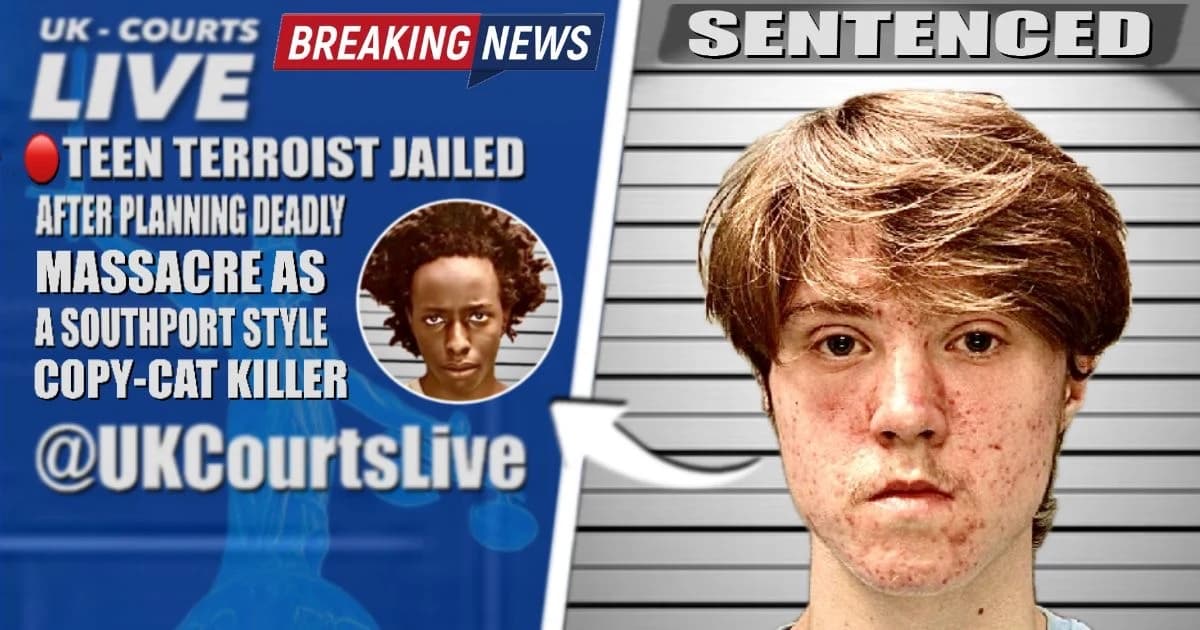
Dance school plot: Cwmbran teen jailed for terror attack plan
Teenager fixated on extreme violence downloaded banned jihadist manuals, scoped out children’s venues and discussed major UK targets before counter-terror officers stepped in and intervened. An 18-year-old from Cwmbran has been sentenced to 14 months in a young offenders institution after admitting...

Teenager fixated on extreme violence downloaded banned jihadist manuals, scoped out children’s venues and discussed major UK targets before counter-terror officers stepped in and intervened.
An 18-year-old from Cwmbran has been sentenced to 14 months in a young offenders institution after admitting possessing terrorist material, following an investigation that uncovered extensive online research into violent attacks, target locations and extremist manuals, including material identical to that used by Southport murderer Axel Rudakubana.
McKenzie Morgan, of Torfaen, appeared before the Central Criminal Court after pleading guilty to one offence under section 58 of the Terrorism Act 2000, namely possession of information likely to be useful to a person committing or preparing an act of terrorism. The conviction related solely to the possession of material, not to planning or attempting any attack.
Morgan, who was 17 at the time of the offence, was sentenced after the court heard that police recovered banned al-Qaeda training documents from his mobile phone, including manuals containing instructions for knife attacks and violent operations. He admitted searching for, downloading and reading the material, accepting that it was likely to be of use in terrorism-related activity.
The investigation was led by Counter Terrorism Policing Wales, working alongside Gwent Police and the Crown Prosecution Service, after concerns were raised by a member of the public who had seen Morgan’s online communications. He was first arrested on 2 June 2025, released on bail while enquiries continued, then rearrested later that month after further analysis of his digital devices.
Prosecutors said Morgan had engaged in online discussions expressing admiration for Rudakubana and a desire to carry out a similar attack. Images of Rudakubana were saved on his phone, alongside a note titled “places to attack”, created in April 2025, which included photographs of a local dance school close to Morgan’s home, directions to the site and a timed walking route of just over 30 minutes. Location data showed he had been in the vicinity days before his arrest.
The court was told Morgan had also researched other potential locations, including a children’s playground and his own school, and had discussed attacking the first Oasis reunion concert in Cardiff on 4 July. In Snapchat messages, he referred to targeting the event at the Principality Stadium and asked contacts about weapons, sending an image of a large knife with the message “would this work”. He later admitted attempting to purchase knives online, but was prevented by age-verification controls.
During sentencing, Judge Sarah Whitehouse said there was no evidence Morgan held any political, religious or racial ideology. His motivation, the court heard, appeared to be an attempt to emulate a previous attacker rather than advance any ideological cause. The judge described Morgan as vulnerable and at risk of grooming and radicalisation, while also presenting a danger to himself and others.
Morgan attended court accompanied by mental health nurses and was assessed as a high risk both to himself and to others while in custody. Through his counsel, Michael Stradling, the court was told Morgan had no history of violence and that the greater concern had previously been self-harm.
In addition to the custodial sentence, Morgan was made subject to a three-year Criminal Behaviour Order, banning him from places where children are present, and a Terrorist Offender Notification Order lasting 10 years, requiring him to keep police informed of his address and comply with strict conditions on internet use. He will also serve a one-year period on licence following release.
Speaking after sentencing, Detective Superintendent Andrew Williams of Counter Terrorism Policing Wales said the case demonstrated how vulnerable young people can be influenced by extreme violence encountered online. Deputy Chief Constable Nicky Brain of Gwent Police said such investigations were rare in the force area but stressed the importance of reporting concerns.
The CPS confirmed there was no evidence Morgan belonged to a banned organisation or had taken steps to carry out an attack, stating the prosecution reflected a determination to act where terrorist material is possessed without reasonable excuse.