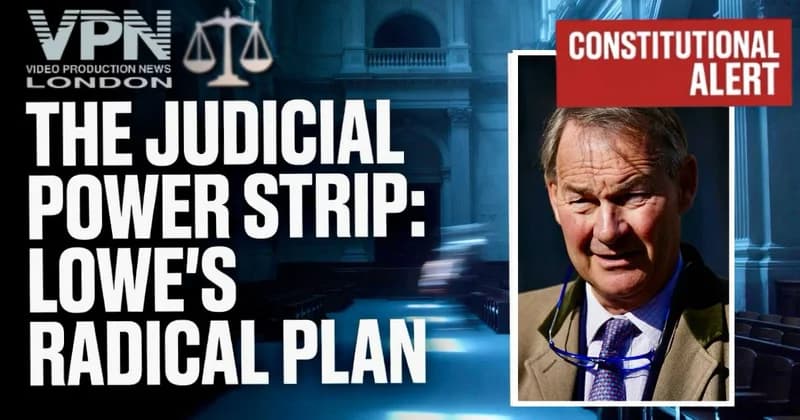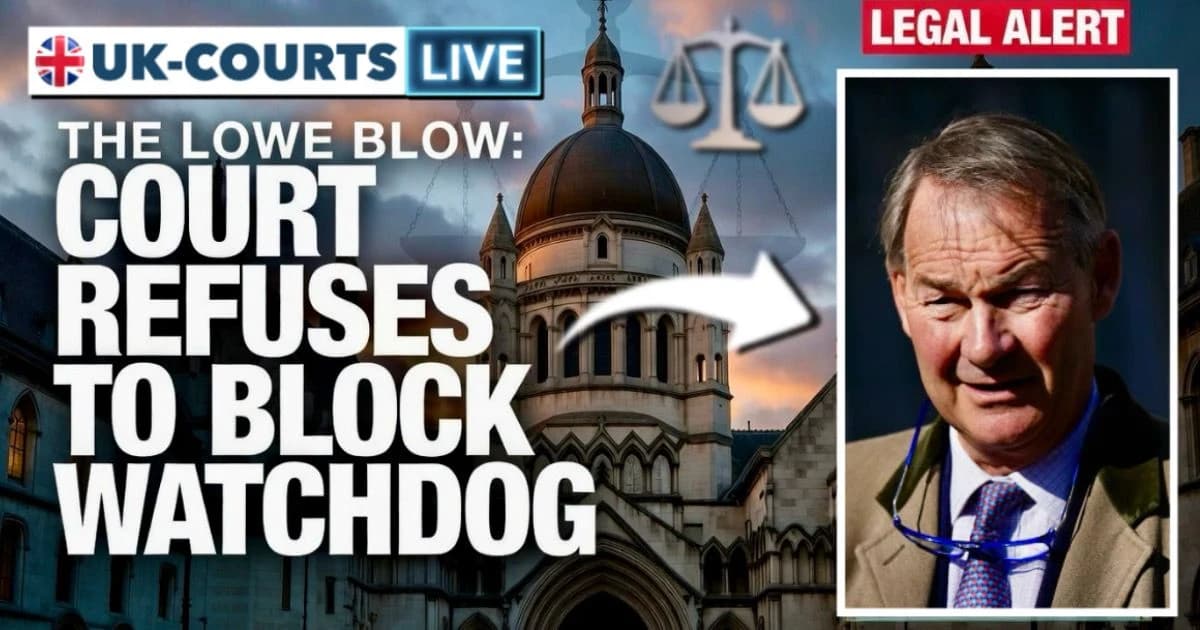
Massive court blow for Rupert Lowe as judge refuses to block watchdog probe
An MP has lost a high-stakes bid to temporarily block the parliamentary watchdog from investigating a complaint against him—a process his own legal team has warned could effectively very likely end his political career.

An MP has lost a high-stakes bid to temporarily block the parliamentary watchdog from investigating a complaint against him—a process his own legal team has warned could effectively very likely end his political career.
Rupert Lowe, the independent MP for Great Yarmouth, is pursuing legal action against the Independent Complaints and Grievance Scheme (ICGS), the body responsible for investigating allegations of bullying, harassment, and sexual misconduct within Parliament.
The ICGS is currently investigating a complaint made against Lowe in July 2025 by a third party, whose identity is protected by a strict court anonymity order.
Lowe had applied for an interim injunction to halt the probe ahead of a full judicial review next month, alleging "procedural unfairness, perversity, and illegality" in how the watchdog operates.
His barrister, Christopher Newman, argued that the risk of "unjust harm" arising from a potentially biased process was significant, given the investigation’s power to terminate a Member of Parliament's career.
However, in a ruling delivered at the High Court on Tuesday, Mr Justice Chamberlain dismissed the injunction bid, citing a "strong public interest" in allowing the established complaints process to continue.
The judge stated that the risk of harm to Lowe had been "overstated" and noted it was unlikely the ICGS would publish any findings before a separate hearing on 17 March to determine if the court even has jurisdiction over the matter.
Lawyers for the ICGS successfully argued that the court has no constitutional role in supervising internal parliamentary disciplinary matters, which they contend fall under the umbrella of Parliamentary Privilege.
Lowe, who recently launched his new political party Restore Britain, currently sits as an independent after being suspended from Reform UK in March 2025 following claims of threats made against party chairman Zia Yusuf.
While the Crown Prosecution Service declined to bring criminal charges regarding the Yusuf allegations, the ongoing ICGS probe represents a separate and significantly more dangerous regulatory threat.
If the investigation concludes with a finding of serious misconduct, the matter will be referred to the Independent Expert Panel (IEP), which has the authority to recommend severe sanctions to the House of Commons.
Under the Recall of MPs Act 2015, should the House approve a suspension of 10 sitting days or 14 calendar days, a formal recall petition is automatically triggered in the MP's constituency.
A successful petition, requiring the signatures of just 10% of eligible voters in Great Yarmouth, would see Lowe immediately unseated and a by-election triggered.
Given the current political volatility and Lowe's shift from Reform UK to his own startup party, such a by-election would force him to defend his seat without the machinery of a major national party behind him.
The 17 March hearing will now serve as a pivotal moment for Lowe’s future, as the High Court decides whether the judiciary can intervene in a process that currently leaves him "answerable to the House" alone.