Deliveroo Gunman Guilty of Shooting Girl in Ladbroke Grove Spree
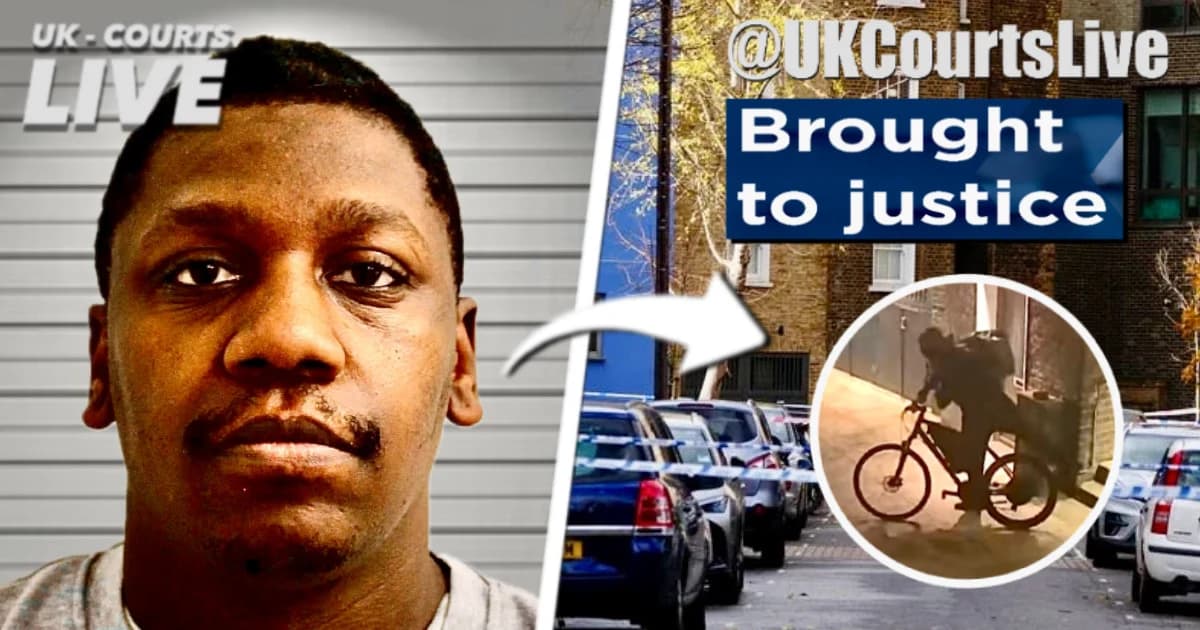
Deliveroo disguise hid a cold-blooded would be assassin: Jazz Reid, 33, convicted at Old Bailey for attempted murder after 11-shot ambush left dad fighting for life and 8yo girl wounded. Full verdict below. A man who disguised himself as a Deliveroo rider to carry out a series of targeted...
Deliveroo disguise hid a cold-blooded would be assassin: Jazz Reid, 33, convicted at Old Bailey for attempted murder after 11-shot ambush left dad fighting for life and 8yo girl wounded. Full verdict below.
A man who disguised himself as a Deliveroo rider to carry out a series of targeted shootings in west London has been convicted of attempted murder and multiple firearms offences at the Old Bailey.
Jazz Reid, 33, (01.06.92) of Iffley Close, Uxbridge, was found guilty on Thursday, 6 November, following a trial that laid bare the meticulous planning behind three attacks linked by forensic evidence to weapons bearing his DNA.
The jury rejected Reid’s claims of a set-up over an unpaid drug debt, delivering unanimous verdicts on all counts after deliberating for less than a day.
He faces a lengthy custodial sentence when he returns to court on 5 January.
The convictions stem from a spree of violence that began on 9 October 2024, when Reid allegedly drove a hire car from his Uxbridge home to a storage point in Ladbroke Grove, where he kept a modified e-bike and a green Deliveroo rucksack complete with a takeaway box.
From there, he cycled to a communal front door in Notting Hill, firing two shots that struck 27-year-old Ameile Buncombe in the thigh, causing serious injury.
Prosecutor Michael Goodwin KC told jurors the attack was executed with “precision”, part of a pattern designed to evade detection through the innocuous guise of a food delivery operative.
Just over a month later, on 11 November 2024, Reid repeated the method, travelling to an address on Kenley Walk in north London associated with his primary target—a 34-year-old man.
He discharged four rounds, the shots echoing through the street and alerting neighbours who promptly notified police, though no injuries were reported at the scene.
Thirteen days on, the violence escalated on Southern Row in Ladbroke Grove, where Reid located the same man seated in a family car alongside relatives, including his eight-year-old daughter in the front passenger seat.
Disguised once more as a delivery cyclist, Reid unleashed 11 shots in rapid succession, five of which lodged in the father’s back, chest, abdomen, and pelvis, while two struck the child in her buttocks and foot.
Both victims survived, but the man endured life-threatening wounds that prosecutors described as “severely life-changing”.
Neither can be identified for legal reasons, a restriction that underscored the court’s sensitivity to the case’s gravity during proceedings.
The investigation, led by Detective Inspector Richard Scott of the Metropolitan Police’s specialist crime unit, unravelled through exhaustive analysis of hundreds of hours of CCTV footage, automatic number plate recognition data, and mobile phone cell site records.
These traced Reid’s hire car journeys from Uxbridge to a “cover” flat on the Swinbrook Estate in north Kensington, where he parked without drawing suspicion before retrieving his e-bike and disguise.
Forensic links proved damning: a 9mm self-loading pistol, loaded with 17 rounds, was recovered on 26 November 2024 from beneath a concrete slab at the rear of Reid’s home, its grip and muzzle bearing his DNA and ballistics matching casings from the Southern Row attack.
A separate firearm, used in the earlier incidents, yielded partial DNA profiles from Reid on spent cartridges at the Kenley Walk scene.
Jurors heard how Reid sought to obscure his trail by discarding SIM cards post-shooting and swapping handsets, yet cell data captured calls to his Swinbrook associate mere moments before each incident.
The e-bike and Deliveroo kit were later seized from the estate flat, sealing the evidential chain.
Reid, giving evidence in his defence, maintained he played no role in the shootings, attributing the planted weapon to a vendetta over a £10,000 drug debt accrued in 2021.
He recounted a prior assault in which he had grappled with an attacker over a gun—his only admitted handling of a firearm—and detailed his 2012 arrest for conspiracy to supply Class A drugs, which led to a prison term in 2013.
Under cross-examination by Goodwin, Reid conceded he possessed no corroborative proof beyond his testimony for the framing narrative, a concession that appeared to undermine his account.
The prosecutor pressed on the absence of the debt claim in Reid’s initial defence statement, suggesting it was a fabrication; Reid demurred, insisting he had spent the relevant periods at a family gathering and procuring cannabis.
Goodwin characterised the trio of attacks as “targeted shootings, planned and executed with precision”, emphasising the family’s entrapment in the vehicle with “nowhere to escape” as Reid opened fire.
The jury, weighing this against Reid’s denials, returned guilty verdicts on attempted murder of the father, wounding with intent both the child and Buncombe, and six firearms charges—three counts each of possessing a weapon and ammunition with intent to endanger life.
Following the verdicts, Reid was remanded in custody, his composure fracturing briefly as marshals led him from the dock.
Detective Inspector Scott hailed the outcome as the product of “tireless” detective work that left “no doubt in the jury’s mind of his guilt”.
He detailed Reid’s “extreme lengths” to commit and conceal the crimes, including the SIM disposals and vehicle changes, before expressing satisfaction that justice had been secured.
Superintendent Owen Renowden, overseeing policing in Kensington and Chelsea, credited the Ladbroke Grove community for aiding the probe and affirmed the Met’s resolve in pursuing gun offenders.
“There is no hiding place for those who choose violence,” Renowden stated, underscoring the force’s commitment to dismantling such operations.
As Reid awaits sentencing, the case stands as a stark testament to the fusion of low-tech deception and high-stakes forensics in modern urban investigations, with implications for how courts interpret digital footprints in firearm prosecutions.
The Old Bailey, ever the theatre of London’s most intricate criminal narratives, closes this chapter on Reid’s spree—for now—pending the judge’s pronouncement in the new year.