Citizen journalists exposed in wrong photo blunder
Citizen journalists mislead tens of thousands as an unrelated photo was falsely attached to an asylum seeker’s story, risking legal action under the Online Safety Act and defamation law. We have written previously on citizen journalism, both in its promise to tell untold truths and rebalance the...

Citizen journalists mislead tens of thousands as an unrelated photo was falsely attached to an asylum seeker’s story, risking legal action under the Online Safety Act and defamation law. We have written previously on citizen journalism, both in its promise to tell untold truths and rebalance the public narrative, and also in its pitfalls and risks when reporting is undertaken without the rigorous fact-checking infrastructure of an editorial team.
Yesterday I was appalled to see two examples of the kind of blunders that are becoming increasingly common among citizen journalists.
The issue concerned the story of an Afghan asylum seeker, known as SA, who has recently established in court that he was 17 when he entered the UK, whereas his age had originally been recorded as 45.
A story of this nature would naturally trigger alarm bells for anyone who agrees with us that the asylum system is not fit for purpose, routinely exploited, and in desperate need of radical reform. However, the reality here is nuanced.
The original recording of SA as being 45 was based on an initial appraisal, not a full test.
Asylum seekers can claim to be any age they wish, but that does not mean such claims are accepted or go unchallenged by the state.
No test is ever perfect, but the Merton test which recently established his age as 17 when he entered the UK has a recognised margin of error that might allow a 22-year-old, or even a 24-year-old to pass — but it is hard to imagine a man in his forties ever passing.
Reporting partial truths is one issue, and we can discuss the ethics of clickbait headlines or missing context, but what we saw here was something very different.
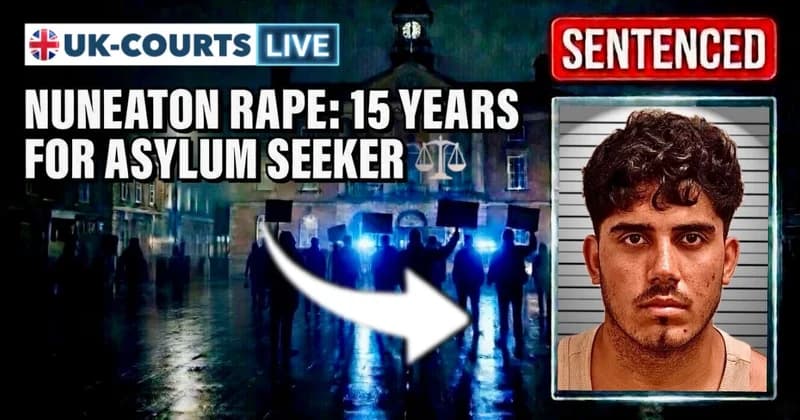
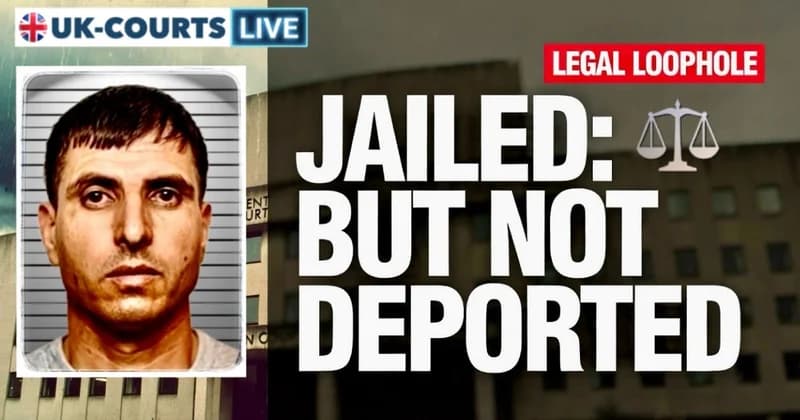
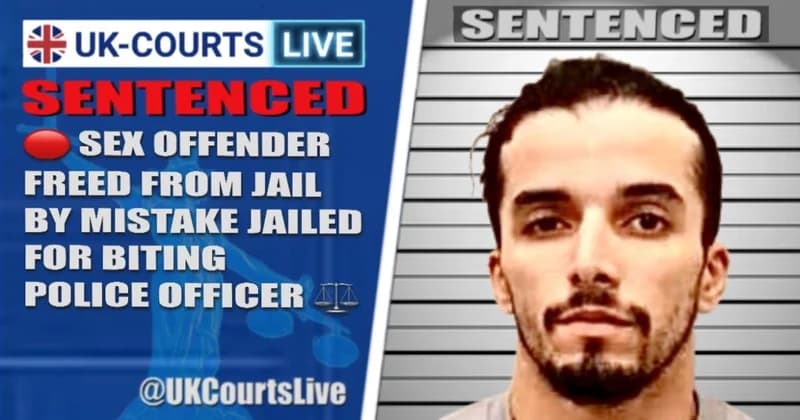
This story was deliberately paired with the unrelated custody photograph of 49-year-old violent criminal Sher Wali, currently serving time in prison, in two recent posts by:
@pippaisright
https://x.com/pippaisright/status/1994884028756103520?s=46
and
@hjb_news__
https://x.com/hjb_news__/status/1994446893904961769?s=46
This is not investigative journalism. This is not someone seeking to uncover truth, or emulate the seven British Press Awards won by the Telegraph for exposing the MPs’ expenses scandal.
This has the appearance of engineered ‘better than real’ fake news — synthetic stories designed to satisfy pre-existing biases and to exploit the algorithm.
As we have repeatedly warned, citizen journalism on social media platforms still has a long way to go if it is to achieve legitimacy. More worryingly, it is doubtful that all citizen journalists see anything wrong with inventing, distorting, or recycling stories in order to present something as exclusive news and overlooked truth, when it is anything but.
Any improvement is likely to require independent journalists adopting shared standards, submitting to real-time editorial oversight, and - the bottom line - foregoing the type of content which frequently generates the most views. Given a free choice, it is unclear how many would take that path voluntarily.
However, due to the prohibition on False Communications in the Online Safety Act 2023 — brought into force only a few months ago — the option of continuing “as is” may not remain a viable alternative for much longer.
Access to the Law: Why These Posts Are a Legal Problem, Not Just an Ethical One
The Online Safety Act 2023 (“OSA”) has fundamentally changed the legal landscape for false online communications. It shifts the burden away from simply asking whether a post is offensive or distasteful and instead asks three questions:
1. Is the communication false or misleading?
2. Does the poster know (or suspect) it is false?
3. Is non-trivial harm intended, or at least likely, to arise?
1. False or misleading content
The original story about SA – that the Home Office mistakenly logged him as 45 – is factual. But the two social-media posts went far further:
• they paired that story with the custody photo of an entirely different man, a 49-year-old violent criminal;
• they presented it as though that image represented the asylum seeker himself;
• and they omitted key information (his minor status, the Court’s findings, Home Office concession) which completely changes public perception.
The image does not just “illustrate” the story. It recasts him as a dangerous adult offender, which on any objective reading is a knowingly false representation.
Under the OSA, recklessness counts. If a poster uses imagery that a reasonable person would recognise as likely to mislead, or if they post sensationalist material without checking its origin, that satisfies the mental element of the False Communications offence.
In at least one case here the account describes itself as a “media data solutions” professional. The law expects such people to know better.
2. Non-trivial harm is more than plausible; it is likely
This kind of post is not harmless gossip. It weaponises a familiar trope: the “fake child migrant”, used as a proxy for dishonesty, criminality and abuse of the system. It invites public anger and hostility towards:
• the asylum seeker himself,
• the Home Office,
• and even the courts.
That goes far beyond disagreement with asylum policy. It has obvious real-world consequences: harassment, vigilantism, mob-style online attacks, threats, and an anti-asylum backlash. The fact that similar disinformation-driven incidents have already resulted in prosecutions and long custodial sentences makes the risk far from hypothetical.
The threshold in the OSA is not “catastrophic harm” or violence. It is simply non-trivial harm to a likely audience. Given the background and the environment in which these posts circulated, that bar is comfortably reached.
3. The platform and regulatory consequences
The OSA applies a dual system:
• It criminalises individual posters for knowingly false content intended to cause harm; and
• It imposes a separate duty of care on platforms such as X.
This is important: Ofcom’s powers are not primarily designed to imprison social-media users. They are designed to force platforms to act. So platforms are now legally incentivised to:
• mark posts as misleading,
• restrict visibility in the UK,
• remove content,
• suspend accounts,
• or demonetise users.
If they fail, Ofcom can step in against X itself. Financial and regulatory pressure on the platform makes it far more likely that individual users will face consequences.
This does not require a police investigation. The system is built so that the platform acts first.
And the old law hasn’t gone away: defamation remains a huge legal risk
The OSA adds a new route to legal consequences. But even without it, these posts would face another formidable legal threat: defamation.
Attaching the image of a convicted criminal to an entirely different individual, and implying that this is who they are, is precisely the kind of defamatory misrepresentation that traditional media outlets spend vast sums avoiding.
No newspaper editor or broadcast editor in the country would ever allow this to be published. They would not risk it:
• it falsely alleges serious wrongdoing,
• it damages reputation,
• the target is identifiable,
• and the publisher cannot prove the allegation true.
That is more than enough to sustain a defamation claim. And unlike the OSA, defamation does not require proving “intended harm”. Financial and reputational damage to the victim is enough.
Citizen journalists posting these images are not merely taking a moral shortcut. They are crossing a legal threshold that legacy media are trained to avoid.
The bigger picture
For years social-media commentators assumed the rules would never apply to them. The Online Safety Act changes that. Citizen journalists cannot simply recycle images, fabricate visual evidence, and mislead the public without legal risk.
Between the OSA’s new offence, platform-level obligations, Ofcom’s enforcement powers, and traditional defamation law, the era of consequence-free online disinformation is coming to an end.
This is the moment where citizen journalism has to choose: evolve into something credible, or face the same scrutiny and liability that professional media have always lived under.