
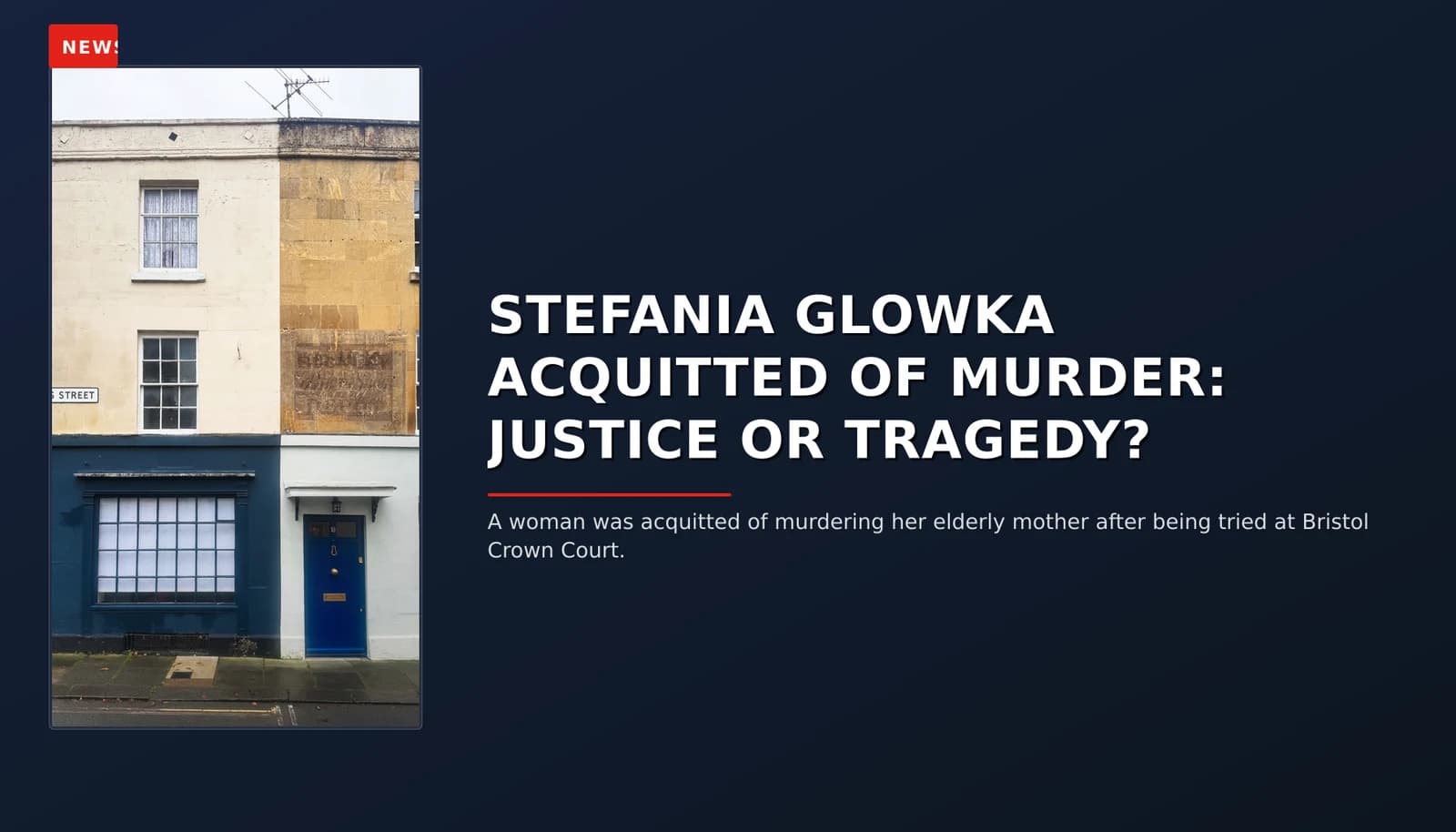
Stefania Glowka Acquitted Of Murder: Justice Or Tragedy?
A woman has been acquitted of murdering her elderly mother in a case that raised questions about mental health and family dynamics. The trial at Bristol Crown Court highlighted the complexities of diminished responsibility in criminal proceedings.

A woman has been acquitted of murdering her elderly mother in a case that sparked questions about mental health and family dynamics.
The trial of Stefania Glowka, a 64-year-old carer from Devizes, Wiltshire, concluded yesterday at Bristol Crown Court with a surprising verdict. Despite facing charges for the death of her 86-year-old mother Tamara Glowka, the jury found her not guilty of murder. This decision has raised eyebrows and sparked discussions about mental health, family responsibilities, and the justice system's approach to such cases.
The incident unfolded on Christmas Day in 2025, when police were called to their home following a report of a serious assault at around 8:10 GMT. Stefania initially pleaded guilty to manslaughter based on diminished responsibility, citing her depression as impairing her judgment. However, during the trial, psychiatrists testified about her mental health condition, leading the jury to reconsider the charges.
Stefania, originally from Poland, had been caring for her mother since 2004. The emotional and physical strain of being a primary carer for an elderly parent is well-documented, but in this case, it appears to have taken a severe toll on her mental health. Her mother, Tamara, suffered from hallucinations and psychosis, which may have contributed to the tragic events that day.
The court heard harrowing details of the incident: Stefania strangled her mother with a belt before attempting suicide herself. She then called 999 to report the crime several hours later. The sequence of events suggested a mixture of desperation and confusion, leading some to question whether she fully understood her actions at the time.
Read more: Trial date set for man accused of murdering Steph Irons
Legal experts have noted that this case highlights the complexities of mental health in criminal proceedings. While Stefania's initial plea indicated a recognition of wrongdoing, the subsequent testimony from psychiatrists painted a picture of a woman whose judgment was significantly impaired. This impairment likely played a crucial role in the jury's decision to acquit her of murder.
The acquittal has been met with mixed reactions. Some within the legal community commend the jury for carefully considering the evidence and focusing on the mitigating factors presented during the trial. Others express concerns about whether such cases risk trivializing the seriousness of violent crimes, particularly against vulnerable individuals like elderly people.
Looking ahead, Stefania was scheduled to face sentencing for her initial manslaughter plea, but with the murder charge dropped, it remains unclear what penalties, if any, she will face. This case underscores the need for a nuanced approach to mental health in criminal cases and the importance of ensuring that justice is served without further traumatizing victims' families.
As the dust settles on this emotionally charged trial, questions linger about how such tragedies can be prevented in the future. The case of Stefania Glowka serves as a stark reminder of the challenges faced by carers and the potential consequences of inadequate support systems for both the elderly and their caregivers.
Read more: Police Intention To Release Statement During Henry Nowak's Killer Trial Met With Opposition

More Stories

Trial date set for man accused of murdering Steph Irons
25 November 2025 at 09:012 min read
Read More
Police Intention To Release Statement During Henry Nowak's Killer Trial Met With Opposition
7 June 2026 at 09:382 min read
Read More
Shooting Near Toledo Festival: Police Search For Suspects After Multiple Injuries
7 June 2026 at 01:313 min read
Read MoreComments (0)
No comments yet. Be the first to share your thoughts!
Leave a Comment
Your email address will not be published. Comments are moderated before appearing.