
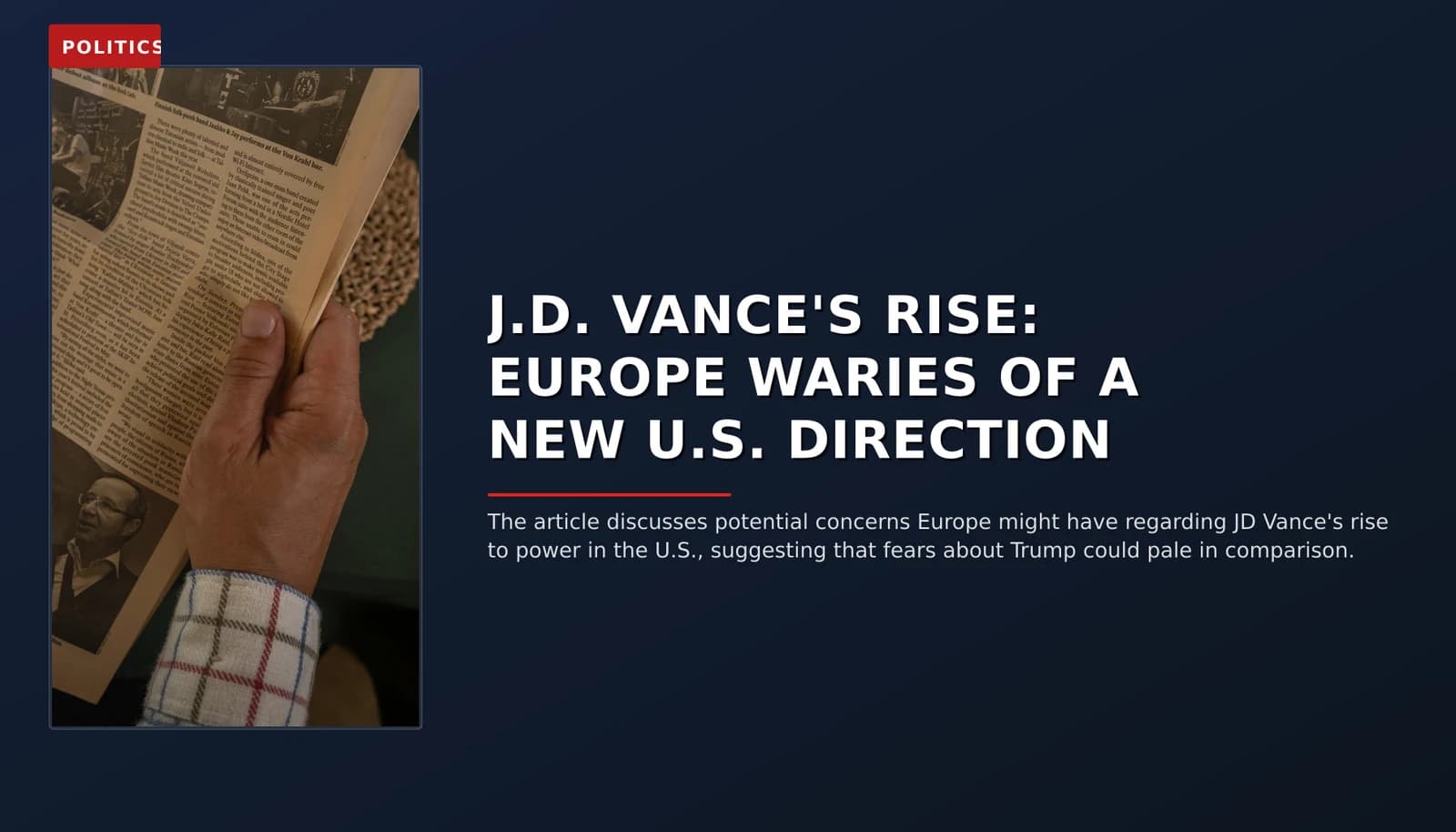
J.d. Vance's Rise: Europe Waries Of A New U.s. Direction
As JD Vance's political influence grows in the U.S., concerns mount in Europe about potential impacts on transatlantic relations and international stability.

As JD Vance gains political momentum in the U.S., concerns grow in Europe about the implications for transatlantic relations.
The recent surge of J.D. Vance, a prominent figure in American politics, has sparked cautious observation across the Atlantic. As his influence grows within Republican circles, European policymakers are beginning to assess what this shift might mean for their relationship with the United States. While former President Donald Trump's legacy still casts a long shadow over transatlantic ties, there is now a growing sense that Vance could represent an even more significant departure from the norms of international diplomacy.
Vance's rise has been marked by his vocal opposition to several key policies favored by European nations. His stance on issues such as trade agreements and climate change has drawn attention not just within the U.S., but also among European leaders who are now closely monitoring his potential influence over future American foreign policy decisions. This contrasts sharply with Trump's approach, which was often characterized by unpredictable 'deal-making' that kept allies on edge.
According to sources in Brussels, there is a growing consensus that Vance's policies could pose challenges to the multilateral frameworks Europe has worked hard to establish. While Trump's presidency saw strains in transatlantic relations, many believe that Vance might take these tensions to new levels if he ascends to higher office. This fear is compounded by his public statements that suggest a more unilateral approach to international affairs.
It is unclear exactly how Vance's policies would impact Europe specifically. However, his rhetoric on issues like immigration and economic protectionism has raised eyebrows among European leaders who have long championed open markets and global cooperation. Some analysts warn that a Vance administration could lead to increased trade barriers and less collaboration on key international issues, undermining the stability that Europe has sought to maintain.
Read more: Starmer To Host Zelenskyy And Eu Leaders For Ukraine Talks: Breather Or Breakthrough?
The fear that Europe might have more reason to worry about JD Vance than Donald Trump is not without merit. While Trump's presidency was marked by significant volatility and unpredictability, it also saw a degree of familiarity in his approach to dealing with international relations. In contrast, Vance's ideology appears to align more closely with a 'America First' doctrine that could result in even greater divergence from European interests.
As the political landscape in the U.S. continues to evolve, Europe is left weighing the potential implications of a Vance-led administration. While there are still many unknowns about how his policies would translate into actionable foreign policy decisions, the concern among European leaders is palpable. The stakes are high, and the outcome could have far-reaching consequences for global stability and cooperation in the years to come.

More Stories

Starmer To Host Zelenskyy And Eu Leaders For Ukraine Talks: Breather Or Breakthrough?
6 June 2026 at 19:132 min read
Read More
U.s. House Halts Iran Military Authorization: A Step Toward Checking Trump's Powers
4 June 2026 at 01:403 min read
Read More
Kemi badenach attacks PM: Scathing criticism over Iran war response
7 March 2026 at 14:153 min read
Read MoreComments (0)
No comments yet. Be the first to share your thoughts!
Leave a Comment
Your email address will not be published. Comments are moderated before appearing.